
The Folding Car: Hiriko

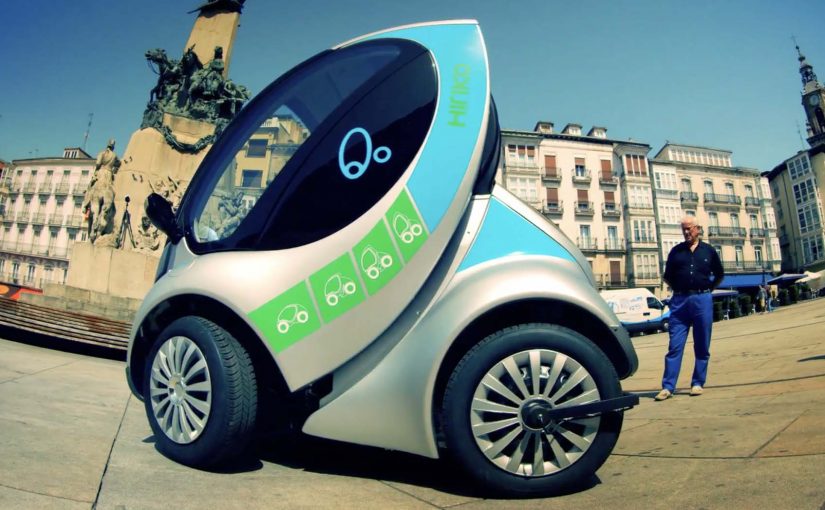
Hiriko is a folding car that has been in the making for the last 5 years. This city car is positioned for mobility services (car sharing) that aim to reduce the congestion generated by automobiles in cities.

The folding car resembles a Smart Car and has the ability to fold itself into an upright, space-saving parking position that feels straight out of a sci-fi novel.

A working model of Hiriko is unveiled in Brussels, and it is described as commercially available in 2013.

At a reported estimated price of around €12,500 (excluding tax), the future of driving feels close.

How the fold-up parking mode works

The core trick is simple: Hiriko can retract into an upright, space-saving parking position, shrinking the footprint it occupies when it is not moving.

In dense European city centers, shared electric city-car concepts live or die on parking efficiency and last-mile convenience.

The real question is whether a dramatic fold-up parking mode delivers enough operational advantage to make shared fleets meaningfully more viable in tight urban cores.

Done well, a fold-up parking mode is worth betting on for shared mobility, because it turns parking from a constraint into a lever for utilization and staging.

Why it lands in dense city fleets

Because the car can retract into a smaller parked footprint, operators can stage more vehicles closer to the places riders actually start and end trips, which reduces pickup friction and dead time.

Extractable takeaway: If your product promise is “better city mobility,” make the benefit visible in one glance, especially at the moment that usually breaks the experience (parking, pickup, handoff).

What it optimizes for

This is framed for car sharing rather than private ownership because the value is operational: higher parking density, easier staging near demand, and better fleet utilization in tight city environments.

What to copy from Hiriko

  • Make the constraint visible: Turn the hard part (parking density) into a concrete before/after moment.
  • Design for staging, not only driving: Optimize where vehicles live between trips, not just how they perform in motion.
  • One-glance differentiation: If you need behavior change, build a benefit people understand without a manual.

A few fast answers before you act

What is Hiriko?

Hiriko is a fold-up two-seat electric city car concept designed for urban mobility services such as car sharing, with a body that retracts to reduce parking footprint.

What problem is the folding mechanism trying to solve?

Parking density. By shrinking its footprint when parked, the car is meant to make it easier to operate shared fleets in tight city environments.

Why is this framed for car sharing rather than private ownership?

Because the core value comes from fleet efficiency: easier parking, easier staging near transit nodes, and higher utilization in dense areas.

What makes the concept feel “sci-fi” in practice?

The upright, compact parked stance changes the familiar silhouette of a car and makes the space-saving benefit immediately visible.

What is the simplest lesson for mobility and product teams?

If your promise is “better city mobility,” make the benefit visible in one glance. A fold-up parking mode is a benefit people can understand without explanation.

KLM: Meet & Seat

Most brands use social channels tactically, mainly to reach people with social ads. KLM takes a different route by turning social into a flight feature, not just a media channel.

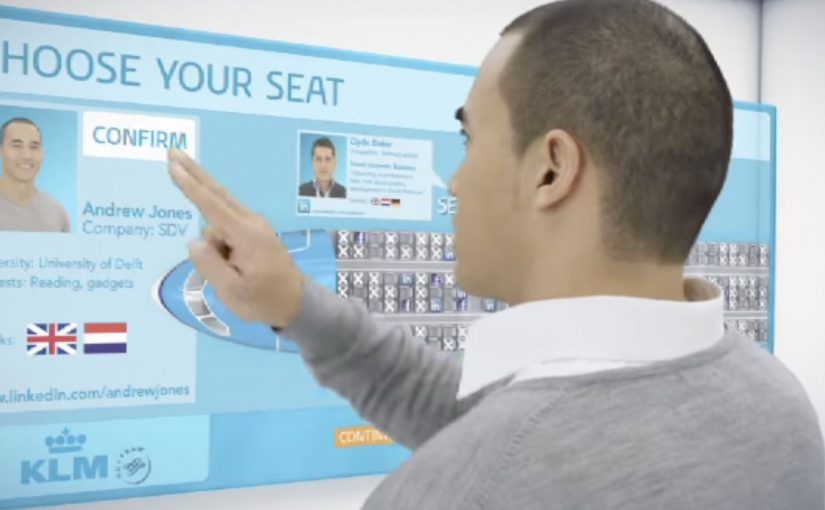
Last year KLM announced it would launch a social seating service in 2012 that lets Facebook and LinkedIn users meet interesting passengers on their flight.

From social graph to seat map

The mechanism is opt-in. Passengers can link a Facebook or LinkedIn profile to their booking, view other participating passengers, and use that context to decide who they might like to sit near. Instead of “broadcasting” brand messages, KLM uses social signals to make the journey feel more connected and a little less anonymous.

In global airline customer experience, social features only earn their place when they reduce travel friction while keeping passenger comfort and control intact.

Why this goes beyond advertising

The real question is whether your “social” idea earns a place inside the core workflow, or stays a bolt-on marketing layer.

This is not a campaign that ends when the media stops. It is a product layer that sits inside the booking and seat-selection experience. That matters because the value is practical. The idea helps solo travelers find relevant people. It helps professionals spot peers. It helps conference-goers connect before landing.

What makes the idea feel safe enough to try

The service is framed as voluntary. You choose to participate, and the experience only works if passengers trust they can opt in, opt out, and keep the interaction lightweight. That balance is the difference between “novel” and “creepy”, especially when your setting is an enclosed cabin for many hours.

Extractable takeaway: If a feature touches identity inside a captive environment, design for clear consent, easy exit, and low-pressure interaction first.

Where it is live, for now

Meet & Seat has now gone live and is currently available on KLM flights between Amsterdam and New York, San Francisco and São Paulo. The stated intent is to extend the service to other sectors over time.

Steal this pattern for social utility

  • Turn social into utility. A social feature that solves a real moment beats social content that asks for attention.
  • Make it opt-in by design. Voluntary participation is how you earn trust for anything identity-adjacent, meaning tied to real identity or profile data.
  • Embed it in a workflow. Booking and seat selection are high-intent moments where new features get tried.
  • Keep the promise small. Help people meet someone interesting. Do not overclaim “matchmaking”.

A few fast answers before you act

What is KLM Meet & Seat in one line?

An opt-in service that lets passengers connect via Facebook or LinkedIn and use that context during seat selection to sit near people they find interesting.

Why is this different from a normal social media campaign?

Because it is a service embedded in the travel journey, not content distributed around it.

Why does opt-in matter so much here?

Because seatmate selection touches identity and comfort. Participation needs to feel controlled, reversible, and low-pressure.

Where should a similar feature live in the journey?

Put it in a high-intent step, such as booking or seat selection, so people can try it when they already have a reason to act.

What is the main transferable lesson?

Stop treating social as a megaphone. Treat it as a signal you can convert into a useful moment inside the customer journey.

Rise of the Machines: Siri and Quadrotors

Here are two videos (fictional and real) that create the same feeling. A Skynet reality does not seem too far away.

Two clips, one unsettling takeaway

One is a short parody where a voice assistant turns from helpful to threatening. The other is a real lab demo where tiny quadrotors fly as a coordinated swarm. Put them next to each other and the “machines are getting clever” idea stops being a movie line and starts feeling like a trajectory.

Fiction, then engineering

Psycho Siri

Andrew Films USA delivers a compact piece of sci-fi anxiety. Siri is framed as familiar, then reframed as unpredictable, with polished visual effects that make the escalation feel plausible.

A swarm of Nano Quadrotors

GRASP Lab at the University of Pennsylvania shows coordinated micro flight with a team of nano quadrotors, presented as experiments in swarm behavior and formation control. The choreography is the point. It looks like one organism, not many small machines.

Here, “swarm behavior” means several machines coordinating as one system rather than acting as isolated units.

In consumer technology and robotics, capabilities move from demo to everyday life faster than most people update their mental models.

The real question is not whether machines look intelligent, but whether people can understand, predict, and control what they do.

Why it lands: the same story from two directions

Parody works because it exaggerates a fear people already carry. When the “assistant” becomes the aggressor, the joke is that the interface you trust most is the one you cannot physically switch off in the moment.

Extractable takeaway: When technology feels “sudden”, it is often because interface adoption outpaces public understanding of the underlying capability. Brands and product teams win trust by making capabilities legible, bounded, and explainable before they become ambient.

The swarm demo lands for the opposite reason. It is not exaggerated. It is controlled, repeatable engineering that still feels uncanny because coordination at that scale used to belong to animation.

Smart systems should earn trust through visible boundaries and user control, not spectacle alone.

What to steal if you build products around “smart” systems

  • Show constraints, not just power: users relax when they understand what the system cannot do.
  • Design for graceful failure: surprise is fun in demos, but costly in daily use.
  • Make control obvious: clear opt-outs and visible states reduce anxiety.
  • Translate capability into plain language: the best trust-building copy explains behavior, not architecture.

A few fast answers before you act

What is the point of pairing these two videos?

They tell the same story from different angles. One is cultural fear through fiction. The other is real capability through engineering. Together they make the “Skynet” feeling emotionally credible.

What makes swarm robotics feel unsettling to non-experts?

Coordination. Many small machines behaving like one system reads as intelligence, even when it is pre-programmed control and sensing.

Is this actually “AI taking over”?

No. One clip is fiction. The other is a technical demonstration of coordinated flight. The useful takeaway is about perception, trust, and control, not doomsday prediction.

What should product teams do to reduce user anxiety around smart systems?

Make system boundaries explicit, provide obvious controls, and communicate how decisions are made and when humans can override them.

What is a practical business use of swarm behavior?

Tasks that benefit from coverage and redundancy, like inspection, mapping, search, and coordinated movement in constrained spaces. The key is safety, predictability, and clear operational limits.