
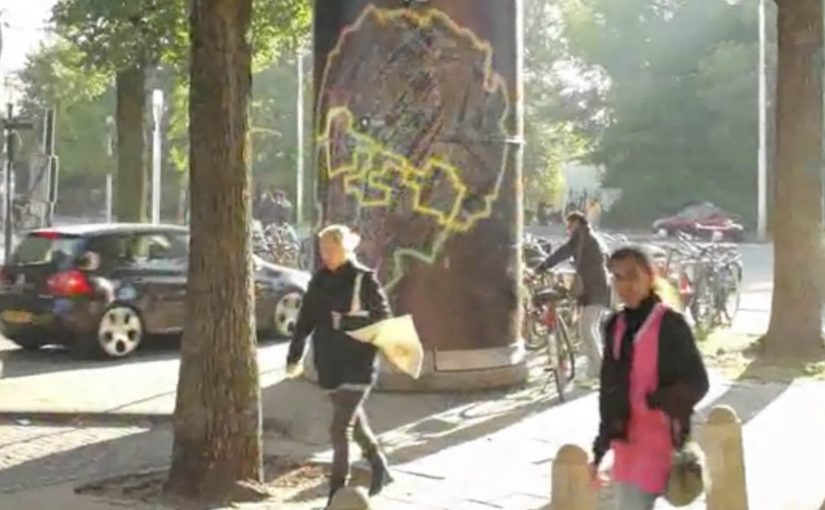
Nike Take Mokum: graffiti you paint by running

Boondoggle Amsterdam came up with a campaign for Nike that made running less serious. They distracted youngsters from their boring running schedules and challenged them to release their creativity on Amsterdam by using their feet as paint instead.

A Facebook app called “Take Mokum” (Amsterdam’s local nickname) was developed that allowed runners to make digital graffiti on the map of Amsterdam. All they had to do was actually run the route and upload their KMs with Nike+. In this context, Nike+ is simply the upload that validates the kilometres. The app would then paint the graffiti for them. These graffiti pieces could then be shared, and liked fanatically.

Running as a creative tool, not a discipline

The mechanism is beautifully simple: convert effort into expression. The runner designs a “tag” by choosing a route. Here, a “tag” is the graffiti-style signature you draw with your route. The city becomes the canvas. Nike+ becomes the proof that the route was actually run. Then the app visualises the path as graffiti, so the output feels like art rather than exercise data.

That flips the motivation model. Because the route becomes a visible mark, every kilometre contributes to something you can show, not just a number you log. You are not running to hit a number. You are running to create something worth showing. The real question is whether you can turn a fitness discipline into a culture-native act of self-expression.

In youth-facing, city-based campaigns, adoption often follows social signalling, not self-optimisation.

Why it lands with youngsters

This campaign taps into identity and visibility. Graffiti culture is about leaving a mark. Take Mokum lets people do that in a digital layer without vandalising anything. The “like” loop adds social reward. The route becomes content, not just a workout.

Extractable takeaway: If you want people to stick with effort, make the output look like identity and let the community reward it.

It also removes the seriousness that can make running feel like punishment. The challenge is playful. The accomplishment is shareable.

The intent: make Nike’s running promise felt, not claimed

The business intent is aligned with Nike’s broader mission to change running. Instead of telling young people that running is cool, the campaign makes running a means to do something else: create, compete for attention, and express style. The product story is embedded in the behaviour.

Behaviour-change work should treat data as validation and culture as the incentive.

The result, as described: young Amsterdam started running, and Nike’s mission to change running was actually experienced by youngsters.

What to steal from Take Mokum

  • Turn effort into an artefact. People stick with habits when the output feels worth keeping or sharing.
  • Let users design the challenge. The route is the creative input. That increases ownership.
  • Use data as validation, not as the headline. Nike+ proves the run. The graffiti is the reward.
  • Build a social loop. Sharing and liking are not add-ons. They are the motivation engine.
  • Match the culture. The campaign borrows from street expression rather than “fitness discipline”.

A few fast answers before you act

What is Nike Take Mokum?

It is a Facebook app that lets runners create digital graffiti on an Amsterdam map by running a route and uploading the kilometres through Nike+.

How does the app turn a run into graffiti?

The runner’s route becomes the “drawing”. After the Nike+ upload, the app visualises the path as a graffiti-like mark on the city map.

Why is this motivating compared to a normal running plan?

Because the reward is creative and social. You produce something you can share and get reactions to, not just a time and distance record.

What audience behaviour did this campaign aim to create?

To get young people running by making the activity feel playful, expressive, and socially visible, rather than structured and serious.

What is the key takeaway for behaviour-change campaigns?

Motivation improves when you convert effort into identity. Give people a way to express themselves, then let the community reinforce it.
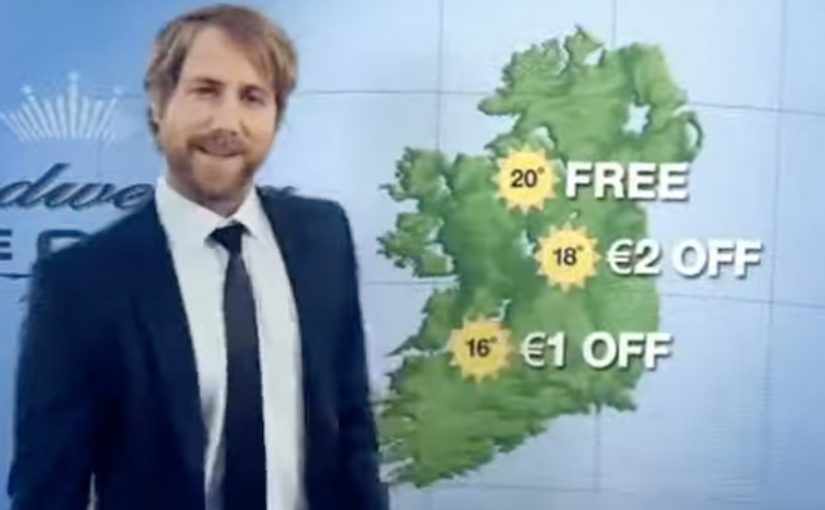
Budweiser: Ice Cold Index

Weather obsession turned into a price lever

Few cultural triggers are as universal as the weather. Budweiser used that everyday obsession to turn attention into action at the pub.

Irish people have always been fascinated by the weather, but their interest is set to reach new heights this summer with the launch of the Budweiser Ice Cold Index.

The Budweiser Ice Cold Index app is set to show you the local weather, then spit out redemption codes for free or discounted beer at nearby participating pubs. The higher the temperature, the less you will pay for your pint.

How the Ice Cold Index mechanic worked

The mechanism is simple. Combine three inputs into one immediate reward: location, temperature, and a redeemable code.

The app checks local weather. It then generates a redemption code tied to nearby participating pubs. Price sensitivity is built into the rule set. As temperature rises, the customer’s price drops. This is dynamic pricing in its simplest form: a discount rule that updates automatically based on a measurable condition.

That turns “checking the weather” into “moving into the selling space”.

The real question is how you turn a daily habit check into a measurable step toward purchase without it feeling like a random coupon drop.

Linking price to an external context signal beats arbitrary discounting, because the offer explains itself in one line.

In Irish on-trade activations, weather-linked rules can make a pub choice feel like a natural, talkable next step.

Why the offer feels timely, not forced

It lands because it connects to a real moment of intent. Warm weather increases thirst and increases pub footfall. The offer arrives at exactly the time the customer is already considering a drink.

Extractable takeaway: If you can anchor an incentive to a shared, observable condition, you reduce explanation friction and increase redemption because the context does the persuading.

It also feels fair and transparent. The rule is easy to understand. Hotter day equals cheaper pint. That clarity reduces skepticism and makes the incentive feel like a natural extension of the context.

The business intent behind linking price to temperature

The intent is to convert ambient interest into measurable behavior.

By tying discounts to local conditions, the brand creates a reason to choose a participating pub now, not later. It also encourages repeat checking and repeat visits, which is where loyalty accrues in practice.

This app literally moves people into the selling space, provides refreshment, and so it should gain some loyalty points with customers as well. Too bad it is only in Ireland.

Steal these moves from the Ice Cold Index

  • Attach the incentive to a context signal. Weather is a shared trigger that makes offers feel relevant.
  • Use a rule people can explain in one sentence. Clarity increases trust and redemption.
  • Move people into the selling space. The best mobile incentives reduce distance between intent and purchase.
  • Design for repeat behavior. If the offer updates with conditions, customers have a reason to come back.

A few fast answers before you act

What is the Budweiser Ice Cold Index?

A mobile app concept that shows local weather and generates redemption codes for discounted drinks at nearby participating pubs, with discounts increasing as temperature rises.

What was the core mechanism?

Dynamic pricing driven by weather conditions, delivered through location-aware redemption codes for nearby pubs.

Why does tying price to temperature work?

Because it aligns with real-world demand. When it is warmer, people are more likely to buy a cold drink, and the offer feels timely rather than random.

What business goal does this support?

Driving footfall to participating pubs, increasing redemption rates, and encouraging repeat engagement through an offer that changes with conditions.

What is the transferable takeaway?

Use a shared context trigger to make incentives feel natural, then deliver a simple, redeemable action that moves people into purchase.

Lenovo ThinkPad T420: Enjoy It Responsibly

Lenovo, one of the world’s largest laptop brands, developed a series of online viral videos for their then-flagship ThinkPad T420. Across the set, they try to highlight all the extra time one can gain when a laptop promises faster graphics performance, faster boot up, faster wireless connections, faster data transfer, and similar “speed” wins.

However only one of these videos caught my eye. Please enjoy it responsibly.

Speed as a story, not a spec sheet

The mechanism is a simple translation layer. Take performance claims that are usually buried in benchmarks, then turn them into a human currency. Time. The videos do not ask you to care about milliseconds. They ask what you would do if the waiting disappeared.

In global enterprise and prosumer computing categories, performance messaging lands best when it is framed as reclaimed time and reduced friction, not raw technical superiority.

This is the right way to market performance because people respond faster to friction removed than to technical superiority explained.

The real question is how to make speed feel useful before a buyer ever sees the benchmark.

Why it lands

Most performance ads fail because the benefit is abstract. “Faster” only matters when you can picture the moment it saves you. This approach works because it repeatedly converts speed into everyday relief, and then uses humor to make that relief memorable.

Extractable takeaway: If you need to sell performance, convert benchmarks into a repeatable human outcome, then dramatize that outcome with one clear scenario people can retell in a sentence.

Where Lenovo is aiming this set

Lenovo’s emerging marketing team developed the virals for use in Russia, India, Middle East, Eastern Europe, Turkey, South Africa, South East Asia, Hong Kong and Taiwan.

What performance marketers can steal from this

  • Translate tech into time. People buy saved minutes more readily than they buy “20% faster”.
  • Build a series around one promise. Repetition creates recall, especially in multi-market rollouts.
  • Use one standout film as the hook. The sharpest piece pulls attention, the rest does the persuasion work.
  • Keep the claim legible. One benefit per scene beats stacked feature lists.

A few fast answers before you act

What is Lenovo trying to communicate with these T420 virals?

Lenovo is trying to show that performance improvements translate into reclaimed time in daily work, such as faster start-up, faster connectivity, and smoother graphics.

Why use “time saved” instead of performance specs?

Time saved works better because it is universal. Specs require interpretation, but time savings are instantly understood and easier to remember.

What makes one viral stand out in a series?

One viral stands out when it gives the promise a single memorable scenario that people can retell without needing the rest of the campaign for context.

What is the risk of humor in enterprise product marketing?

The risk is that viewers remember the joke but forget the product truth. The humor has to sharpen the benefit, not bury it.

How can other marketers apply this without copying the creative style?

They can keep the same structure. Convert a technical claim into one visible human benefit, then build a simple scene that makes that benefit immediately clear.