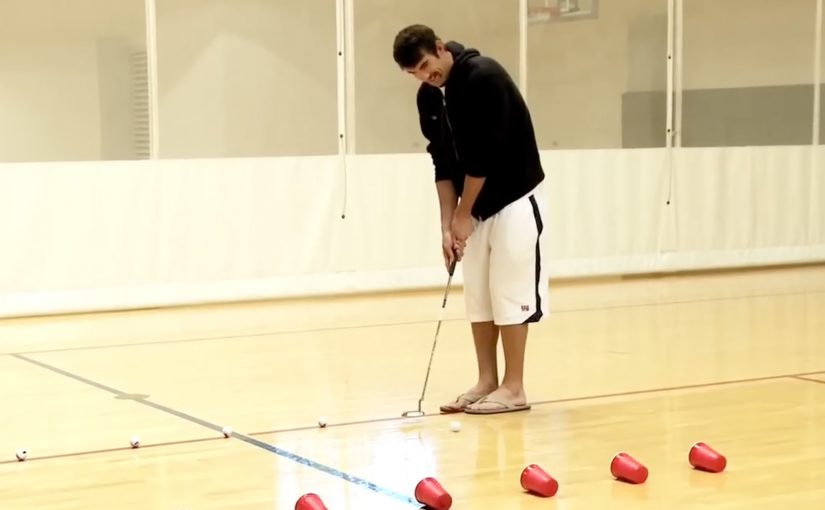
Fans vs athletes, turned into a social dare
The International Olympic Committee (IOC) is in the midst of “The Best of Us Challenge” where viewers are challenged to outdo their favorite athletes in wacky activities.
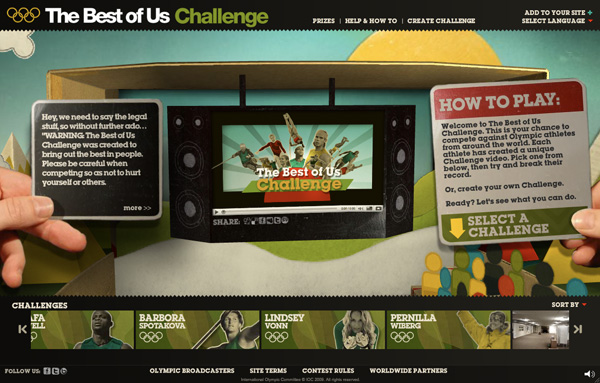
At the above web site (www.thebestofuschallenge.olympic.org) viewers are encouraged to submit videos in hopes of not only besting the athletes, but also winning signed merchandise or a trip to the Vancouver Winter Olympics.
This campaign reaches out via various social media touch points such as Facebook, Twitter and YouTube.
How the mechanic earns participation
The mechanism is a clean loop. A famous athlete sets a challenge. The viewer responds with their own attempt on video. The best entries win prizes, and every new submission becomes fresh content that recruits the next participant.
In global sports and entertainment marketing, this kind of challenge format works because it gives the viewer a role beyond watching. The audience becomes the content engine.
Why it lands: competition plus “I can do that” energy
It is wacky by design. That lowers the barrier to entry, makes the attempts shareable, and keeps the tone inclusive. You are not trying to be an Olympian. You are trying to beat an Olympian at something ridiculous.
Examples that make the format instantly legible
Here are some of the challenges you will see:
Michael Phelps – Speed Putting
Rafael Nadal – Tennis Ball Pick Up Challenge
What to steal if you are building participation, not just reach
- Make the “ask” performable. If people cannot picture themselves doing it, they will not submit.
- Use a credible instigator. Known talent gives the challenge immediate context and legitimacy.
- Reward the behaviour you want repeated. Prizes are less about value and more about giving submissions a reason.
- Design distribution into the format. Every entry is content that naturally travels through personal networks.
A few fast answers before you act
What is “The Best of Us Challenge” by the IOC?
It is a participation campaign where viewers try to outdo famous athletes in playful challenges by submitting their own videos for a chance to win prizes.
What is the core mechanism that drives growth?
Athletes set challenges, viewers submit attempts, and the submissions become shareable content that recruits more participants across social channels.
Why do challenge formats work so well for sports brands?
They give the viewer a role beyond watching. Participation creates identity and social proof, and each entry functions as distribution.
What makes a participation “ask” actually performable?
It must be easy to picture, easy to attempt, and easy to film. If the audience cannot imagine doing it, they will not submit.
What is the most transferable takeaway?
If you want participation, design a simple loop where the audience becomes the content engine, and reward the behaviour you want repeated.