
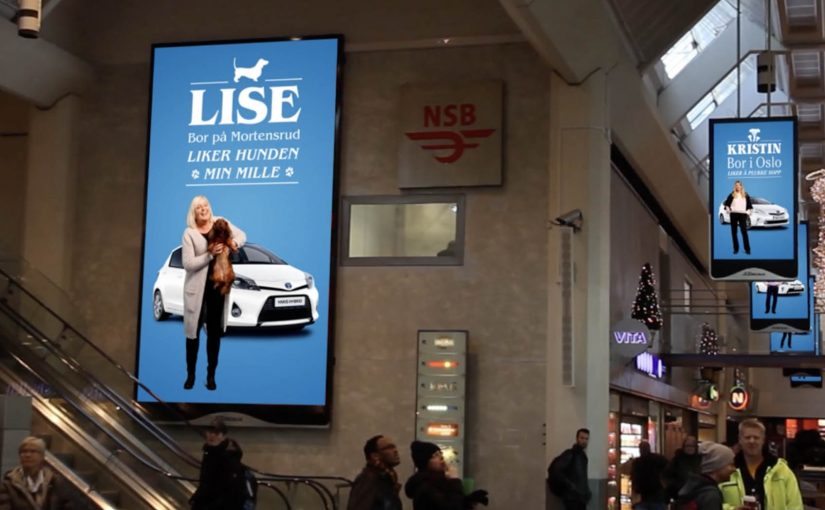
Toyota: Try My Hybrid

Toyota in Norway is doing really well on loyalty and customer satisfaction, but it is struggling to recruit new customers.

So instead of having salespeople persuading new buyers, Toyota lets satisfied Hybrid owners offer test drives to prospects. A web and mobile service makes it easy for owners. For no money. To let strangers, neighbours and friends, and friends of friends via Facebook test drive their Hybrid.

Turning owners into the dealership

The mechanic is simple and trust-led. That means the trust comes from the owner-host relationship rather than from Toyota’s sales script. Prospects find nearby Hybrid owners and request a test drive. Owners opt in, schedule, and host the drive. The conversation is the product, because it is grounded in lived experience rather than sales script.

In automotive marketing where trust is the bottleneck, peer-to-peer test drives can outperform sales-led persuasion.

Why it lands

It removes the two biggest barriers to a first drive. Social friction and credibility. The prospect gets a low-pressure introduction, and the owner gets to play the proud expert. That dynamic changes what the test drive feels like. It becomes a neighbourly recommendation, not a pitch. The social graph component also matters, because “friend of a friend” is often the sweet spot where curiosity meets safety.

Extractable takeaway: If your current customers are genuinely satisfied, build a structured way for them to host the first experience. Let trust carry the conversion, and let technology simply remove coordination friction.

What Toyota is really solving

This is an acquisition problem disguised as a community service. Toyota already has strong satisfaction. The real question is how that satisfaction becomes low-friction acquisition before a prospect ever enters a showroom. Toyota is right to treat owner advocacy as the front end of acquisition, not as a soft loyalty add-on. The challenge is that satisfaction does not automatically translate into new buyers at scale. This service turns satisfaction into a repeatable, measurable funnel step. Discovery, booking, drive, and then consideration. Without needing more showroom persuasion.

What brands can steal from Try My Hybrid

  • Make the first experience owner-led. Use real users as the proof layer.
  • Design for “near me”. Proximity is the simplest trust signal after reputation.
  • Use social adjacency carefully. Friends of friends can unlock trial without feeling like a cold lead.
  • Keep incentives optional. Pride and helpfulness can outperform cash when satisfaction is real.
  • Instrument the pipeline. Treat hosted trials as a trackable acquisition channel, not PR.

A few fast answers before you act

What is “Try My Hybrid” in one sentence?

A web and mobile service that lets prospective buyers book test drives with real Toyota Hybrid owners instead of salespeople.

Why does the owner-led test drive feel more persuasive?

Because it is grounded in lived experience. The host can answer questions with real usage context, which increases credibility and reduces sales resistance.

What makes the social layer important?

It helps prospects find a trustworthy host through proximity and social adjacency, which lowers hesitation versus a fully anonymous test drive.

What is the biggest operational risk?

Reliability and safety. If scheduling fails, hosts no-show, or the process feels risky, trust breaks and the program collapses.

How can a non-automotive brand apply the same model?

Turn your happiest customers into opt-in hosts for the first experience, then build a lightweight system to match prospects to hosts and remove coordination friction.
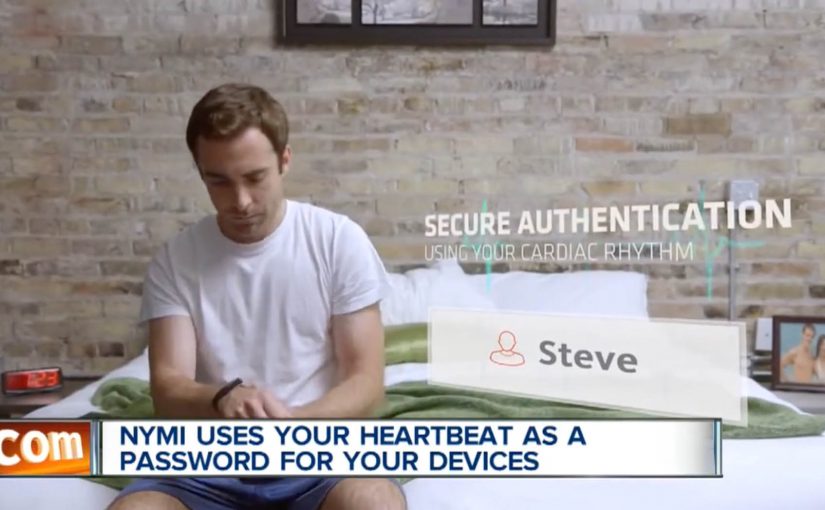
Replace your passwords with your heartbeat

Imagine never having to type a password, and never needing to pull out your credit card to make a payment ever again. A biometrics startup called Bionym is positioning exactly that future with Nymi, a sleek wristband that uses your heartbeat to authenticate your identity.

The promise is simple. If your identity can be verified passively, you can unlock everyday things without friction. Bionym presents Nymi as a way to unlock your favourite devices such as your computer, smartphone, and even your car. If this kind of wearable is adopted at scale, it becomes a first step toward replacing keys and passwords with something you already carry on you.

What is actually being launched

Nymi is positioned as a consumer-ready wristband with a clear job. Authenticate you, then unlock the devices and services you use most. The interesting part is not the form factor. It is the shift from remembering secrets to proving identity continuously.

In this context, “authenticate” means proving your identity without typing a secret. That shift matters because it removes repeated login interruptions from the moments you are trying to get something done.

In global consumer and enterprise environments where people move between devices, services, and locations all day, authentication friction becomes a quiet tax on usage.

Why passive identity is so tempting

Passwords and keys interrupt you at exactly the point you want momentum. A wearable that verifies you in the background reframes identity from an event (login) to a state (you are present), which makes everyday unlocks feel like flow instead of checkpoints.

Extractable takeaway: When identity proof becomes a background signal, you remove “stop and sign in” moments that quietly kill adoption.

The ecosystem requirement that decides whether it matters

A wearable authentication layer only becomes valuable when it works across many endpoints. That means third-party developers and partners need to build a thriving ecosystem of apps and devices that can use Nymi for access and verification.

The real question is whether “heartbeat as login” can become a shared standard across devices and services, because without broad integrations it stays a niche accessory.

Pre-order details

You can pre-order the Nymi for $79, but it is not going into production until later this year. Between now and launch, the real work is adoption. Getting integrations, partners, and use cases that make “heartbeat as login” feel normal.

Moves worth copying for frictionless login

  • Make the promise tangible. Give the product one clear job (unlock) instead of selling biometrics as a vague “future”.
  • Design for passive confirmation. Reduce prompts, but make the authenticated state obvious enough that people trust it.
  • Win integrations before awareness. Treat partners and endpoints as the product, because a single-device unlock story does not change behaviour.

A few fast answers before you act

What is Nymi?

A wristband from biometrics startup Bionym that uses your heartbeat to authenticate your identity and unlock devices.

What kinds of things can it unlock?

Bionym positions it as a way to unlock devices such as computers, smartphones, and cars, reducing the need for passwords and keys.

What has to happen for this to scale?

A strong third-party ecosystem of apps and device integrations, so the wristband works across many real-world use cases.

Is heartbeat authentication inherently safer than passwords?

It can reduce risks tied to memorized secrets, like reuse across services. Security still depends on how the wristband, the endpoints, and the fallback flows are implemented.

What should you look for before betting on a wearable login?

Look for real integrations with the devices and services you actually use, because the ecosystem decides whether this becomes a habit or a gimmick.

Super Bowl 2014 Ads

Super Bowl Sunday is the mecca of television advertising year after year. Advertisers on this day have a golden opportunity to create valuable brand buzz and recognition through astronomically priced 30 second television spots. By brand buzz, I mean people repeating your brand name or distinctive cue unprompted in the hours and days after the game.

After watching over 60 ads that use both time-tested and unconventional strategies to attract attention, I have come up with my most entertaining list.

I start with one that immediately sets the tone for why Super Bowl ads matter. Big emotion. High memorability. Then I round it out with a mix of humour, characters, and simple ideas executed with confidence.

How I picked these ten

I looked for spots that make one clear choice, emotion, humour, or a character you can describe in a sentence, then execute it cleanly enough that you remember the brand, not just the joke.

In global consumer brands and agencies, Super Bowl work is a stress test for whether a brand can earn attention and stay memorable in a single crowded media moment.

Why these spots stick

When a spot commits to one simple idea and pays it off with a clear emotional or comedic beat, it becomes easy to retell, and retellability is what turns a 30 second moment into memorability.

Extractable takeaway: If people cannot retell your ad in one sentence, they will not carry your brand name with it.

The real question is which parts of a 30 second story people still remember when the game is over and the next morning is crowded with other brands.

I lean toward ads that trade clever complexity for a single, confident idea that stays attached to the brand at the moment you remember.

Budweiser: Puppy Love


Volkswagen: Wings


Dannon Oikos Greek Yogurt: The Spill


Bud Light: Ian Up For Whatever


Heinz: If you are happy


Kia K900: The Truth


Hyundai Genesis: Dad’s Sixth Sense


Duracell: Trust Your Power


Doritos: Time Machine


M&M’S: Delivery

What to borrow for your next brief

  • Choose one main beat. Pick emotion, humour, or character first, then let everything else serve that choice.
  • Make the brand part of the payoff. Ensure the remembered moment still carries the brand name or distinctive cue.
  • Keep it retellable. If the premise cannot be repeated in one sentence, it will not travel beyond game night.
  • Use characters as memory hooks. A simple, consistent character or device can do more work than extra plot.
  • Execute with confidence. Simple ideas win when they are committed to, not over-explained.

A few fast answers before you act

What is this post?

A curated list of my most entertaining Super Bowl 2014 ads, selected after watching over 60 spots.

How many ads are on the list?

Ten.

Which brands are included?

Budweiser, Volkswagen, Dannon Oikos, Bud Light, Heinz, Kia, Hyundai, Duracell, Doritos, and M&M’S.

How should I use this list?

As a fast reference for what stands out on the biggest advertising day of the year. Then use it to compare how different brands earn attention through emotion, humour, and memorable ideas.