
Jung von Matt: Lorem Ipsum Recruitment

Jung von Matt: Lorem Ipsum Recruitment

Art Directors in agencies use Lorem Ipsum (dummy text) as a placeholder when creating layouts. A de facto place to generate that dummy text is Lipsum.com, described as drawing tens of thousands of creatives from around the world each day.

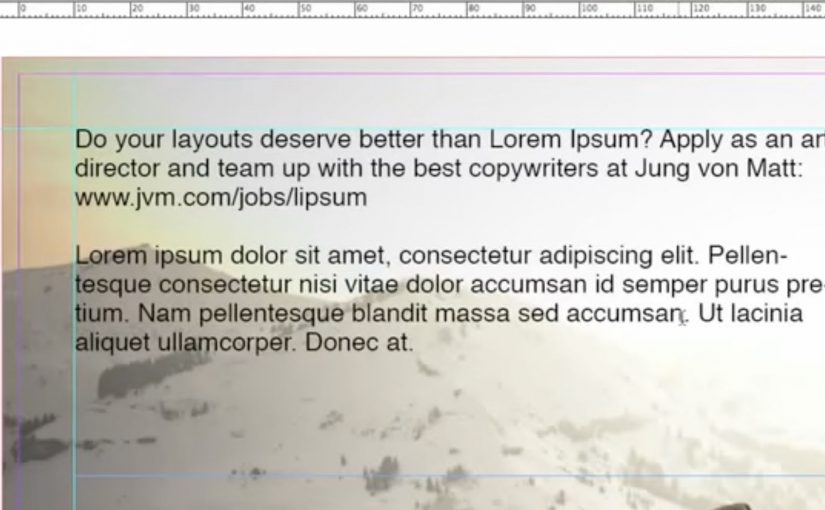
So for one week in January, Jung von Matt slipped a recruitment message into the flow. When anyone copy and pasted Lorem Ipsum from Lipsum.com into their layouts, a Jung von Matt recruitment line came along with the dummy text.

Recruitment that hides inside the tool, not the feed

The mechanism is a Trojan insertion into a daily workflow. Here, “Trojan insertion” means placing a message inside a routine working asset so it gets discovered during real task flow rather than through paid media. Instead of buying attention where creatives scroll, the message shows up exactly where creatives build. Inside the placeholder text that sits in the middle of real work. That works because the recruitment line appears when designers are already focused on layout work, which makes the interruption feel relevant rather than random.

In agency talent markets, the most efficient recruitment messages appear inside the tools and rituals creatives use every day.

Why it lands

This idea earns its attention rather than demanding it. The surprise is subtle. You spot it only if you are doing the job, which makes the message feel targeted and insider. It also travels naturally. Layouts get shared for feedback, reviewed, and iterated, so the line can surface in multiple contexts without additional media. This is smarter than a generic job ad because it uses working context as targeting.

Extractable takeaway: If you want to reach specialists, place the recruitment message inside a high-frequency workflow artifact, so the moment of discovery feels personal and relevant.

The real question is how to place a hiring message inside a creative ritual without making the brand feel intrusive.

What Jung von Matt is really optimizing for

The obvious goal is applications. The deeper goal is employer brand positioning. The agency is signalling that it understands how creatives work, and that it will recruit with the same craft it expects in the job.

What recruitment teams can steal from this

  • Target the workflow, not the platform. Start from where your talent produces, not where they consume.
  • Use a low-friction carrier. Dummy text is copied at scale, which makes distribution effortless.
  • Make the message context-native. A recruitment line should look like it belongs in the artifact it hijacks.
  • Design for second-hand discovery. Make it likely to be noticed in reviews, sharing, or handoffs.
  • Keep it respectful. The best hacks feel clever, not invasive.

Previously Jung von Matt have recruited creatives via the Trojan Recruitment campaign.


A few fast answers before you act

What is Lorem Ipsum Recruitment in one sentence?

It is a recruitment tactic where a Jung von Matt hiring message was embedded into Lorem Ipsum text so it appeared when creatives copied dummy text into layouts.

Why is Lipsum.com a smart place to do this?

Because dummy text generation is a repeated, habitual step in layout work, so the message shows up at high frequency in a relevant context.

What makes this more effective than a normal job ad?

It reaches the right audience while they are actively designing, and the discovery feels targeted rather than broadcast.

What is the main risk?

Trust. If the audience experiences it as tampering rather than wit, the stunt can harm employer brand instead of helping it.

What should you measure if you run a similar idea?

Qualified applications, referral quality, portfolio traffic, and whether employer brand perception improves among the specific roles you are targeting.

Bradesco Seguros: The Fake iPad Ad

Bradesco Seguros: The Fake iPad Ad

A fake ad that behaves like a real crash

Bradesco Seguros created a cheeky ad in the iPad version of Quatro Rodas, a Brazilian car magazine. When readers swipe the “page,” the car in the ad follows the direction of the gesture and crashes into the side of the screen, unveiling the message: “Unexpected events happen without warning. Make an insurance plan.”

The mechanic: one native gesture, one irreversible consequence

The entire idea is built on the most common tablet behavior: swiping to move on. Instead of letting the user escape the ad, the ad “obeys” the swipe and turns it into the cause of an accident. The crash is the reveal. It is also the proof that the format is touch-native, not a print layout copied onto glass. Here, touch-native means the idea only works because the swipe directly causes the outcome on the screen.

In touch-first publishing, a single gesture-driven interaction can turn an ad into a micro-experience that earns attention the way content does.

Why it lands

It creates a moment of surprise without requiring explanation. The user thinks they are performing a routine action, then the ad responds in a way that feels physical and slightly alarming. Because the message is revealed by the crash itself, the brand does not need to overclaim. The interaction makes the point. The real question is whether the gesture itself makes the risk message feel immediate, inevitable, and brand-relevant. This is a strong use of tablet media because the interaction and the message are inseparable.

Extractable takeaway: If your message is about risk or unpredictability, make the audience cause a small, safe “unexpected event” through a familiar action, then reveal the message as the consequence.

What touch-first ad teams should steal

  • Exploit a default gesture. Build on what people already do, not what you wish they would do.
  • Make the payoff immediate. The interaction must resolve within a second or two, or it feels like a gimmick.
  • Let the mechanic carry the copy. If the interaction proves the point, the line can stay simple and memorable.
  • Keep it brand-safe. Use surprise, not fear. The crash is symbolic, not distressing.

A few fast answers before you act

What is Bradesco Seguros’ “Fake Ad” in Quatro Rodas?

It is an interactive iPad magazine ad where a swiping gesture makes the car in the ad move and crash into the screen, revealing the insurance message about unexpected events.

What is the core creative mechanic?

Gesture mirroring. The ad responds to the swipe like content would, then turns that response into a surprising consequence that delivers the message.

Why is this better than a standard banner or full-page ad?

It uses the tablet’s native behavior, so the attention is earned through interaction, not demanded through interruption.

What is the key lesson for touch-first advertising?

Design around one familiar gesture and make the output feel inevitable and meaningful, not decorative.

What is the most common way this approach fails?

When the interaction is slow, unclear, or unrelated to the message. The mechanic must be the argument.

Dungville: Klara the Cow Betting Game

Dungville: Klara the Cow Betting Game

Natwerk was asked to create something playful for the online-minded visitors of The Next Web Conference 2012. So they built an analogue prediction game featuring a real cow, then layered it with an online extension.

Klara, a grid, and a one-day “village”

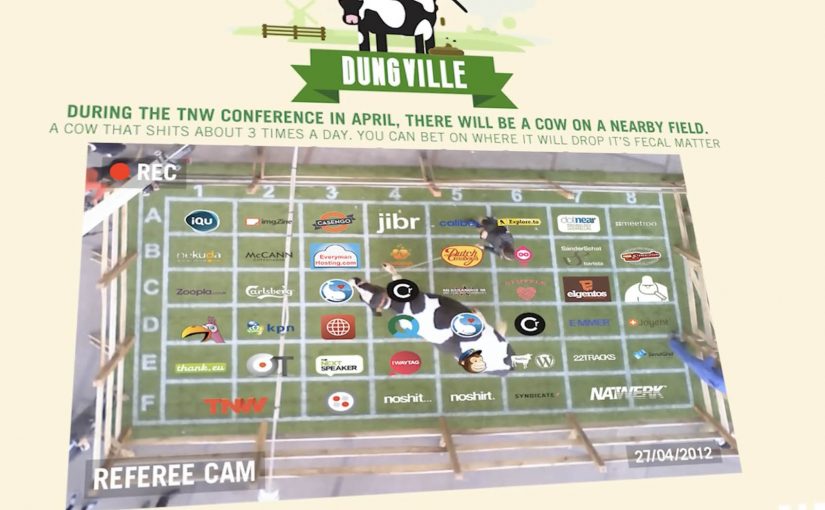
The installation was framed as a tiny pop-up “village” at the conference venue. One real farmer. One real cow named Klara. A field laid out as a grid. Visitors could place bets on where she would drop her dung.

Mechanism: a physical event drives a digital game

As shown in the case film, Klara was expected to do her business several times a day, and the audience wagered on where it would happen. The web layer turns that unpredictability into a simple loop. Pick squares. Wait. Validate. Win or lose.

That mechanism works because one visible but unresolved physical outcome gives everyone the same reason to watch, talk, and check back.

In event marketing, the strongest activations turn a shared physical moment into a lightweight digital ritual people can join and talk about instantly.

Why it lands

The idea is memorable because it is absurdly literal. A real-world randomizer. A clear grid. A clear outcome. It also fits the conference crowd. People who live online love mechanics that are easy to explain, easy to screenshot, and easy to debate in real time.

Extractable takeaway: If you can attach your digital interaction to an offline moment that nobody can fully predict, you get tension for free, and tension is what keeps people checking back.

What this kind of activation is good for

The real question is whether the game gives people a simple reason to keep returning to the shared moment.

This is not about deep persuasion. It is about creating a shared story at the venue and giving the event a “small legend” people repeat after they leave. It works best when your goal is attention, conversation, and community participation rather than detailed product education.

Steal the event-game pattern

  • Use a single, visible game board. A grid makes rules self-explanatory and outcomes easy to verify.
  • Keep the loop simple. Pick. Wait. Result. Repeat. Complexity kills participation at events.
  • Make the offline moment the engine. When the physical world provides the variability, the digital layer can stay minimal.
  • Design for group talk. The best event games create debate and banter, not solo play.
  • Be deliberate about tone. Toilet-humour mechanics are polarising. If you use them, commit fully and keep it light rather than crude.

A few fast answers before you act

What is Dungville in one sentence?

It is a conference activation where a real cow on a gridded field powers a web game, letting visitors predict where she will drop dung.

Why does a real-world “random” trigger work so well?

Because it creates genuine uncertainty. People keep watching and checking because nobody can fully control the outcome.

What makes this an “online extension” rather than just a stunt?

The web layer turns the physical moment into a repeatable interaction loop, giving people a way to participate, compare picks, and track results.

What is the biggest execution risk?

Drop-off due to waiting. If results take too long, interest fades. The format needs clear timing and frequent enough outcomes to sustain attention.

What should you measure for a similar event game?

Participation rate, repeat participation, time-on-experience, social mentions during the event window, and whether attendees recall the activation as part of the event story.