
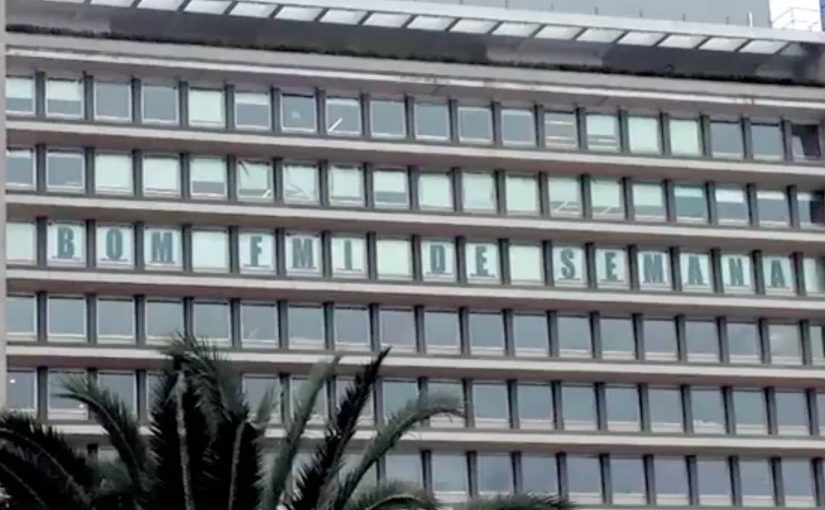
TBWA Lisbon: Windows become Twitter billboard

TBWA was the last agency to move to Lisbon’s advertising district. With their top competitors already there, they decided to showcase their creativity by turning 19 windows of their office into a 36m long Twitter billboard.

The stunt is simple in concept and bold in execution. The office becomes the medium. Instead of hiding behind a reception desk and a logo, the agency uses its own facade as a live publishing surface for the public street.

Turning an address into a live channel

The mechanism is real-time social content made physical. Tweets appear across the windows, transforming an office building into a public conversation layer. It is not “social amplification” in the usual sense. It is a direct translation from a digital feed into a street-level display.

In dense urban environments, public-facing digital surfaces work best when they make participation visible, immediate, and shared by everyone on the street.

The real question is whether your brand can turn participation into a public signal, not just another message people scroll past.

The video does not explain exactly how people were encouraged to send in their tweets, but it does show the breadth of what people shared. Tweets touch politics, taxes, Europe, Merkel’s visit, and more. That range matters because it signals that the billboard is not a branded script. It behaves like a live civic wall, meaning an open public message board where anyone can add a line and everyone on the street sees it.

Why it lands in an ad district full of competitors

When agencies cluster, sameness is the enemy. This activation works because it creates a visible signature at the point of competition. People do not have to be invited inside to experience TBWA. The building itself is performing in public, and the audience can participate without crossing a threshold.

Extractable takeaway: In a competitive cluster, your best differentiator is a street-level interface that makes participation visible to everyone nearby.

It also carries a little risk. Real-time public messages can be messy. That tension is part of the attention engine. It feels alive because it is not perfectly controlled.

The intent: differentiate through public participation

The business intent is positioning. TBWA is signalling modernity, openness, and confidence in real-time ideas. The agency is also using the street as a distribution channel to generate talk, foot traffic, and press interest.

A live, participatory facade is a stronger differentiator here than another logo on glass, because people can experience the idea without being invited in.

And it worked. In the end, all the window tweeting created quite a stir in the local media.

Practical moves from the Twitter window billboard

  • Use your own real estate. If you have a facade, treat it as media, not architecture.
  • Make digital physical. The jump from screen to street creates instant novelty.
  • Design for participation. People engage more when they can see themselves appear in public space.
  • Accept a little mess. Real-time content feels credible because it is not overly polished.
  • Build for earned media. A visible public installation gives journalists something to film, not just to quote.

A few fast answers before you act

What is the TBWA Lisbon Twitter billboard?

It is a facade activation that turned 19 office windows into a 36m long display showing tweets in public, effectively making the building a live billboard.

Why does turning tweets into a window display work?

Because it makes online conversation visible in a shared physical space, which creates surprise, participation, and social proof.

How did it create attention beyond the street?

The visibility and real-time nature made it easy for people and local media to capture and share, turning a building into a story.

Is this more about branding or engagement?

Both. The engagement mechanic is participation, but the branding outcome is differentiation and positioning in a competitive district.

What is the key takeaway for agencies and brands?

If you want to stand out locally, build a public interface that lets people contribute and be seen. It creates talk faster than self-promotion.
Toronto Silent Film Fest: Instagram trailers

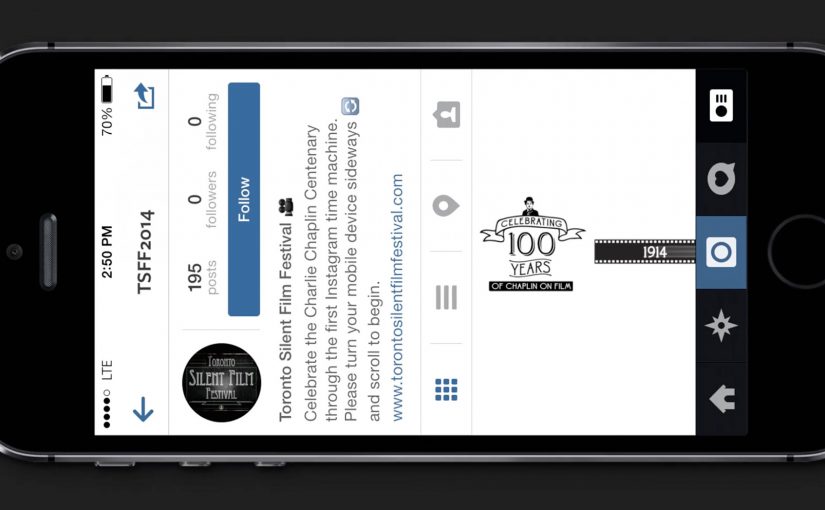
You open Instagram, land on a feed of black-and-white stills, and start scrolling fast. Suddenly the images “move” like a flipbook. It feels like a tiny silent-movie trailer hiding inside a platform that is supposed to be static photos.

The month before, Fox used Vine to mash up a Wolverine trailer and stir hype. Now the Toronto Silent Film Festival borrows the same instinct, then applies it to Instagram. It promotes the event with what it bills as a first-of-its-kind set of Instagram trailers that only really work on a smartphone.

An Instagram trailer, in this format, is a sequence of consecutive still frames posted as individual images. When you scroll rapidly, your thumb becomes the playback control and the feed becomes the projector.

In niche cultural events marketing, the fastest way to earn attention on a small budget is to turn a platform’s native behaviour into the medium.

The trick lands because the mechanic matches the subject. Silent films are built on frame-by-frame illusion. Instagram is built on frame-by-frame browsing. Put the two together and the experience feels clever, not forced.

Why this works better than a normal trailer drop

A standard trailer asks for time and attention up front. This asks for curiosity first. You discover the motion by accident, then you replay it because you want to confirm what you just saw. That discovery loop is the real distribution engine. For a social-first launch, this is a better opener than dropping a normal trailer because it earns replays before it asks for commitment. By “discovery loop” I mean the accidental motion, the immediate replay to confirm it, and the urge to show someone else.

Extractable takeaway: If you can turn a native gesture into a repeatable “did you see that?” moment, you can earn attention and sharing without asking for a click.

What the campaign is really doing

It is less about explaining the festival and more about attracting the right kind of audience. If you enjoy the hack, you are probably the kind of person who will enjoy the program. The format acts like a filter for taste.

The real question is whether your launch gives people a simple action that doubles as playback and sharing.

This work is credited to Cossette, and it later picked up industry recognition for using mobile behaviour as the creative device, which fits the strategy. Make the idea itself feel like a silent-film magic trick.

What to steal for your own social-first launch

  • Exploit a native gesture. Scrolling is a universal habit. Build around it.
  • Make discovery the hook. The best “first play” happens when people think they found something.
  • Match mechanic to meaning. Frame-by-frame browsing is a perfect metaphor for silent-film motion.
  • Keep the explanation optional. If the concept needs a paragraph to understand, it will not spread.

A few fast answers before you act

How do Instagram trailers work in this campaign?

The trailer is split into many still frames and posted as consecutive images. On a phone, you scroll quickly through the feed to simulate motion like a flipbook.

Why does this feel “right” for a silent film festival?

Silent cinema is fundamentally frame-based illusion. This mechanic recreates that feeling using modern thumb-scrolling, so the medium reinforces the message.

What is the main advantage over posting a normal video?

Discovery. People do not just watch. They figure it out, replay it, and show someone else how it works.

What kind of brands or events can use this pattern?

Anything with a strong visual identity and a story that benefits from “reveal”. Especially cultural events, launches, and limited-time programs where curiosity drives consideration.

What is the biggest risk with platform hacks?

If the experience only works in a narrow usage mode, many people will miss it. The mechanic needs to be obvious enough that first-time viewers understand what to do within seconds.

Maes: A Barrel for Every Maes

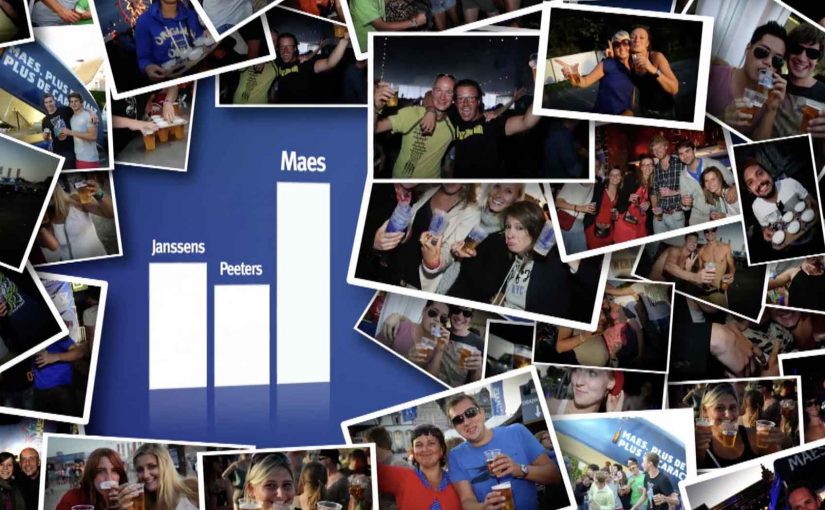
Maes is described as Belgium’s second most popular beer, and “Maes” is also described as the country’s third most common surname. With the market leader said to be outselling Maes by roughly 4 to 1, the brand looks for leverage where it can actually own something. The name.

So Maes decides to rally the Maes families of Belgium by giving them a free barrel of beer, and turning that offer into a reason to gather, invite, and celebrate publicly.

The mechanism: a surname offer with a social booking loop

Eligible families sign up through a custom Facebook app to claim the barrel. The same flow lets them book a pub for a chosen date and invite friends, so the reward is designed to be shared rather than quietly consumed.

In Belgian FMCG marketing, turning a broad brand problem into a narrow community identity can create disproportionate participation and talk value.

Why this lands

This works because it converts a discount into status. You are not “getting a deal.” You are being singled out because of who you are, and the campaign immediately pushes you into a social moment where other people experience the brand alongside you. The pub booking is the smart part, because it transforms redemption into an event.

Extractable takeaway: If you need advocacy, attach the reward to an identity trigger and force the payoff into a shared setting, so the benefit becomes a gathering people naturally document and retell.

What the brand is really doing

The real question is how a challenger beer brand turns a shared surname into a social growth loop that scales beyond the free barrel itself.

Maes is using a surname as a distribution engine. The name creates a defined audience, the free barrel creates urgency, and the “book a pub and invite friends” flow turns each participant into a micro-host who does recruitment for you.

What to steal from the Maes mechanic

  • Exploit a unique ownership angle. If you can credibly “own” a name, place, ritual, or identifier, build the campaign around that.
  • Design the share into the redemption. Booking a pub and inviting friends is a built-in amplification mechanic.
  • Reward the group, not just the individual. Group rewards create social proof and higher perceived value.
  • Keep eligibility simple. One clear rule beats a complicated promo code maze.

A few fast answers before you act

What is “A barrel for every Maes”?

It’s a promotion that offers a free barrel of Maes beer to people with the surname “Maes,” turning surname identity into a social recruitment mechanic.

How do people redeem the offer?

By signing up through a custom Facebook app that also lets them book a pub date and invite friends.

Why is the pub booking part important?

It converts redemption into an event, which increases sharing, attendance, and the number of people who experience the brand in a social setting.

What problem is this trying to solve?

It’s designed to build advocacy and attention for a challenger brand by mobilising a defined community rather than competing only on mass advertising.

What is the key risk with identity-based offers?

If eligibility or verification feels unfair or confusing, it can backfire. The rule has to be clear, and the experience needs to feel welcoming rather than exclusionary.