
WhatsApp Taxi

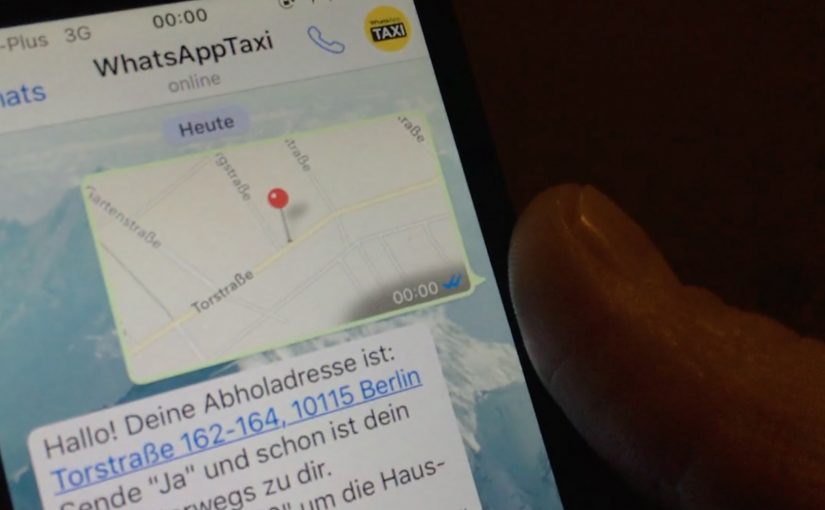
You need a taxi. Instead of calling or using a dedicated app, you open WhatsApp, share your location, and place the order by message. Taxi Deutschland positions “WhatsApp Taxi” as a simple way to request a cab in major German cities using the behavior people already know. Messaging.

Why this shows up now

After years of public sharing and transparency on social media, people gravitate toward more intimate, private, and even anonymous ways to communicate. That shift boosts the popularity of messaging apps and ephemeral messaging. Chat apps become hubs for social networks, games, e-commerce, and more.

The service. Taxi ordering by location message

Taxi Deutschland launches a new service called “WhatsApp Taxi” that allows users in major German cities to order a taxi by simply sharing their location via a WhatsApp message. The interaction is reduced to one core input. Your location.

The pattern. Messaging becomes an interface

Just last week I wrote about how KLM was starting to use Facebook Messenger for customer service related queries and tasks. WhatsApp Taxi sits in the same movement. Utility shifts into the messaging layer, which means the chat app becomes the place where the service starts, is confirmed, and is updated. The chat thread becomes the service surface.

In service categories where the audience already coordinates through chat, the smarter move is often to reduce entry friction rather than build another interface.

Why this lands for service adoption

This is a stronger service design move than another branded utility app because one familiar message and one high-confidence input make the service easier to try, which is why the interaction feels lighter and more repeatable.

Extractable takeaway: When the job to be done can be triggered with one trusted input inside a familiar chat flow, messaging can outperform a dedicated interface on adoption because it removes setup and learning cost.

The real question is whether your service needs a dedicated interface at all when messaging can already handle the request, confirmation, and follow-up. For Taxi Deutschland, the business intent is to reduce ordering friction and capture demand inside an existing behavior instead of forcing a new app habit.

What service brands can lift from WhatsApp Taxi

  • Ship in the behaviour people already have: If your audience already lives in messaging, put the service where the habit already exists.
  • Reduce the request to one high-confidence input: Location-first is a clean pattern when the service is fundamentally “come to me”.
  • Make chat the interface: Treat the thread as the order surface. Request, confirmation, updates, and support stay in one place.
  • Keep the interaction minimal: If one message can start the service, adoption is easier than “install app, register, learn UI”.
  • Design for repeat use: The same simple flow should work the second time without needing new learning or setup.

A few fast answers before you act

What is WhatsApp Taxi?

A Taxi Deutschland service that lets users order a taxi via WhatsApp by sharing their location in a message.

Where does it work?

Taxi Deutschland positions the service for use in major German cities.

What is the core user action?

Send your location via WhatsApp message to initiate the taxi order.

Why is this a marketing and product signal?

It shows how messaging apps evolve from communication tools into utility layers where services can be initiated and managed.

What is the transferable lesson for brands?

If your service can be reduced to a small set of high-confidence inputs, messaging can become a low-friction interface that people already understand.
KLM Messenger: Travel Updates in Chat

Facebook wants to transform their Messenger platform into an all-encompassing utility, where people will be able to conduct virtually any interaction, from buying products to paying bills to various other customer service related queries and tasks.

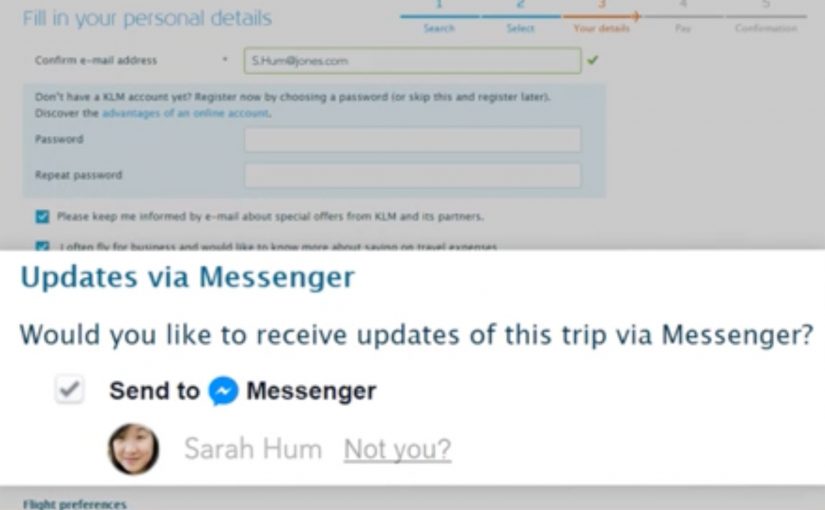
So together with KLM they have launched a new Messenger service. Travellers who book their flight on klm.com can now choose to receive booking confirmation, check-in notification, boarding pass and flight status updates all via Facebook Messenger.

For further questions they can also contact KLM directly through the Messenger, 24/7.

Why this is a meaningful shift in airline service

In service-heavy journeys like air travel, messaging becomes valuable when it carries the essential trip artifacts and keeps help in the same thread. This takes airline communication out of the inbox and into a channel people already use all day. The value is not novelty. The value is reduced friction, because the boarding pass and status updates stay findable inside one conversation.

Extractable takeaway: Move high-frequency journey updates into one persistent thread customers already use, so the essential artifacts stay retrievable at the moment of need.

  • Proactive updates. Confirmation, check-in prompts, and status changes arrive automatically.
  • One thread per trip. The travel journey stays readable in a single conversation.
  • Service in context. Questions can be asked and answered where the information already lives.

Messenger as a utility layer

If Messenger becomes a place where you can transact, track, and solve problems, then brands that show up with real utility earn repeat usage. Here, “utility layer” means the messaging channel carries the task flow and the core artifacts, not just promotional messages. In this case, KLM turns Messenger into a travel companion, not a marketing channel.

The real question is whether your messaging channel can hold the full journey without pushing customers back into apps, email, and account logins.

The more predictable the updates, the more likely customers are to opt in, and the more valuable the channel becomes for both sides.

What to take from Messenger-first travel updates

  1. Meet customers where they already are. Messaging reduces the cognitive load of managing travel.
  2. Design for opt-in value. People accept notifications when they are clearly helpful and timely.
  3. Keep the thread “service-first”. Utility collapses if the channel gets flooded with promotion.
  4. Support matters. Proactive notifications plus 24/7 human help (or well-designed escalation) is what makes it credible.

A few fast answers before you act

What did KLM launch on Facebook Messenger?

A Messenger service that delivers booking confirmation, check-in notifications, boarding passes, and flight status updates for travellers who book on klm.com, with the option to contact KLM through Messenger 24/7.

Why use Messenger for travel updates?

Because it reduces friction. Customers receive timely information in a channel they already use, without searching email or opening an airline app repeatedly.

Is this a chatbot initiative or customer service?

At its core it is customer service and trip management delivered through messaging. The key value is proactive updates plus the ability to ask questions in the same thread.

What is the main CX benefit?

One continuous conversation that contains the essential trip artifacts. Confirmation, reminders, boarding pass, and live updates in a single place.

What is the transferable lesson for other brands?

If you can deliver high-frequency, high-value updates through a messaging channel with clear opt-in, you can increase satisfaction by making the journey easier to manage.

Netflix: The Friendly Pre-Roll Campaign

How do you make a sitcom like Friends, which went off the air 12 years ago, a year before YouTube even existed, seem relevant to online video viewers today.

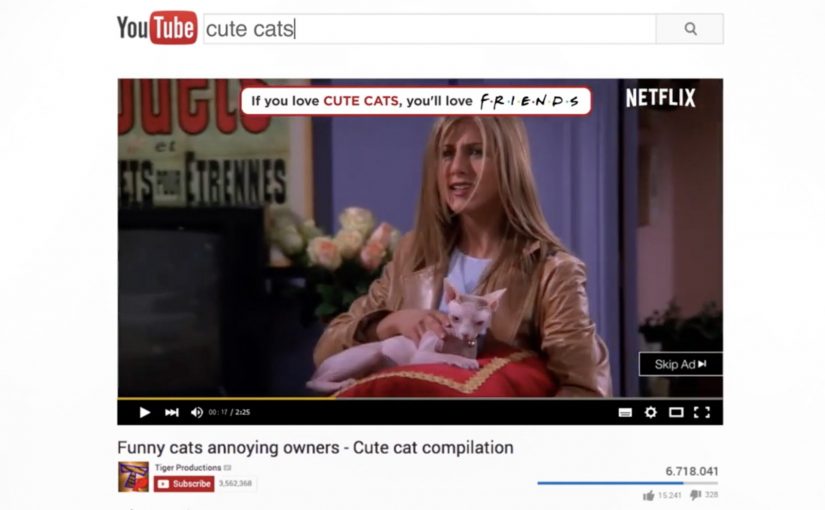
To promote the ability to stream all 10 seasons, Netflix launched a nostalgic pre-roll campaign built on a simple insight: no matter what you search for or watch, there is almost always a Friends moment that relates to it. The execution was described as tagging thousands of videos so that the pre-roll you see matches the context of what you are about to watch.

Contextual nostalgia, delivered as a punchline

The mechanism is a library-plus-matching system. Take a deep archive of instantly recognizable scenes. Build a mapping between common viewing contexts and a specific Friends clip that “fits”. Then serve those clips as short pre-rolls in front of the videos people already watch, so the relevance lands before the viewer has time to skip.

In subscription streaming marketing, making older catalog content feel culturally current often depends on matching the show to what people already care about in the moment.

The real question is whether older catalog content can feel native to what the viewer is already doing right now. The stronger strategic move here is the match, not the memory.

Why it lands

This works because it flips pre-roll from interruption into payoff. Instead of asking viewers to care about Friends, it proves the show’s range by meeting them inside their existing interests. The result feels like the platform “gets you”, and the show feels less like nostalgia and more like a living reference library.

Extractable takeaway: If you can match your IP to the viewer’s current context fast and accurately, you turn targeting into entertainment. Entertainment earns attention where generic pre-roll loses it.

What this teaches about contextual catalog promotion

  • Build a mapping, not a montage: relevance comes from one perfect clip, not from throwing many at the viewer.
  • Exploit depth as a feature: long-running shows have breadth. Treat that breadth like a targeting asset.
  • Design for the skip button: the first seconds must communicate “this is for you” immediately.
  • Let the idea do the explaining: the best contextual ads are self-evident without a voiceover.
  • Use nostalgia as utility: the memory hit matters, but the contextual “fit” is what makes it feel current.

A few fast answers before you act

What is “The Friendly Pre-Roll Campaign”?

It is a Netflix campaign that uses short Friends scenes as pre-roll ads, matched to the context of what people are searching for or about to watch.

Why use Friends for this?

Because the show has a huge library of recognizable moments across everyday topics, which makes contextual matching feel natural rather than forced.

What makes this different from uploading clips to a channel?

The value is in placement and matching. The clip appears where the viewer already is, and it relates to what they are doing right now.

What is the core marketing job it solves?

It makes older content feel current by connecting it to today’s viewing contexts, instead of relying on “remember this” nostalgia alone.

What is the biggest execution risk?

Bad matching. If the clip feels irrelevant, the magic collapses and the pre-roll becomes just another interruption.