
Samsung: Galaxy 11

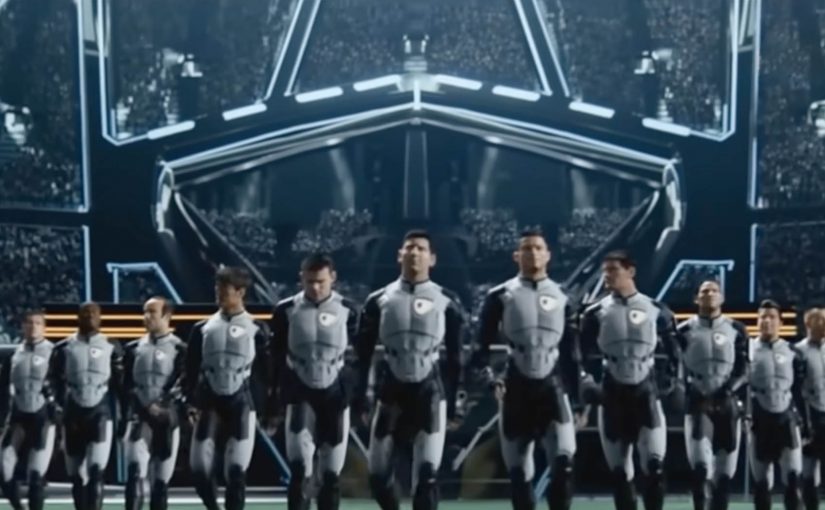
Samsung, to promote its new Galaxy S5 smartphone during the 2014 World Cup, created a 13 minute animated film (split in 2 parts) featuring some of the world’s greatest footballers on a mission to save Earth from an alien race called Hurakan.

To save Earth from total annihilation, the human footballers dubbed the “Galaxy 11” get into a winner take all football match with the alien race. In the film, the Galaxy 11 are seen using various Samsung Galaxy devices to face off against the horned creatures, who have a penchant for flips and fancy kicks.

How this sells without stopping the story

The real question is whether your brand can earn minutes of attention without pausing the story to sell.

This works when the product has a credible job inside the plot, because that makes every appearance feel like story logic instead of an interruption.

In global consumer brands, World Cup season is one of the few windows where audiences will engage with branded entertainment if the story earns it.

Why this format works for a World Cup moment

A World Cup moment is crowded with highlight reels and second-screen noise. A self-contained animated story gives viewers a reason to stay, because they want to see how the match resolves.

Extractable takeaway: When attention is scarce, trade a single claim for a simple plot. Conflict, goal, showdown. Then let your product earn screen time by being useful to the characters.

  • It is built for attention. A 13 minute animated story gives Samsung room to create a world, not just a product claim.
  • The product is part of the mission. Galaxy devices show up as tools the team uses, so the placement feels “in-world” rather than bolted on.
  • It scales globally. Football, sci-fi stakes, and animation travel across markets without heavy explanation.

What to learn from “Galaxy 11”

If you want people to stay with a brand story for more than a few seconds, give them a narrative engine. Here, a narrative engine means a repeatable conflict-goal-showdown loop that keeps scenes moving. A clear enemy, a clear goal, and a clear showdown. Then let the product play a credible role inside that story, instead of pausing the story to sell.

  • Start with stakes, not specs. Establish the enemy and the win condition before the product shows up.
  • Give the product a job. Make the device a capability the characters rely on inside the plot.
  • Keep the structure simple. Enemy, goal, showdown. Then end with a clear resolution.

A few fast answers before you act

What is Samsung “Galaxy 11”?

It is a two-part animated film created for the 2014 World Cup that puts elite footballers into a “save Earth” match against an alien team called Hurakan, while featuring Samsung Galaxy devices in the story.

How long is the film?

It runs about 13 minutes in total and is split into two parts.

How do Samsung Galaxy devices fit into the film?

The Galaxy devices are shown as tools the team uses during the mission, so the product appears through action rather than through a conventional pitch.

Why use animation for a World Cup campaign?

Animation makes it easier to build a shared “in-world” story and let it travel across markets, because the stakes and visuals are easy to understand.

What is the transferable pattern for brands?

Build a short, high-stakes story with a simple structure. Then integrate the product as a believable capability inside the plot.
Nike Football: The Last Game

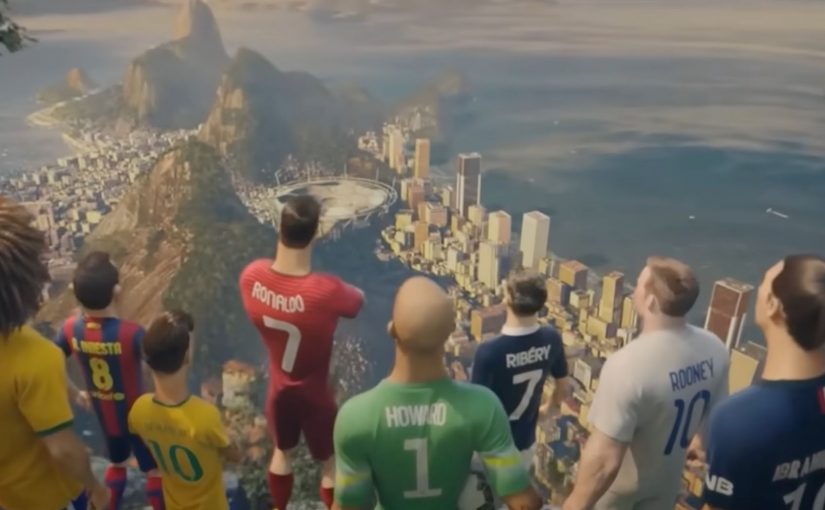
In a build up to the first match of the 2014 FIFA World Cup, Nike Football released a five minute animated film that features some of the world’s greatest footballers on a mission to save football from the hands of a villainous mastermind, The Scientist.

In a future where brilliant football has ceased to exist and the game has become almost extinct, Brazilian legend Ronaldo (O Fenómeno) decides enough is enough and goes on a mission to reignite the game with brilliant football with the help of a re-assembled group of the world’s most brilliant players.

In the final minutes of the film, Cristiano Ronaldo, Wayne Rooney, Neymar Júnior, Zlatan Ibrahimović, Andrés Iniesta, David Luiz, Franck Ribéry, Tim Howard and Ronaldo (O Fenómeno) are seen battling the “perfect” football clones in a winner take all match.

How the plot carries Nike’s platform

The film pits “brilliant football” against a future of optimized, risk-free play, so “Risk Everything” reads like a choice between creativity and extinction. Here, a brand platform means the recurring campaign idea that frames the work.

In global tournament marketing, this kind of work competes with entertainment, not other ads.

The real question is how you turn a tournament moment into a story people choose to watch and share, even when they do not care about the sponsor.

Why this story structure is so effective

By giving creativity a face (the players) and safety a face (The Scientist and his clones), the film turns an abstract brand message into a clear, watchable conflict.

Extractable takeaway: If your platform is an attitude, dramatize it as a choice with consequences, then let the audience feel the outcome instead of explaining it.

  • It turns a brand platform into a myth. “Risk Everything” translates naturally into a fight for football’s soul.
  • It uses a clear villain to sharpen the message. The Scientist represents control, safety, and sameness. The players represent creativity and individual brilliance.
  • It makes the product message implicit. You do not need to be told that creativity wins. You watch it win.

What marketers can take from “The Last Game”

When you have a cultural moment as big as the World Cup, the winning work often behaves like entertainment first. Nike built a mini-universe with stakes, characters, and a simple conflict. That gives the story a reason to be shared beyond football fans, and it gives the brand a clear point of view without sounding like advertising.

  • Lead with stakes. Make the outcome matter before you ask anyone to share.
  • Give the tension a face. A clear opponent sharpens what you stand for, and what you stand against.
  • Keep the product message implicit. Show the behavior you want to reward, then trust viewers to connect the dots.

A few fast answers before you act

What is Nike Football “The Last Game”?

It is a five-minute animated film released ahead of the 2014 FIFA World Cup where Ronaldo (O Fenómeno) and a group of top players try to save football from The Scientist and his “perfect” clones.

Who are the players featured in the final match?

Cristiano Ronaldo, Wayne Rooney, Neymar Júnior, Zlatan Ibrahimović, Andrés Iniesta, David Luiz, Franck Ribéry, Tim Howard and Ronaldo (O Fenómeno).

What is the core idea behind the villain “The Scientist”?

He represents a future of controlled, optimized, risk-free football. The film positions creative, brilliant play as the antidote.

Why does this work so well ahead of a tournament?

It amplifies the emotion people already bring to the World Cup and gives them a shareable story that feels like culture, not a commercial break.

Giraffas: The Goal Screen

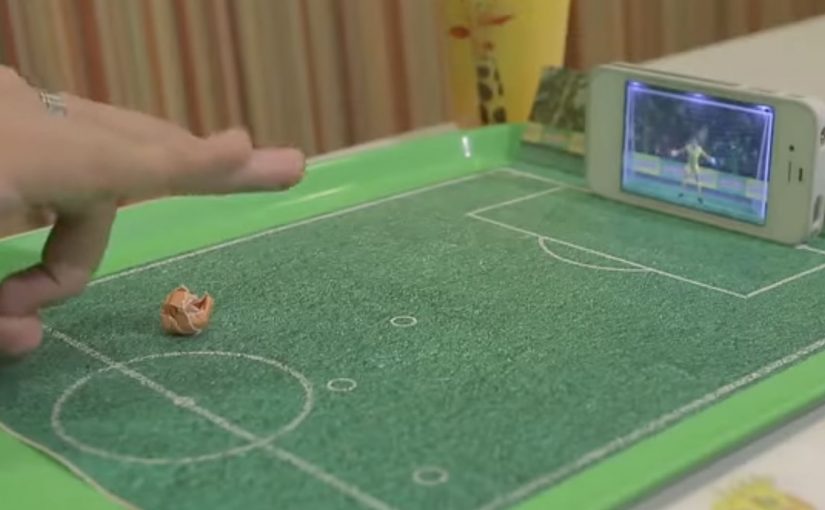
To capitalize on the lead up to the 2014 FIFA World Cup, Brazilian fast food chain Giraffas creates a mobile game that turns their tray papers into a virtual soccer field. To play, consumers rip the side of the paper tray, make a paper ball, and flick it into their mobile screens.

7 million tray papers are printed, and the game is made possible by using the smartphone camera to recognize the ball distance, the accelerometer to identify the trajectory of the kick, and the microphone to recognize the area of impact.

A game that bridges paper and screen

The mechanism is a simple physical ritual, meaning a repeatable action with objects already on the tray, that unlocks a digital experience. The tray liner provides the “pitch”. The paper ball provides the input. The phone turns sensors into a referee, translating distance, direction, and contact into gameplay.

That matters because the tray liner and paper ball remove setup friction, so the leap from noticing the idea to trying it stays almost instant.

In quick-service restaurants, the strongest interactive ideas add value during the waiting and eating moment, without requiring staff training or extra hardware at the counter.

The real question is how little effort a brand can ask of people before play feels easier than ignoring it.

Why it lands

The strongest part of the idea is not the World Cup tie-in. It is the packaging mechanic that makes play feel native to the meal. This works because it turns a disposable surface into a reason to play, and it makes participation feel immediate. It is not “download an app for later”. It is “play right now, with what you already have, while you are here”. The World Cup context supplies motivation, but the in-store simplicity supplies repeatability.

Extractable takeaway: When you want in-the-moment engagement, design a physical trigger that is already in the customer’s hands, then use the phone only as the translator. The fewer steps between curiosity and action, the more people actually try it.

What to borrow from this tray-to-screen mechanic

  • Use packaging as the interface. If your brand owns a surface (tray liners, cups, wrappers), it can become the entry point.
  • Make the first attempt effortless. Rip, roll, flick. Three verbs. No instructions wall required.
  • Exploit phone sensors, not novelty tech. Camera, accelerometer, and microphone are scalable because they are already everywhere.
  • Anchor to a cultural moment, but keep it evergreen. The event creates urgency, the mechanic creates habit.

A few fast answers before you act

What is “The Goal Screen” for Giraffas?

It is an in-store mobile game that turns Giraffas tray papers into a virtual soccer field, using a paper ball that customers flick into their phone screen.

Why does the paper tray matter to the experience?

The tray paper acts as the physical “pitch” and the trigger for play, making the game feel native to the restaurant moment.

How does the phone detect the kick?

The setup is described as using the camera for distance, the accelerometer for trajectory, and the microphone for impact area.

What is the marketing objective behind this kind of mechanic?

To make the in-store visit more entertaining and memorable, and to create a reason to interact with the brand during the meal.

What is the transferable lesson for other brands?

Turn a ubiquitous brand touchpoint into a play surface, then use the phone as a lightweight sensor hub that makes the interaction feel “magical” without added hardware.