Pedestrian Ghost

Speeding cars and pedestrian safety is a huge problem in Ukraine. In fact Ukraine is responsible for 56% of pedestrian collisions in Eastern Europe. To make people think twice about speeding, Shell along with JWT Ukraine created an ambient campaign where they invented the pedestrian ghost. The campaign was run during Halloween and has generated a lot of buzz over the internet…

Carlsberg: Bikers in cinema experiment

In a Belgian cinema, an “easy night out” turns into a small test of nerve. A couple walks in with tickets in hand. The room looks full. The only two empty seats are in the middle. The twist is that the audience is packed with intimidating bikers.

Carlsberg and Duval Guillaume Modem set this up as an experiment to reinforce the brand’s association with making the right choices. Reactions were recorded and edited into a viral film that rewards the people who stay seated rather than turn around.

The mechanism that makes it work

The mechanics are simple and deliberate. Fill the room. Leave two seats. Let unsuspecting pairs make a binary decision in public. Stay or leave. The tension is real because the setting is real, and the social pressure is visible to everyone watching.

Once a couple commits and sits down, the room flips from threat to approval. The bikers applaud, and the moment turns into a reward scene that makes the brand feel like it “saw” the better choice.

In crowded FMCG categories, social experiments work when they dramatize a value claim in a single, easy-to-retell moment.

Why it lands: social risk, then social proof

The audience experiences the same internal dialogue as the couples. Do I trust my instincts. Do I judge by appearance. Do I avoid discomfort. That tension is the hook. The applause is the release.

It also produces a clean moral without preaching. The brave are rewarded. The crowd is not actually hostile. The viewer walks away with a feeling that maps neatly onto the brand’s “good decision” positioning.

What Carlsberg is buying with this stunt

This is not about product attributes. It is about emotional territory. Confidence. Decency under pressure. And the idea that choosing Carlsberg is the grown-up, correct move when there are multiple options.

It is also engineered for sharing. The setup can be explained in one sentence, and the payoff is satisfying even if you only watch the last third of the video.

What to steal for your own brand experiments

  • Make the choice binary. The story works because there is a clear yes or no moment.
  • Stage tension, then earn release. If you create discomfort, you must repay it with warmth or justice.
  • Keep the “why” instantly readable. Viewers should understand what is being tested without narration.
  • Reward the behaviour you want to own. The applause is not decoration. It is the message.
  • Protect trust. If participants feel tricked or harmed, the brand loses the moral high ground.

A few fast answers before you act

What is the Carlsberg “bikers in cinema” experiment?

It is a filmed cinema stunt where unsuspecting couples enter a theatre filled with bikers and find only two seats left among them. Their decision to stay or leave becomes the story, and the people who stay are rewarded.

Why is this more shareable than a typical ad?

Because the premise is instantly understandable and the emotional arc is clean. Tension, decision, payoff. That structure travels well as a short video.

What brand message does the stunt communicate?

That “making the right choice” is a real behaviour under pressure, not a slogan. The brand borrows credibility by rewarding the choice on camera.

What is the biggest risk with social-experiment advertising?

Breaking trust. If the situation feels unsafe, humiliating, or coercive, the audience will side with the participants, not the brand.

How do you adapt this pattern without copying the stunt?

Create a public moment with a clear decision, then design a surprising but positive reward that proves your positioning. Keep the stakes emotional, not harmful.

Coca-Cola: Rush Hour Cinema

Bogotá gridlock, turned into a cinema you are already sitting in

On an average, commuters in Bogota spend daily 4 hours stuck in traffic. The infernal rush hour traffic jams are the result of unfinished constructions on main avenues, as well as on the rapid transit system, TransMilenio, which has seen work on its expansion come to a halt, due to irregularities in the handling of funds, and corrupt contractors.

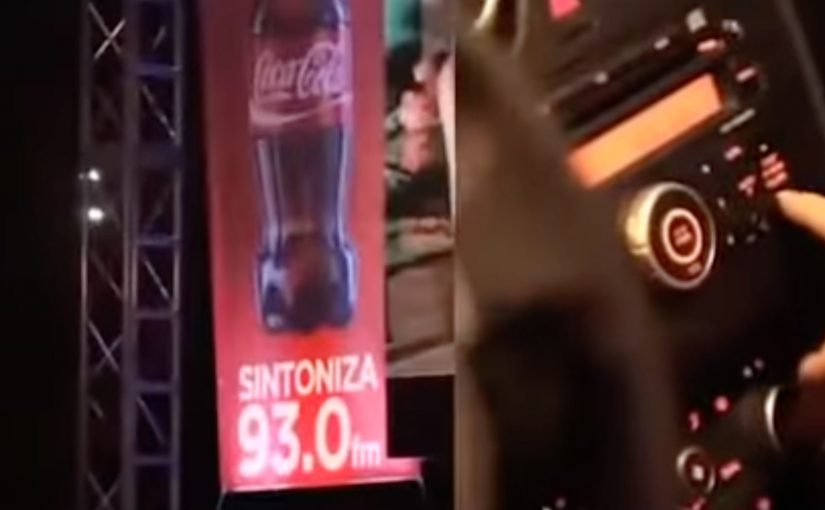
So Coca-Cola with ad agency Ogilvy Colombia turned these traffic jams into a drive in cinema. The soda-pop giant launched this ingenious initiative on the eve of their 125th anniversary.

The mechanism: a drive-in cinema without the driving

The idea is as direct as it gets. If people are trapped in cars for hours, give them something worth watching, right there on the route they cannot escape.

A drive-in cinema activation is a public screening designed for people inside vehicles, typically using a large screen for the picture and a radio frequency so the car stereo carries the audio.

In big-city commuting cultures, attention is already captive. The smartest brand experiences do not try to fight the context. They use it.

Why it works: it flips frustration into a shared moment

Traffic jams create the same emotional pattern every day. boredom, irritation, and the feeling that time is being stolen. Rush Hour Cinema interrupts that loop with something communal. Drivers are not just waiting. They are watching the same thing together.

The experience also changes what people do with their phones. Instead of complaining or doom-scrolling, they have a simple story to capture and retell.

The business intent behind the “nice surprise”

This is not a product pitch. It is brand behavior on display. Coca-Cola shows up as the brand that makes an unavoidable moment feel lighter, and it does it at scale, in the exact place where annoyance peaks.

It is also efficient media. The audience is guaranteed. The dwell time is long. And the memory is anchored to a very specific location and feeling, which makes recall easier later.

Rush Hour Cinema is an ambient Coca-Cola activation in Bogotá that uses rush hour gridlock as the venue, transforming waiting time into a public drive-in style screening.

What to steal if you want to turn a pain point into attention

  • Pick a context where time is already lost. Commuting, queues, delays, waiting rooms. People will thank you for filling it.
  • Make participation effortless. No app. No sign-up. Just look up and tune in.
  • Design for group reality. People experience it side-by-side, so the moment becomes social proof.
  • Keep the message implicit. When the gesture is the point, the brand earns goodwill without talking.

A few fast answers before you act

What is Coca-Cola’s Rush Hour Cinema?

It is an ambient activation in Bogotá that turns rush hour traffic into a drive-in style cinema experience, using a large screen for video and car radios for audio.

Why does a traffic jam make sense as a media channel?

Because attention and dwell time are already there. People cannot leave, and they are actively looking for relief from boredom and frustration.

What is the key design principle behind this idea?

Do not fight the context. Upgrade it. When you improve an unavoidable moment, the brand gets disproportionate gratitude and retell value.