
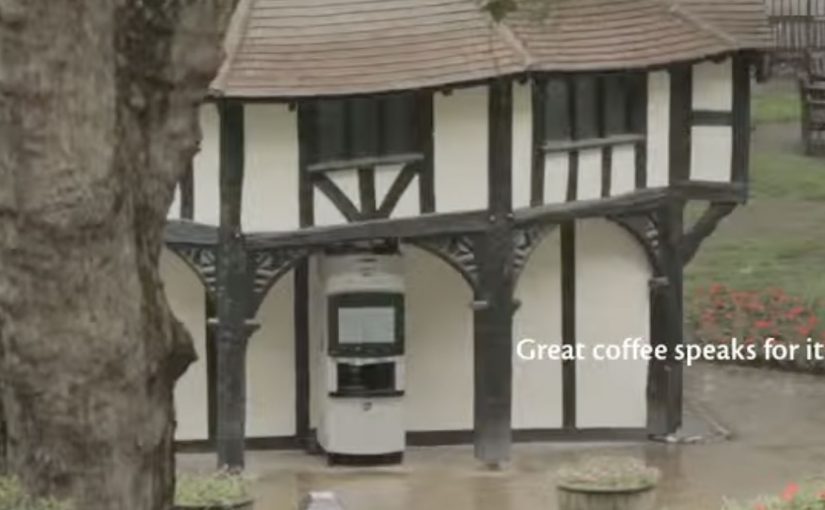
Kenco: Kenneth the Talking Vending Machine

Kenco Millicano’s whole bean instant coffee is positioned as the closest thing to a proper coffee from a vending machine. However, people often have negative perceptions about drinking instant coffee from a machine. So, to engage and excite people enough to consider swapping their coffee shop routine for a vending option, Kenco Millicano worked with its agency team on a talking vending machine. The voice for the machine was provided by comedian and voice actor Mark Oxtoby, who spent a whole day in Soho Square interacting with passers-by.

Similarly in Hong Kong, Levi’s worked with TBWA on a talking phone booth dubbed the “Levi’s Summer Hotline”. Inside the booth, two popular local radio hosts connected via video and challenged visitors to answer questions or do stunts. The crazier the stunt, the bigger the prize. The prize printed out in the booth like a receipt, and could be redeemed at nearby Levi’s stores. The activation was reported to have drawn more than half a million interactions over three days and to have driven a 30% sales uplift.

Two executions. One shared trick

Both ideas take a familiar street object. A vending machine. A phone booth. Then they add something people do not expect from an object like that. A voice, a challenge, a human response, and a reward that arrives immediately.

How the “talking interface” mechanic works

A “talking interface” is a familiar street object that responds with voice, turning a simple transaction into a short ask, response, reward loop.

  • Interrupt the script. People approach expecting a predictable transaction, then the unit talks back.
  • Create a small social contract. You do something simple or slightly brave, and the unit rewards you.
  • Turn participation into theatre. Bystanders can understand what is happening fast, and the crowd recruits the crowd.

In busy public places where attention is scarce, interactive installations win when the first five seconds are obvious and the payoff is immediate.

The real question is whether you can make a vending moment feel like a social interaction, not a compromise.

Why it lands

The “talking” element is not a gimmick. It flips an inanimate object into a social moment, which makes the interaction feel personal even when it is happening in public. That shift changes the emotional framing from “machine coffee” to “a quick story I was part of”. For brands, that is how you replace a negative perception without arguing about it.

Extractable takeaway: If you want people to try something they think they dislike, do not debate the product. Change the moment around the product so the first experience feels human, surprising, and worth retelling.

What these activations are really doing for the brands

Kenco’s machine makes “vending” feel warmer, and it makes the product choice feel less like compromise. Levi’s booth turns brand interaction into a game with a tangible receipt-style reward that pushes people towards a nearby store. Both installations are a conversion point and a content engine at the same time.

Steal this loop for street activations

  • Use a familiar object. Familiarity reduces explanation time and increases participation.
  • Make the first step low-risk. A small action opens the door to a bigger payoff.
  • Keep the loop short. Ask. Respond. Reward. Long flows die in public space.
  • Design for onlookers. The audience around the participant is the multiplier.
  • Make redemption effortless. If the reward requires extra effort later, participation drops.

Vending machines are one of my favourite formats for street-level innovation. I have featured plenty of them on Ramble. If you want to go deeper, browse the vending-machine archive.


A few fast answers before you act

What is a “talking vending machine” in marketing terms?

It is an interactive out-of-home installation where a vending unit uses live or scripted voice interaction to trigger participation, then delivers an immediate reward to reframe the product experience.

Why does “talking back” increase participation?

Because it breaks the expected script of a transaction. That surprise creates curiosity, and curiosity pulls people closer long enough for the reward loop to start.

What makes these ideas work in high-footfall locations?

They are instantly legible, fast to complete, and entertaining for bystanders. The environment supplies the amplification through crowd behaviour.

What is the biggest execution risk?

Throughput and reliability. If interactions slow down, misfire, or confuse people, the installation becomes friction, not fun.

How do you measure success beyond views?

Participation rate per hour, completion rate, average dwell time, sentiment, and whether the activation produces measurable trial or store redemption lift.
smart: eBall interactive ping pong duel

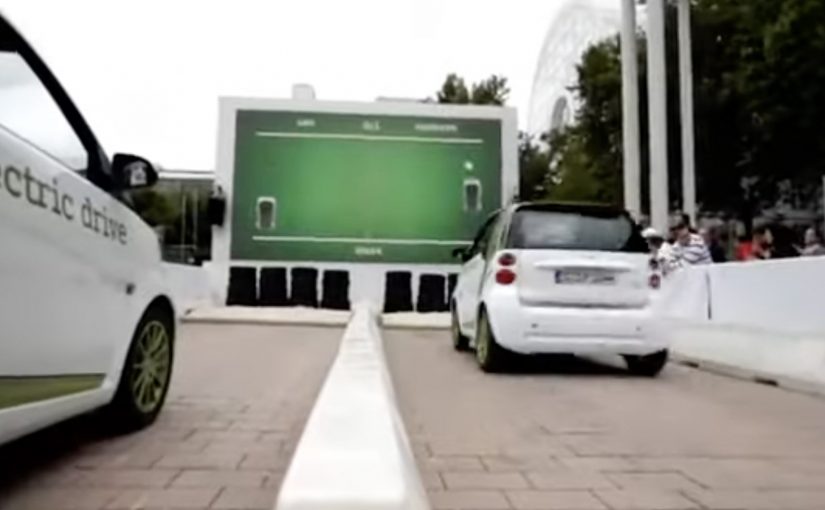
At the Frankfurt Motor Show (IAA) in 2011, Daimler promoted the third generation smart fortwo electric drive with a special interactive game event. Berlin-based Proximity BBDO designed a game called eBall that translates the joy of a highly responsive car into something visitors can play.

Visitors sign up with their driver’s license, get quick instructions on forward and reverse, and then step into a live ping pong duel. Instead of a controller, they use the car itself. Driving forward and back moves the “paddle,” with measurement technology tracking the rally on a large display.

When “responsive” becomes the gameplay

Electric drive messaging often struggles because it is full of abstractions. Efficiency, torque, responsiveness. eBall makes one of those claims physical. The faster and more precisely you control forward and reverse, the better you play. That is a rare alignment. The product behaviour is the mechanic.

Extractable takeaway: If your product promise is about control, speed, or precision, build an experience where performance is visible to a crowd and felt by the participant in under a minute.

In European automotive launches, live interaction works best when it turns a technical attribute into a simple skill people can feel and repeat.

The real question is whether your interaction turns the claim into a repeatable skill, not a slogan.

The tech trick is invisible on purpose

As described in coverage of the installation, the paddles on the LED wall are controlled by two real smart fortwo electric drive cars using laser measurement and transmission technology. The important detail is not the hardware. It is the immediacy. When the wall responds instantly, the player trusts the cause-and-effect and stays in the duel.

Why the driver’s license step matters

The license check does two jobs. It manages safety and liability, and it creates a small “this is real” threshold. You are not playing a simulator. You are operating a vehicle in a branded arena. That seriousness increases attention, and it makes the win feel earned.

What smart is really selling here

eBall does not try to convince you with specs. It frames the car as a fun, responsive object that behaves like a sports device in the hands of the driver. The subtext is clear. If it can play ping pong with precision, it will feel effortless in tight city driving too.

Moves worth copying in event mechanics

  • Translate one attribute into one action. “Responsive” becomes “hit the ball back.” No extra storytelling required.
  • Design for spectators. The LED wall makes the game readable from distance, so the crowd becomes the amplifier.
  • Keep the control model binary. Forward and reverse is legible, teachable, and low-cognitive-load.
  • Make the feedback immediate. Interactivity only feels truthful when response is fast.
  • Engineer the queue. A duel format naturally builds anticipation and repeat attempts.

A few fast answers before you act

What is smart eBall?

It is a live event game where visitors play a ping pong style duel by driving a smart fortwo electric drive forward and backward to control a digital paddle on a large screen.

Why does ping pong fit an electric city car story?

Because it is a precision game. It makes responsiveness and control visible in a way a brochure cannot, and it fits the “small, agile, quick” associations smart wants to own.

What makes this different from a normal driving simulator?

The controller is the vehicle, and the outcome is public. That changes the psychology from private play to performance, which increases energy, memorability, and word of mouth.

What is the biggest operational risk with this kind of activation?

Latency, safety, and throughput. If the system lags, people stop trusting the interaction. If safety or queue management fails, the experience becomes stressful instead of fun.

What should brands measure in a “playable product demo” like this?

Participation rate, average dwell time, repeat plays, audience size over time, and how many people capture and share the experience, plus any downstream test-drive or lead signals.

Navarro Correas: Wine Art Project

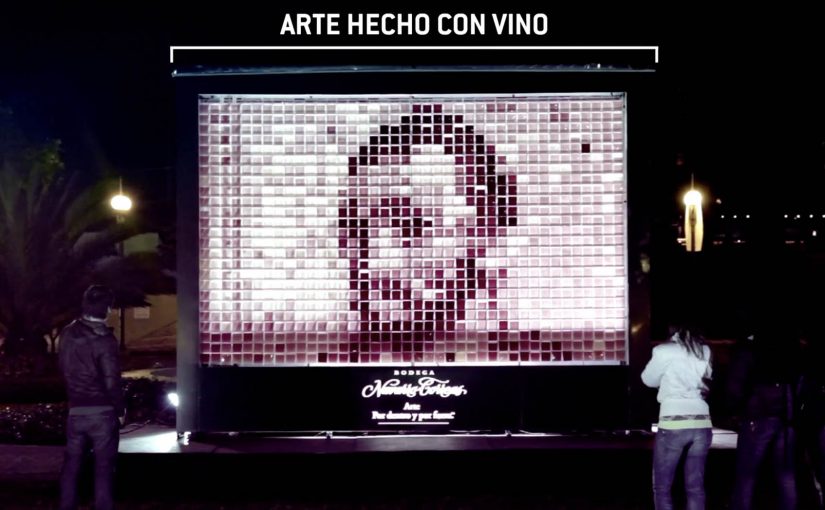
Navarro Correas creates a 13 x 8.2 meter structure in Bogotá, Colombia. It consists of 1,000 acrylic cells and an automated robotic mechanism that fills each cell with six different shades of wine.

How the installation works

People activate the robotic mechanism by sending a text message with the acrylic cell number they want filled. Over time, 1,000 text messages build the full image, described as recreating Van Gogh’s self-portrait. A masterpiece made with Navarro Correas’ own wines.

An SMS-controlled installation is a public artwork where participants trigger physical changes by texting simple commands, turning the audience into the “interface”.

In large-scale city activations, participation gets dramatically stronger when the crowd can see their input change a shared object in real time.

The real question is not whether people will send one text, but whether each text feels like a visible personal contribution to something bigger.

Why it lands: it turns contribution into ownership

This works because it makes participation concrete. You are not “liking” or “voting”. You are choosing a specific cell and watching a physical outcome appear. The growing picture becomes a public scoreboard of collective effort.

Extractable takeaway: If you want mass participation, design a mechanic where each small action is visible, additive, and irrevocably part of the final outcome. People engage longer when they can point to “their piece” of the whole.

The stronger idea here is the visible build, not the SMS channel by itself.

The wine-as-paint choice also earns attention twice: first as a spectacle (liquid filling the grid), and then as a reveal (the final portrait). The mechanism creates suspense, and suspense keeps people texting.

What the brand is really doing here

The installation positions the wine as a maker’s material, not just a drink. It borrows the credibility of craft and art, then backs it with a participatory system that feels modern and social without needing a social network.

What to steal for your next interactive public piece

  • Make the input trivial: one action, one identifier, no learning curve.
  • Make the effect observable: people should immediately see change after they act.
  • Use “additive progress”: partial completion should still look interesting, so the build phase has its own payoff.
  • Design for attribution: let participants feel “I contributed”, even if the contribution is small.
  • Pick a reveal that rewards patience: the final image should be worth waiting for.

A few fast answers before you act

What is the Navarro Correas Wine Art Project?

It is a public installation made of 1,000 acrylic cells that are filled by a robotic mechanism with different shades of wine. People participate by texting a cell number to trigger a fill, gradually revealing a final portrait image.

Why use SMS for interactivity?

SMS is frictionless and universal. It requires no app download, works on basic phones, and is fast enough for impulse participation in a public space.

What makes this different from a normal billboard stunt?

The audience directly controls the build. Each message produces a visible change, so the piece becomes a collective construction rather than a one-way display.

What is the key behavioral driver?

Ownership through contribution. People engage more when they can claim a specific part of the outcome and see the shared progress accumulate.

What should you measure for a campaign like this?

Participation volume, unique participants, repeat participation, time-to-completion of the full artwork, dwell time around the installation, and any earned media or social mentions driven by the live build.