
Budweiser: Poolball, football on a pool table

Coming to a Buenos Aires pub near you is the newly minted sport of Poolball, created by Ogilvy Argentina for Budweiser.

Two teams meet on a giant 7×3 meter pool table. Fifteen soccer balls are reskinned to look like pool balls. The competitors use their feet instead of cues to score.

A new bar sport with a brand stitched into it

Poolball takes two things that already belong in the same evening. Football and beer. Then it adds a third. The “I could play that” simplicity of pool. The result feels less like a stunt and more like a playable product.

Extractable takeaway: Poolball is a brand activation that fuses two familiar games into one instantly understandable format, so people stop watching and start participating without needing instructions.

The mechanic: one rulebook, two rituals

The mechanic is the entire idea. A pool table scaled up to human size. Pool-ball visuals on footballs. Pool rules translated into foot play. When the mechanic is this legible, the content is self-explaining and the crowd becomes the amplification layer.

BTL is often used as shorthand for below-the-line activity. In practice, it means a brand experience designed to be felt in the real world, then shared because it is worth retelling.

In busy city bars and event spaces, the formats that spread fastest are the ones everyone can read at a glance.

Why it works in a pub

Bar-friendly activations win when they create quick status moments. You either played it, you watched someone nail a shot, or you filmed the chaos. Poolball naturally creates all three, because every “pocket” attempt is a mini highlight.

It also lowers the risk of participation. You are not learning a new sport. You are remixing two you already know, with rules you can copy by watching one play.

The intent behind the fun

The real question is whether your activation is a game people still want to play when the camera is off.

Budweiser is not selling a feature here. It is selling association. Big-game energy. Competitive banter. Social proof that the brand belongs in the centre of group nights out.

When the game is branded but not fragile, the brand becomes the host of the experience rather than the interruption inside it.

Poolball patterns worth stealing

  • Fuse, don’t invent. Combine two known behaviours so the audience understands the format instantly.
  • Make the object the media. A giant playable artefact beats a screen when your goal is participation.
  • Design for highlights. Build in repeatable “shot” moments people want to film and replay.
  • Keep rules visible. If someone can learn it by watching one round, you have the right complexity level.
  • Let branding be structural. Brand the experience itself, not every surface area with logos.

A few fast answers before you act

What is Poolball?

Poolball is a branded game format that combines football and pool. Players kick footballs designed like pool balls on a giant pool table and score using pool-style goals.

Why does this kind of activation travel well across venues?

Because it is easy to understand, easy to spectate, and it produces repeatable highlight moments. Venues like it because it creates crowd energy. Brands like it because the crowd documents it.

What makes the mechanic “shareable” without forcing sharing?

The visual contrast does the work. A human-scale pool table and “pool ball” footballs create an immediate “what is that” reaction, so filming feels natural rather than incentivised.

How do you keep a branded game from feeling like a gimmick?

Make it genuinely playable. Simple rules. Clear scoring. Quick rounds. If the experience is fun without the brand name, the brand credit comes for free.

What’s the minimum viable version of this idea?

A single hybrid rule, one striking physical cue, and one repeatable scoring moment. If people can explain it in one sentence, you have the right foundation.
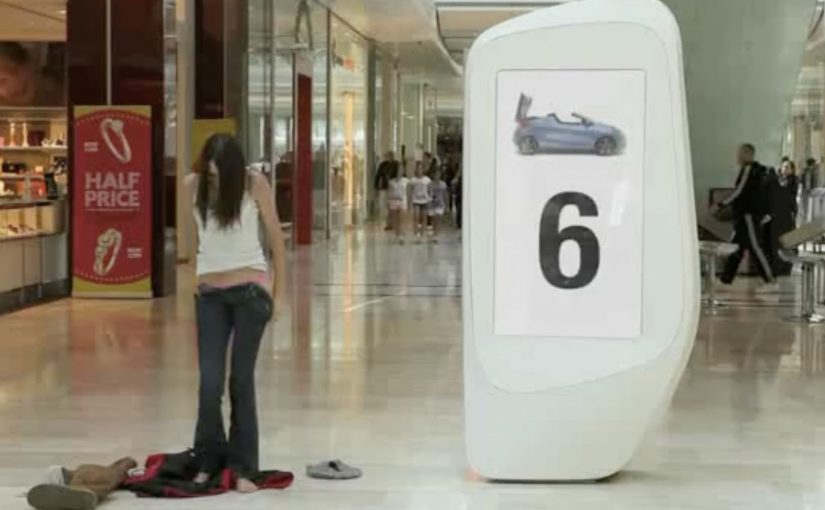
Renault Wind Roadster: 12 Second Strip

Renault UK and ad agency Publicis London set up “12 Second Strip”, a challenge that asks people to strip down to one layer of clothing in 12 seconds in the hope of winning the brand new Renault Wind Roadster.

The challenge involves people stripping down to one layer of clothing in just 12 seconds, which is the same amount of time it takes Renault’s new Wind Roadster to drop its top. To participate, people post their fun and tasteful strip videos on YouTube.

A product demo turned into a timed dare

The execution takes a single, memorable product fact. The roof moves in 12 seconds. Then it builds a challenge around that exact number, so the “proof” of the car becomes the rule of the game.

The mechanic: match the roof with your own 12 seconds

It is straightforward. Record a short clip where you race the clock to get down to one layer. Upload it. The format is repeatable, the constraint is clear, and the brand’s key claim stays embedded in every entry.

In UK automotive launches, time-based challenges work best when they translate a feature into something the audience can perform, share, and compare without needing a long explanation.

Why this lands as shareable UGC

The concept is light, competitive, and easy to understand at a glance. The “one layer” rule keeps it positioned as playful rather than explicit, while the 12-second constraint gives it a built-in hook that makes clips watchable and easy to forward.

Extractable takeaway: If you have one standout feature, convert it into a public constraint. Constraints create format. Format creates volume. Volume creates recall.

What Renault is really buying

The real question is whether a product claim can be turned into a repeatable public behavior without losing the brand point.

This is attention that carries product memory. Every participant repeats the roof story through action, and every viewer gets the same message without feeling like they are watching a conventional car ad.

What to steal for your next challenge-based campaign

  • Start with one sharp product truth. The best UGC formats begin with a single claim people can repeat.
  • Make the rule the message. If the rule changes, the brand meaning should not disappear.
  • Keep it simple to enter. Short clips, one constraint, one destination.
  • Write safety and tastefulness into the brief. Clear boundaries protect both the audience and the brand.

A few fast answers before you act

What is 12 Second Strip?

It is a Renault UK challenge that asks people to strip down to one layer of clothing in 12 seconds, mirroring the time it takes the Renault Wind Roadster’s roof to drop.

Why anchor the challenge to “12 seconds”?

Because it turns a feature into a format. The number becomes a rule that forces every entry to carry the same product story.

What makes this a strong user-generated format?

It is easy to understand, fast to produce, and inherently comparable. Viewers can instantly judge attempts and share the best ones.

How do you keep a provocative mechanic brand-safe?

Set a clear boundary inside the format. Here, the one-layer rule keeps the participation playful and recognizable without pushing it into something more explicit.

What is the main brand lesson here?

Make your most distinctive proof point performable. When the audience can reenact a claim, it travels further than a slogan.

Tele2: Giant Phone

Tele2 is launching a new offer that sounds technical on paper. Fixed telephony delivered through the mobile network. In plain terms, that means a home-phone style service carried over the mobile network instead of a traditional fixed line. The fastest way to make that believable is to let people use it like a normal landline.

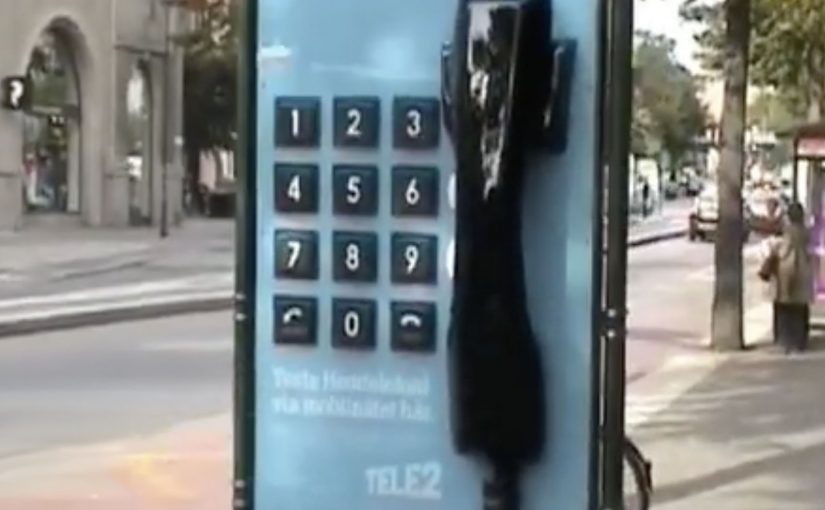
So Forsman & Bodenfors builds giant, working phones in Sweden’s three biggest cities. Passersby can pick up the handset and call whoever they want for free, whether that is a friend, a taxi, or the first number that comes to mind.

To keep the street theatre alive, Tele2 occasionally calls the giant phones. Whoever answers at that moment wins a prize.

The giant-phone mechanic

The mechanic is a physical demo of a simple promise. A “home phone” style service that rides the mobile network behaves exactly like the thing people already understand: pick up, dial, talk. The oversized installation does two jobs at once. It acts as out-of-home media you cannot ignore, and it removes friction by turning product education into a one-step trial.

In technical product launches, the most reliable shortcut to trust is an immediate, public, hands-on trial that converts jargon into a familiar behavior.

Why the simplicity message sticks

This works because the audience does not have to believe a claim. They verify it themselves in seconds. The scale makes it socially safe to participate, because the act of “trying it” is also the entertainment. The prize-call twist adds intermittent reward, which keeps attention and creates a reason to stay nearby a little longer.

Extractable takeaway: When your value proposition is hard to explain, design a live interaction where the user completes the core promise in one obvious action, then let the environment do the storytelling.

What Tele2 is really selling

The obvious message is “it’s easy.” The real question is whether the new delivery model feels familiar enough to trust. The deeper message is “it’s close enough to the old thing that switching feels low-risk.” The activation reframes a potentially abstract network feature as continuity: you still have a phone experience, just delivered differently.

Launch lessons from the giant-phone demo

  • Prototype the promise. Build a demo that behaves like the old habit, even if the technology underneath is new.
  • Make the demo the media. If the unit cannot be ignored, you buy awareness and comprehension with the same spend.
  • Keep participation effortless. “Pick up and call” beats any explanation panel.
  • Add a timed trigger. A random callback, reward, or live moment gives people a reason to linger and talk about it.

A few fast answers before you act

What was Tele2 trying to prove with the giant phones?

That its fixed-telephony offer delivered over the mobile network feels as straightforward as a traditional landline. You pick up a handset, dial, and it works.

Why use giant phones instead of a standard street team?

The scale creates instant attention and makes the demo impossible to miss. It also turns the product trial into a public spectacle that others notice and join.

What makes this an effective “technical product” launch pattern?

It replaces explanations with verification. A user experiences the core benefit directly, which reduces skepticism and increases recall.

How does the prize-call element help the concept?

It creates anticipation and a reason to stay engaged, while adding a simple narrative hook people can repeat to others.

Where does this approach work best today?

Any launch where the promise is “this new infrastructure behaves like the old familiar thing,” such as networks, payments, or connected services that need trust before adoption.