
LEGO France: Creativity Forgives Everything

A child gets caught mid-creation. The scene looks like trouble at first glance, then the line flips the judgement: “We forgive everything to their creativity”. LEGO has recently launched this campaign in France around that exact tension between mess and imagination.

Click here to watch the video on AdsSpot website.

Turning “naughty” into proof of imagination

The core mechanism is a simple reframe. Instead of defending play as “educational”, the work leans into the moments parents normally correct. The child’s act is still a transgression, but it is also a creative act. The signature gives parents permission to smile first, and judge later.

In brand advertising for physical toys competing with screens, the fastest way to win attention is to make imagination look like something happening right now in the room.

Why the line sticks

“Creativity forgives everything” works because it treats creativity as a social contract, not a product feature. Here, “social contract” means an unspoken trade-off: parents tolerate the mess because it signals imagination at work. Parents recognise the micro-drama instantly. You want boundaries, but you also want your child to be bold, curious, and inventive. The campaign positions LEGO as the tool that triggers that boldness, even when it comes with collateral damage.

Extractable takeaway: If your category is crowded with functional claims, choose a human tension your audience already lives with. Then write a line that resolves the tension emotionally, and let the product become the enabler of that resolution.

What LEGO is protecting

This is brand defence disguised as humour. The real question is how LEGO stays culturally distinctive when screens can deliver endless entertainment without leaving any real-world evidence. It keeps LEGO out of a specs battle and away from “learning toy” cliches. By celebrating the messy edge of creativity, the brand claims a territory that is hard for digital entertainment to steal. Real-world play that leaves evidence.

What brands can borrow from LEGO here

  • Use a permission-giving signature. A great brand line does not just describe. It authorises a feeling or behaviour.
  • Stage recognisable “caught in the act” moments. When the scenario is instantly familiar, the audience supplies the backstory for you.
  • Make the brand the ally. The work does not lecture parents. It makes them complicit, which is more persuasive.
  • Let the theme travel across formats. This idea naturally fits film, print, and outdoor because the tension can be captured in a single moment.

A few fast answers before you act

What is LEGO’s “Creativity forgives everything” campaign?

It is a LEGO France brand campaign built around the idea that adults can forgive children’s small “misbehaviours” when they are clearly driven by creativity and imaginative play.

What is the core idea in one sentence?

Reframe mischief as imagination, then position the product as the trigger for that imagination.

Why does this positioning work for LEGO specifically?

Because LEGO is a physical system for building anything. The campaign connects that open-endedness to real, observable behaviour rather than abstract “learning” benefits.

How do you adapt this approach to another category?

Identify a daily tension your audience recognises, write a line that gives emotional permission, then demonstrate the product as the enabling tool inside that tension.

What should you avoid when copying the pattern?

Avoid moralising. The power comes from empathy and recognition, not from telling the audience how they should behave.
Volvo: There’s More to Life, in 3D

Volvo is pushing past the “cold Swedish marque” perception and leaning into an emotion-led brand campaign built around a disarming line: “There’s more to life than a Volvo.”

The campaign print ad sets up a string of human moments, then lands the message back on the car with a safety punchline. “There’s not running into the car ahead of you, in your XC60. That’s why you drive one.”

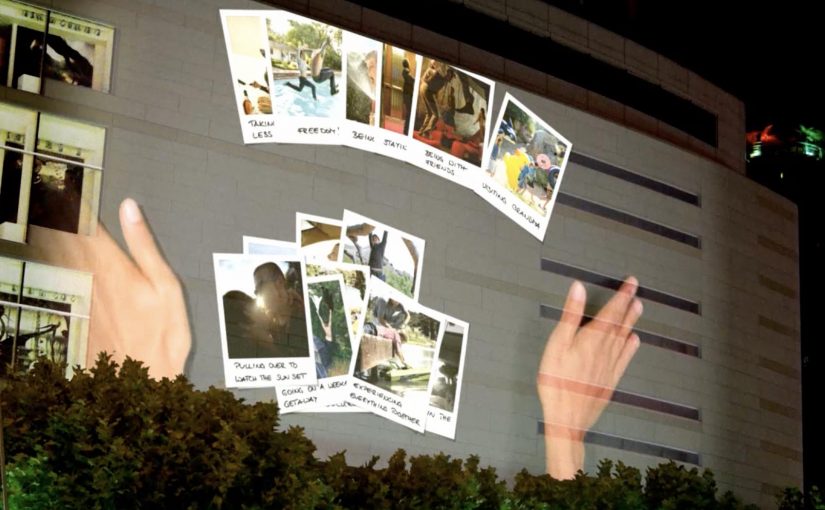
Germany gets a very different kind of treatment. A 3D projection in Frankfurt turns the thought into a public spectacle, produced by NuFormer in cooperation with Saatchi & Saatchi.

When the brand line needs public proof

Projection mapping, sometimes called 3D video mapping, is the practice of aligning animated light to the exact geometry of a building facade so the architecture appears to move, fold, or transform. Here, it becomes a storytelling canvas for an emotion-led repositioning. By public proof, I mean a shared, observable moment that demonstrates the brand promise in the real world.

Across European automotive brand building, public-space spectacle is often used to make an abstract shift in perception feel immediate and shared.

Why this execution fits the line

“There’s more to life than a Volvo” only works if it feels like an invitation, not a lecture. The projection format helps because it is experiential rather than declarative. It lets the audience feel the campaign instead of being told about it.

Extractable takeaway: If a repositioning line asks for emotion, design the experience so the audience lives the feeling first, then let the product proof arrive as the payoff.

It also reframes safety. Safety is still the payoff, but it arrives after life. The story says: live fully. Then rely on the car to take care of you when the unpredictable happens.

The real craft move

The real question is whether your repositioning can be experienced, not just stated.

This is branded content without pretending to be entertainment content. The execution does not hide the brand. It earns attention through novelty in public space, then uses that attention to make the line stick as a memory.

Turn a repositioning line into proof

  • Pick a line that can carry a scene, not just a tagline. If you can imagine it as an experience, you can build with it.
  • Translate the message into a physical moment, so “brand shift” becomes something people witness together.
  • Keep the emotional arc intact. Life first, product proof second. That order is the strategy.
  • Use one technical definition inside the story, so audiences and answer engines can repeat what the format is and why it matters.

A few fast answers before you act

What is projection mapping, in plain terms?

It is a technique where projectors are calibrated to a building’s shape so animated visuals appear to interact with the architecture, creating a 3D illusion.

Why use a 3D projection for a brand line?

Because it makes an intangible message tangible. A public moment gives a repositioning scale, memorability, and social proof.

How does this support Volvo’s safety story without leading with safety?

It frames safety as enabling life, not replacing it. The campaign invites emotion and spontaneity, then lands on protection as the reason the promise is credible.

What is the key risk with spectacle-led brand work?

If the spectacle is not anchored to a single, repeatable line, people remember the show and forget the meaning. The message must be retellable in one sentence.

What should be measured to judge effectiveness?

Unaided recall of the line, brand attribute shift toward “modern” and “engaging,” plus amplification signals like organic shares and press pickup tied to the execution.