Heineken Star Player

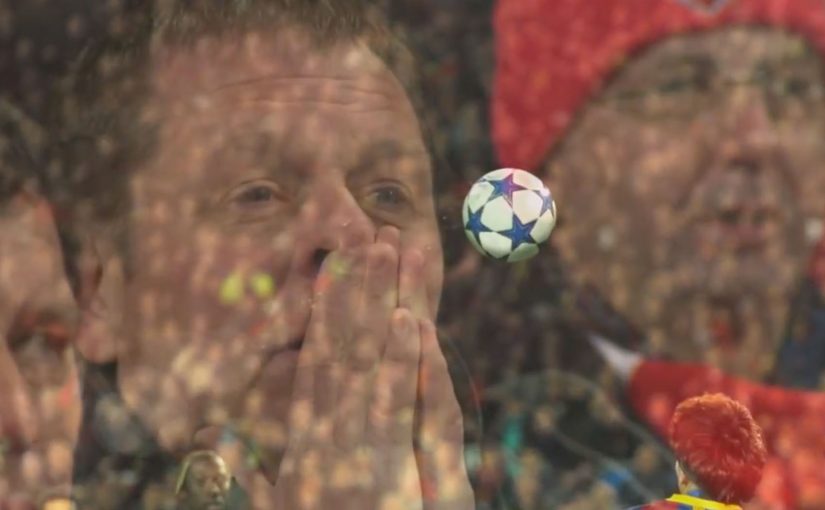
The UEFA Champions League attracts massive global audiences, and a large share of fans watch matches at home. Heineken’s release references over 150 million TV viewers watching live UCL coverage per match week in 220+ territories. Heineken and AKQA used that context to build Heineken StarPlayer, a dual-screen app designed to let fans interact in real time with the nail-biting action.

With StarPlayer, fans play along live on desktop and mobile by anticipating what will happen in key match moments, in real time. The promise is simple. Turn passive viewing into a competitive layer of predictions, banter and shared tension.

What StarPlayer actually adds to the match

The mechanic is built around micro-moments. Here, “micro-moments” means the short, repeatable windows where a single prediction fits without pulling you away from play. Corners, free kicks, penalties, shots, and short time windows where a fan can commit to a forecast. If you are right, you gain points. If you are wrong, you lose ground. The point is not the points. The point is sustained attention and social comparison. Because each forecast is time-boxed and resolved by the next play, the loop creates tension and keeps fans scanning for the next peak moment.

In sports sponsorship, the hard part is not reach. It is converting 90 minutes of attention into 90 minutes of participation.

In global sports sponsorships, the scarce resource is not exposure, it is credible participation during the live window.

The real question is whether you can turn the second-screen reflex into a ritual that heightens the match instead of competing with it.

Why the dual-screen idea fits the way fans really watch

StarPlayer leans into two truths. First, a lot of fans watch at home rather than in stadiums. Second, many are already using a second device during the match, either to check stats, message friends, or follow commentary. StarPlayer turns that second-screen habit into a structured game loop. It also respects viewer control. You can engage in bursts, choose the moments you want to play, and keep your focus on the match while the phone or laptop becomes your companion layer.

Extractable takeaway: If your audience already second-screens, convert that habit into one-tap decisions tied to predictable peaks, so the companion layer adds tension without stealing attention from the main screen.

What the brand is really buying

Heineken positions StarPlayer as “made to entertain” applied to sport viewing. The business intent is to make the sponsorship feel like an experience, not just a logo. If the brand becomes part of the ritual, it earns recall that is tied to real match emotions, not ad breaks. This kind of activation is worth doing only when it becomes part of the viewing ritual, not an interruption layered on top.

The work later earns major industry recognition. Heineken Star Player is listed as a Cyber Gold Lion (Mobile) at Cannes Lions, credited to AKQA London.

Steal the second-screen prediction loop

  • Design around predictable peaks. Build interactions for moments people already lean forward for.
  • Keep the loop lightweight. A decision in seconds beats anything that competes with the main screen.
  • Make it social by default. Rivalry, banter and comparison are the fuel. Solo play is the backup.
  • Optimise for “stickiness”, not clicks. The win condition is returning to the second screen again and again during the match.

A few fast answers before you act

What is a “dual-screen” experience in sports marketing?

A dual-screen experience is when the main content stays on TV, while a phone or laptop adds a companion layer. The second screen can enable play, prediction, stats, chat, or rewards without interrupting the match.

Why do prediction mechanics work especially well in live sport?

Because sport is already a sequence of uncertain outcomes. Predictions let fans externalise their gut feel, then get instant feedback, which creates tension and repeat engagement.

What is the simplest version of Star Player a brand could copy?

Pick 5 to 10 repeatable match moments. Create one-tap predictions with a short countdown. Score it. Add a friend leaderboard. Keep everything playable in under five seconds.

How do you avoid the second screen distracting from the match?

Design for bursts. Keep interactions tied to natural pauses or peak moments. Use quick taps, not typing. The TV remains the hero.

What metrics matter for a second-screen activation?

Time-in-experience per match, repeat participation across matches, and social play rate. For brand outcomes, track recall and sponsorship attribution uplift, not just installs.
Share a Coke

Despite healthy brand tracking data, 50% of the teens and young adults in Australia hadn’t enjoyed ‘Coke’ in the previous month alone. Here, “brand tracking” refers to awareness and preference metrics that can look healthy even when recent consumption is slipping.

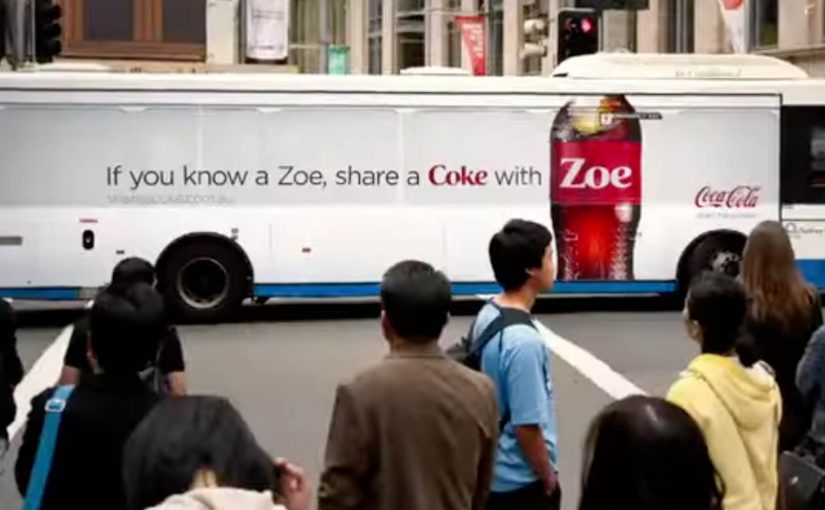
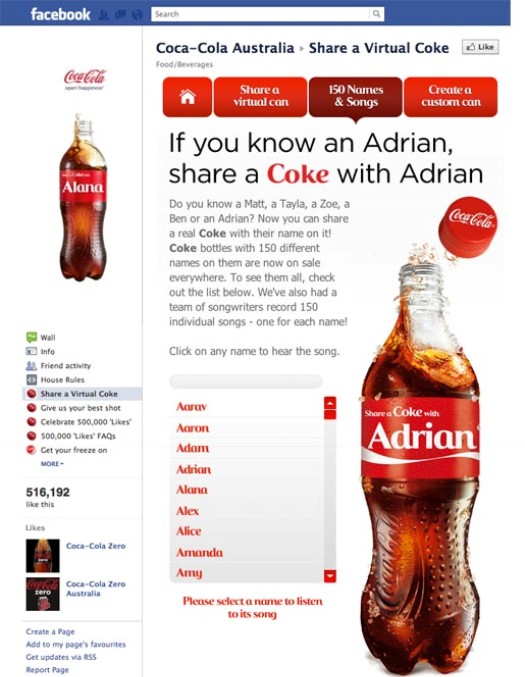
After 125 years of putting the same name on every bottle of ‘Coke’, they decided to do the unthinkable. They printed 150 of the most popular Australian first names on their bottles and then invited all Australians to ‘Share a Coke’ with one another.

Facebook image showing Coca-Cola promoting the Share a Coke campaign.

The result…

Packaging becomes the conversation

What stands out here is the simplicity. A bottle stops being just a product and becomes a prompt. A name makes it personal. Personal makes it talkable. Talkable makes it shareable.

Because the name turns the pack into a prompt, it triggers talk and sharing without requiring people to learn a new action.

In consumer brands with mass distribution and fragmented media, the pack is one of the most consistent touchpoints, so a pack-level prompt can carry an integrated campaign.

In a world where brands are fighting for attention across channels, this is a reminder that the pack itself can be the media, if it gives people a reason to participate.

Why it works (and why it is more than a label change)

It works because it makes personal relevance visible at the exact moment of choice, and that relevance is what people naturally want to point out and pass along.

Extractable takeaway: If you can make the product itself the trigger for a social action, you reduce friction and get sharing that feels like a natural behaviour, not a forced message.

  • It lowers the barrier to engagement. You don’t need a new behaviour. You just need to spot your name, or someone else’s.
  • It turns purchase into a social act. The “share” is built into the product, not bolted on as a message.
  • It scales personal relevance. The idea is big, but the execution is local. It lives in the names people recognise.
  • It links offline and online naturally. When something feels personal in-store, people are more likely to talk about it beyond the store.

The real question is whether your product can create a social reason to talk at the moment of choice, instead of asking media to do all the persuasion.

When you can bake the “share” into the product experience, packaging-led participation is a more reliable lever than a channel-first campaign plan.

What to take from this for integrated campaigns

  1. Start with a human trigger. A real reason for someone to say: “This is for me”, or “This is for you”.
  2. Make the product do the work. If the core idea is physically present, the campaign holds together across channels.
  3. Design for sharing as a behaviour. Not as a slogan. The easiest shares are the ones that feel natural and immediate.
  4. Keep it legible in one glance. The best integrated ideas can be understood instantly, without explanation.

A few fast answers before you act

What is the “Share a Coke” idea?

It is a packaging-led campaign where Coca-Cola printed popular first names on bottles, then invited people to “Share a Coke” with someone else.

What problem was Coca-Cola trying to solve in Australia?

Despite healthy brand tracking data, 50% of teens and young adults in Australia hadn’t enjoyed ‘Coke’ in the previous month, so the brand aimed to reignite consumption and relevance through conversation.

Why is printing names on bottles strategically interesting?

It makes the product feel personally relevant at the moment of choice. That personal relevance can trigger attention, talk, and sharing without needing complex mechanics.

Is this a “digital campaign” or a “packaging campaign”?

It is both, but it starts with the pack. The packaging is the trigger that can naturally extend into social sharing and broader integrated storytelling.

What is the transferable lesson for other brands?

If you can embed participation into the product experience itself, you reduce friction and increase the odds that people will carry your message across channels for you.

Turkcell: #Turkcelltweet Live Unboxing

Turkcell was launching new smartphones bundled with mobile internet and wanted to build awareness among heavy internet users. So Turkcell’s agency, Rabarba from Istanbul, created a live Twitter competition designed to pull exactly those people in.

A Twitter game that literally unwraps the prize

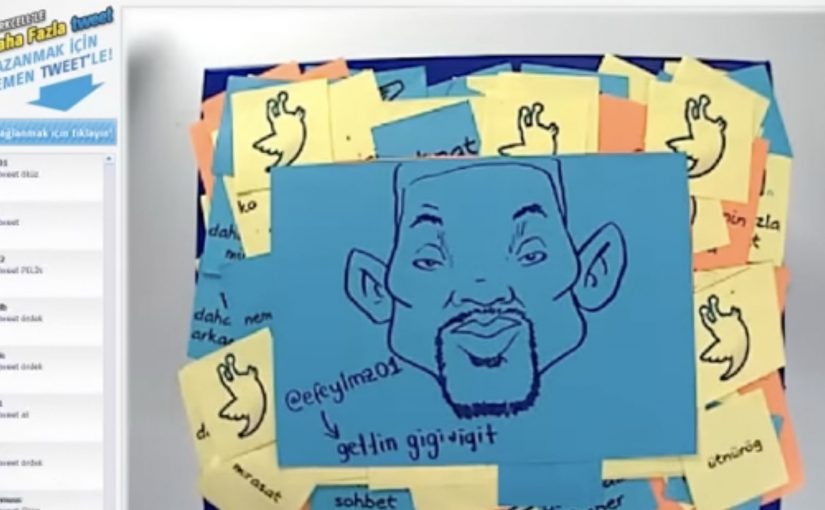
The smartphone was packed in gift boxes and covered with Post-it notes. Players had to tweet what was written on the Post-its to “unwrap” the boxes, using the hashtag #Turkcelltweet. Along the way, contestants joined quick games that won them free minutes and mobile data. The final challenge was to get a celebrity to retweet the message, which won the successful Twitter user a smartphone.

In mobile-first consumer markets, live social mechanics can turn a product launch into a participatory event that spreads through existing networks.

Why it lands

This works because it converts passive watching into a simple, fast action. Read. Tweet. Progress. It also creates a public scoreboard effect. Everyone can see the stream, feel the speed pressure, and understand why a specific player is moving closer to the prize.

Extractable takeaway: When you need attention from people who tune out advertising, design a live loop where participation creates visible progress and the reward feels plausibly “earned” in public. By “live loop” I mean a repeatable action-reward cycle that updates in real time.

What the brand is really buying

The real question is whether you are buying a one-off spike or a repeatable participation habit you can trigger again.

On the surface, it is a giveaway. Underneath, it is audience training. The campaign teaches people to watch Turkcell’s channel closely, to act quickly, and to associate the bundle with active internet culture rather than with standard telecom promotion.

If you cannot guarantee fair rules and real-time moderation, do not run a live social competition like this.

Steal this live unboxing loop

  • Build a single clear verb. “Tweet this to unwrap” is easier than any multi-step entry mechanic.
  • Make progress visible. The crowd should be able to understand what is happening in seconds.
  • Use micro-rewards. Minutes and data keep non-winners engaged, not just the front-runner.
  • Reserve one high-status finish. A celebrity retweet creates a final boss moment that feels bigger than “random draw”.
  • Design for throughput. Live contests die if the pace slows or the rules feel inconsistent.

A few fast answers before you act

What is #Turkcelltweet in one sentence?

It is a live Twitter competition where people tweet Post-it clues to unwrap a boxed smartphone, win small rewards on the way, and compete for a phone as the final prize.

Why does “unwrapping in public” work as a mechanic?

Because it creates visible progress that spectators can follow, and it turns every participant action into content the network can see.

What role do the small prizes play?

They keep the wider crowd engaged. Even if you do not win the phone, you can still gain minutes or data and feel the game is worth playing.

What is the biggest risk with live social competitions?

Fairness and reliability. If timing, moderation, or rule enforcement looks inconsistent, sentiment can flip fast.

What should you measure beyond hashtag volume?

Unique participants, repeat participation, completion rates across stages, sentiment, and whether the campaign lifts bundle consideration and store inquiries in the launch window.