
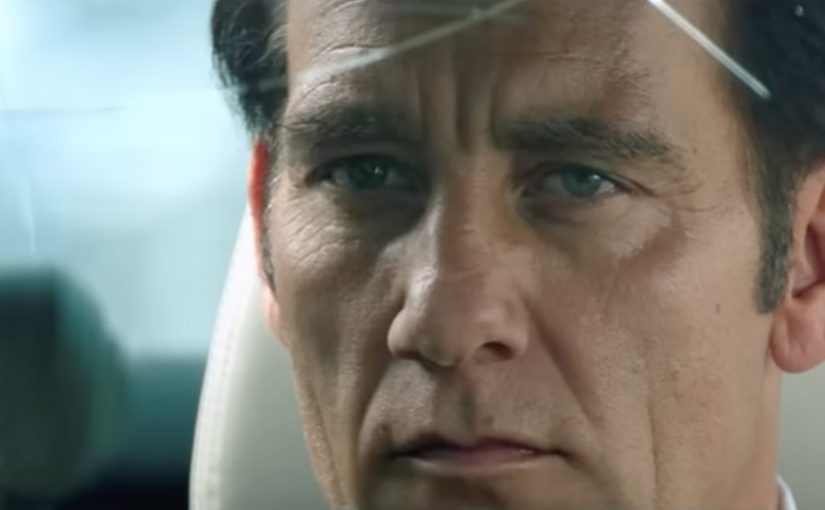
BMW Films – The Escape

BMW Films has teamed up with Academy Award nominated director Neill Blomkamp (“District 9,” “Elysium”) to create an action-packed short film to promote the new upcoming 2017 BMW 5 Series.

The story centers around a young girl simply named “Five”, played by Dakota Fanning, who is the subject of seemingly illegal experiments.

With the FBI cracking down on the company responsible for such experiments, Oscar nominated actor Clive Owen plays the nameless transporter who is hired to get Five out of there. The action ensues.

Why BMW Films still works as a launch format

This is not a product demo dressed up as content. It is content where the product belongs naturally. The car is not the “message”. It is the tool that makes the story credible.

  • Talent creates attention. Director and cast set a quality bar that feels like entertainment, not advertising.
  • The vehicle role is functional. Driving, control, and decision-making are essential to the plot.
  • Shareability comes from story. People pass it on because it is a short film worth watching, even without shopping intent.

The brand job: make the new 5 Series feel inevitable

When a film like this lands, it does two things at once. It signals confidence and it frames the new model in an emotional territory that spec sheets cannot reach. Capability, composure, speed, control.

The benefit is not that viewers remember a feature. The benefit is that they remember a feeling, and they connect that feeling to the 5 Series before they ever step into a showroom.

What to take from this if you are launching something complex

  1. Earn attention with craft. If you want people to choose long-form, it needs to deserve their time.
  2. Give the product a role, not a cameo. If it does not matter to the plot, it will feel bolted on.
  3. Let story carry the distribution. The strongest paid media is the one you do not need because people share it anyway.
  4. Build a universe, not a one-off. Formats like BMW Films work best when audiences expect the next chapter.

A few fast answers before you act

What is “BMW Films: The Escape”?

It is a branded short action film created to promote the upcoming 2017 BMW 5 Series, directed by Neill Blomkamp and starring Clive Owen and Dakota Fanning.

Why use a short film instead of a classic launch ad?

Because story earns time and attention. It creates emotional association and premium perception that traditional product messaging often cannot deliver on its own.

What is the product role of the BMW 5 Series in this format?

The car functions as an essential tool in the narrative. It supports the transporter premise and makes the action feel credible, rather than serving as a standalone showcase.

What makes branded entertainment feel “credible”?

High production quality, real creative talent, and a story where the brand presence is natural and necessary, not forced.

What is the practical takeaway for launch teams?

If you want to use long-form content, design it as entertainment first, then embed the product so it belongs, and the attention will travel further.
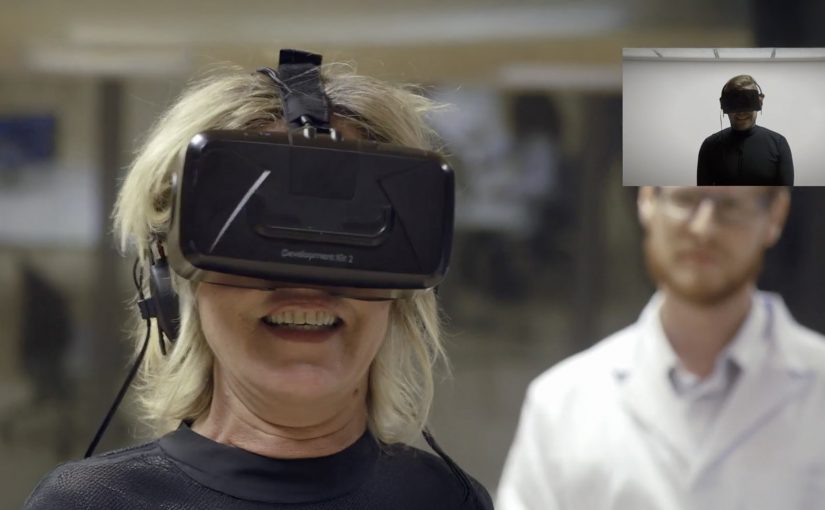

NIVEA Creme: Second Skin Project

A mother puts on a headset and a skin-like suit. Her son does the same, thousands of kilometres away. The promise is simple. If they cannot be together for Christmas, technology will let them feel a hug anyway.

That is the set-up in NIVEA Creme’s “Second Skin Project” with Leo Burnett Madrid. The film introduces Laura in Madrid and her son Pablo, who is away volunteering in Paraguay. They are invited to test a “Second Skin” garment that is presented as a high-tech fabric designed to simulate human skin and transmit the sensation of touch at distance, paired with virtual reality headsets.

In global consumer brands where heritage products compete with endless alternatives, emotional proof often carries more weight than functional claims.

The story then pivots. What looks like a tech demo is used to make a point about touch, not technology. The most persuasive moment is not the suit. It is the human reunion that follows, designed to underline NIVEA Creme’s belief that nothing beats skin-to-skin contact.

The “Second Skin” mechanism that pulls you in

The film borrows credibility from advanced-sounding materials and VR. That framing creates anticipation, because the viewer wants to know whether the experiment can actually work. The suit and headset are the narrative engine that earns attention for long enough to land the real message.

The twist that protects the brand meaning

There is a risk with tech-led emotion. The technology can become the hero and the brand becomes a sponsor. This script avoids that by using the tech as a decoy. The reveal shifts the spotlight back to the product truth. A hug is still the best “gift” and NIVEA Creme wants to be associated with that intimacy.

What to steal if you are tempted by “purpose + tech”

  • Use technology as the hook, not the conclusion. Let it earn attention, then pay it off with a human truth.
  • Make the brand stance explicit. Here the stance is clear. Technology can be amazing, but touch matters more.
  • Cast real stakes. Distance, holidays, and family history make the outcome feel earned.
  • Keep the product role emotional, not technical. NIVEA Creme is not “the innovation”. It is the comfort cue that frames the story.

A few fast answers before you act

What is the NIVEA Creme Second Skin Project?

It is a Christmas-season film and experiment setup where a mother and son test a VR-led “Second Skin” suit that is presented as transmitting the feeling of touch at distance, then the story reveals the value of real human contact.

Why does the campaign use VR and a “second skin” suit?

Because it creates a believable question the audience wants answered. Can technology replicate a hug? That curiosity holds attention long enough for the campaign’s real point to land.

What is the core message NIVEA Creme is trying to own?

That skin-to-skin contact matters. The work uses technology to highlight that, even in a world of advanced tools, nothing replaces human touch.

What makes this more than a generic emotional video?

The narrative structure. It starts as a tech experiment, then pivots into a human reunion. That contrast makes the conclusion feel stronger than a straight sentimental story.

What is the biggest risk with “tech-as-story” campaigns?

Audience misattribution. People remember the gadget and forget the brand meaning. The fix is to ensure the emotional payoff clearly belongs to the brand stance, not the device.

Lexus Hoverboard. Engineering a Brand Moment

Lexus builds a hoverboard. On purpose.

Lexus does not build a hoverboard to sell it.

They build it to show what the brand stands for.

The Lexus Hoverboard is a real, rideable board that levitates above the ground using magnetic levitation. It is not CGI. It is not a concept sketch. It is engineered, tested, and demonstrated.

This is brand storytelling executed through engineering, not advertising copy.

How the hoverboard actually works

The hoverboard uses magnetic levitation technology.

Superconductors inside the board are cooled with liquid nitrogen. When placed above a specially designed magnetic track, the board locks into position and floats.

The result is controlled levitation. Not free roaming, but stable, directional hovering that makes riding possible.

The constraints are part of the point. This is not science fiction. It is applied physics.

Why Lexus created it anyway

Lexus positions itself around precision, control, and advanced engineering.

The hoverboard compresses those values into a single, highly visual artifact. You do not need to read a brochure to understand it. You see it.

By placing professional skateboarders on a levitating board in a custom-built skate park, Lexus turns engineering into a cultural moment.

This is not a product launch

The hoverboard is not a prototype for future mobility.

It is a brand signal.

Lexus shows that it can take complex technology, make it work in the real world, and present it in a way that feels controlled rather than chaotic.

That matters in categories where trust in engineering is everything.

What this says about modern brand building

Brands increasingly compete on what they can demonstrate, not what they can claim.

When technology is real, visible, and difficult to fake, it carries more weight than messaging.

The Lexus Hoverboard works because it is unnecessary. It exists only to make a point.


A few fast answers before you act

Is this a real hoverboard?
Yes. It levitates using superconductors and magnetic tracks, not visual effects.

Why can it only be used in specific locations?
Because the magnetic infrastructure is part of the system.

What is Lexus really selling here?
Confidence in engineering, precision, and control.