
Qantas Out Of Office Travelogue

Qantas Out Of Office Travelogue

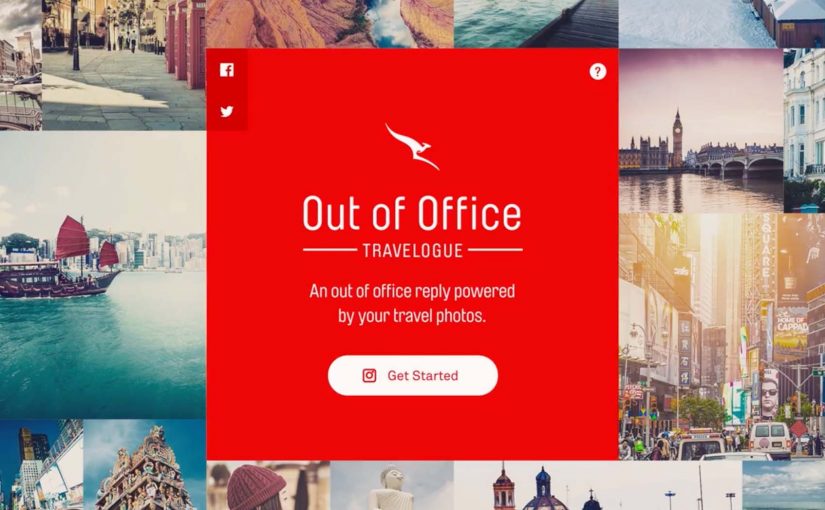
Qantas, Australia’s national airline, wants a new way to inspire travel with an increasingly younger audience. Their answer is a smart twist on a familiar behaviour. The out-of-office email. Instead of the usual “I’m away” message, Qantas turns it into a personalised travelogue powered by the user’s Instagram photos.

The mechanism is simple and effective. Qantas’ research shows that tips from friends and colleagues are a major driver for choosing the next holiday. So the brand uses Instagram’s API to transform a mundane autoresponder into something people actually want to read. A short visual story of where you are, what you are doing, and why it might be worth visiting.

What elevates the idea is the commercial bridge. The email does not just inspire. It incentivises recipients to book flights directly from the out-of-office message. This is social proof plus direct response, built into a format people already accept as normal workplace etiquette. The business intent is clear. Convert social inspiration into attributable flight demand inside the same interaction.

As a result, users created over 10,000 Out of Office Travelogues. The activity generated 100 million media impressions worldwide for Qantas.

Why this works as modern email strategy

Most marketing emails fight for attention in an overcrowded inbox. This one arrives with a built-in reason to be opened and read. It is a message you expect when you email someone who is travelling.

Extractable takeaway: When a brand can place a commercial message inside a communication people already expect, the marketing feels useful before it feels promotional.

It also uses the strongest distribution channel many brands overlook. People’s real networks. When your colleague shares their trip, even passively via an autoresponder, it carries more credibility than a brand-led destination ad.

This is one of the smarter ways to turn routine email behaviour into demand generation because it adds commerce without breaking the social norm that makes the message welcome.

The real innovation is the data-to-story pipeline

At a tactical level, the campaign is “just” an API integration. In practice, it is a reusable pattern. Here, data-to-story pipeline means turning user-owned content and simple signals into a coherent, bookable story unit.

  • Pull customer-owned content from a platform they already use.
  • Convert it into a lightweight narrative unit that fits a communication norm.
  • Add a clear, transactional next step without breaking the tone.

If you can operationalise that pattern, you can treat email not as static creative, but as a dynamic surface where personal context becomes relevant storytelling. Because the story is generated from a person’s real context, it feels more relevant and more trustworthy than static promotional creative.

In travel and hospitality categories where peer recommendation shapes intent, that makes email a distribution surface, not just a notification channel.

The real question is how far a brand can turn trusted everyday communication into measurable distribution without damaging the trust that makes it work.

What to watch if you replicate this pattern

The moment you use personal photos and automated messaging, the trust layer matters.

  • Permissioning and transparency. Make it obvious what is being pulled and why.
  • Control. Users need an easy way to curate what appears.
  • Brand safety. You need guardrails so the travelogue stays on-message without becoming intrusive.

What to steal for email-powered demand generation

  • Hijack a legitimate email type. Out-of-office replies get opened because the recipient expects them.
  • Turn personal content into a controlled story unit. User photos feel authentic, but only work when users can curate the output.
  • Embed the commercial action inside the narrative. Inspiration and booking sit in the same interaction, so intent has no time to cool down.
  • Use networks as distribution, not “audiences”. Colleagues and friends are higher trust than any destination banner.

A few fast answers before you act

What is the Qantas Out of Office Travelogue?

A personalised out-of-office email reply powered by the user’s Instagram photos, designed to inspire travel and drive bookings.

Why is the out-of-office format such a good carrier?

It arrives with intent and legitimacy. People expect it, and it is naturally tied to travel.

What is the core growth loop?

One person travels. Their network sees the travelogue via everyday email behaviour. The recipient gets inspired, and is pushed toward booking directly from the message.

What has to be true for this to scale?

Users need clear permissioning, easy curation, and a direct booking path that feels like a natural next step rather than a hard sell.

What results does Qantas report?

Over 10,000 travelogues created and 100 million media impressions worldwide.
Volkswagen: Wolkswagen

Volkswagen: Wolkswagen

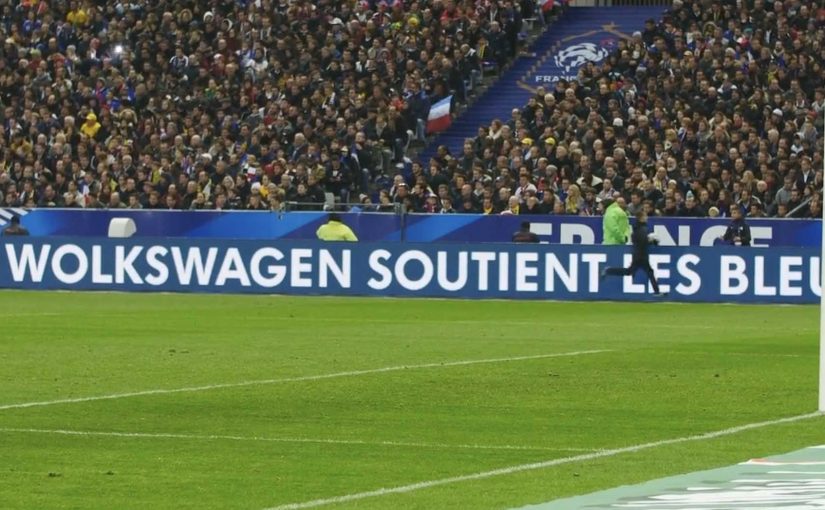
During a France vs Brazil football match in Paris, the LED boards around the pitch display a brand name that looks wrong. “Wolkswagen.”

Volkswagen leans into a simple human impulse. People love being the first to notice a mistake. So the campaign plants one at maximum scale and lets the crowd do what it always does. Point it out, correct it, and spread it.

The mechanism is the typo itself. A deliberate misspelling placed where 80,000 spectators and millions of TV viewers will see it, creating a wave of “they got it wrong” conversations that carries the real message. Volkswagen is present, watching, and ready to announce itself as a major partner of French football.

The psychology of a “correctable” brand moment

This works because correcting a visible public error lets people display attention and share the fix. Here, a “correctable” moment means a public cue that looks wrong but is safe and easy for the audience to fix. Noticing a typo feels like competence. Sharing it feels like helping others notice. The stunt converts that impulse into earned distribution, and it does it without asking anyone to watch a film or click a banner.

Extractable takeaway: If you want mass attention in a high-noise moment, design a safe, obvious “error” people can correct in public, then attach your actual announcement to the moment they point out and share the correction.

In live sports broadcasts, audiences are primed to scan for anomalies, and correcting them is a social reflex that spreads faster than the original message.

What the partnership announcement is really buying

The stated goal is awareness of a new relationship with French football. This is stronger than a standard sponsorship reveal because the audience helps distribute the news. The real question is how to make a routine partnership announcement impossible to ignore. The deeper goal is memorability. Sponsorship news is usually forgettable. A planted mistake is sticky, because people remember the moment they noticed it.

What to steal from this stadium-board stunt

  • Use one unmistakable deviation. The “wrongness” must be instantly readable from far away.
  • Make the correction harmless. The audience should feel clever, not manipulated or misled.
  • Deploy where attention is already concentrated. Stadium boards and live broadcast moments amplify small creative moves.
  • Ensure the reveal is clean. The moment must resolve quickly into the intended message, or it stays a gimmick.

A few fast answers before you act

What is the Wolkswagen idea?

A live stadium-board stunt that intentionally misspells “Volkswagen” as “Wolkswagen” to trigger public correction and attention, then uses that attention to support a football partnership announcement.

Why does an intentional typo generate more attention than a normal logo placement?

Because it activates a correction reflex. People engage to point out the “mistake,” and that engagement becomes the distribution channel.

What makes this feel like a live moment instead of an ad?

Placement and timing. It appears inside the live match environment, where audiences treat what they see as real-time context, not preplanned messaging.

What is the main risk with this pattern?

If the audience believes the brand genuinely made an error, the story can turn into ridicule. The execution needs a clear resolution so it reads as deliberate.

When should you use a “deliberate mistake” stunt?

When you have a time-bound announcement, a high-attention venue, and a brand that can credibly play with perception without damaging trust.

WestJet Christmas Miracle: Spirit of Giving

WestJet Christmas Miracle: Spirit of Giving

A purple-clad virtual Santa appears on a screen and asks residents of Nuevo Renacer what they want for the holidays. The requests are simple, specific, and deeply practical.

WestJet follows up last year’s Christmas Miracle with “Spirit of Giving”, created with Canadian charity Live Different. Instead of surprising passengers at baggage claim, the airline takes the idea to a community near Puerto Plata in the Dominican Republic, then documents the moment those wishes are handed back at a Christmas party.

The earlier film was reported to go viral and pass 36 million YouTube views. This follow-up is described as pulling strong early attention too, with view counts climbing quickly in its first days online.

The mechanism: ask, commit, deliver

The creative device is a clean three-step loop. First, the “virtual Santa” invite makes wishes safe to share. Second, WestJet commits to fulfilment, not vouchers. Third, the reveal turns a list of needs into a communal celebration, with WestJet employees and Santa presenting items that were requested.

That loop works because specific requests and visible fulfilment turn generosity into proof, which makes the story credible on camera and in conversation.

In airline brands where differentiation is hard to sustain through functional claims alone, a repeatable giving platform can build distinctiveness through emotion, participation, and earned reach.

Why it lands

This works because the surprise is not random. It is personalised, visible, and delivered in public, which makes the generosity feel real rather than performative. The setting also matters. A whole community receives together, so the story becomes collective, not one tearful individual moment.

Extractable takeaway: If you want a feel-good campaign to travel, anchor it in specific asks from real people, then make fulfilment the hero action, so the audience can retell the story as a fact, not an ad.

What WestJet is really buying

At face value, it is seasonal warmth. Strategically, it is continuity. The real question is whether a holiday stunt can become a brand behavior people expect and remember. WestJet turns “Christmas Miracle” into a platform, not a one-off. The brand signal shifts from “we did a nice thing” to “this is what we do”, which is how recurring campaigns earn trust and expectation.

What to steal from WestJet’s giving platform

  • Keep the ask interface simple. A single question beats a complex participation mechanic.
  • Make fulfilment concrete. Items, not messages, so impact is legible on camera and in conversation.
  • Use employees as proof. When staff show up, it reads as culture, not just media spend.
  • Design a platform, not a stunt. Recurrence builds memory faster than novelty alone.

A few fast answers before you act

What is “Spirit of Giving”?

It is a WestJet holiday campaign made with Live Different in which residents of Nuevo Renacer share gift wishes with a virtual Santa, then receive those items at a community celebration.

How does it connect to the original Christmas Miracle?

It uses the same core promise, personalised giving captured on camera, but shifts the stage from passengers to a partner community, making the brand story about community impact rather than travel surprise.

What is the key creative mechanism?

A low-friction request moment, followed by a high-credibility delivery moment. The gap between the two is where anticipation and emotion build.

Why does the “virtual Santa” device matter?

It creates permission. People can state real needs without feeling awkward, and the audience immediately understands the format without explanation.

What is the biggest way campaigns like this fail?

When the giving looks staged or extractive. If participants feel like props, the emotional payoff turns into skepticism. Consent, dignity, and specificity are non-negotiable.