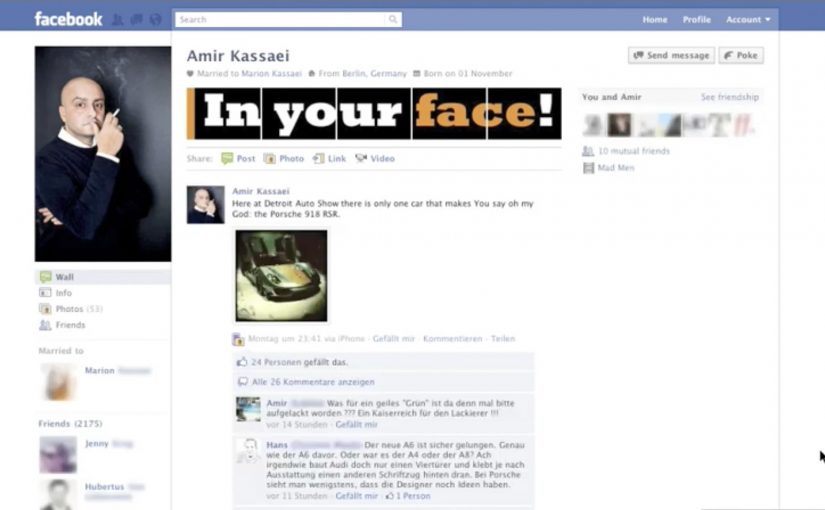
Draftfcb Germany is the latest ad agency to join the trend of tactically using social media for recruitment. In this case, they use Facebook’s redesigned profile layout to spread their hiring needs to a highly targeted advertising audience.
Recruitment message, delivered as a profile takeover
The mechanism is a simple interface hijack. Instead of posting a job ad and hoping people click, the recruitment message is built into the profile itself, so anyone landing on it experiences the “In Your Face” moment immediately. It is native to the platform, and it travels through the same social graph pathways as any other profile view.
In competitive hiring markets, social recruiting works best when the message shows up inside the places people already browse, rather than asking them to switch into “job search mode.”
Why it lands
This is not a deep story. It is a sharp pattern interrupt. That means the familiar Facebook profile suddenly behaves like a recruitment billboard, which makes the message easy to recognize and easy to forward to the right peers. The profile becomes the ad unit, the ad unit becomes a talking point, and the talking point becomes a referral engine as people share it with the exact peers who might fit.
Extractable takeaway: If you want a recruitment message to spread inside a community, put it where the community already looks, and make the first two seconds instantly legible without requiring a click.
The real question is whether the profile itself can carry the hiring message strongly enough to spread through the right creative network without needing a click. This is a smart recruitment move because it converts ordinary profile views into immediate message delivery and referral fuel.
Recruitment moves worth borrowing
- Use the platform’s default surfaces. If the profile is the most-viewed asset, make that the canvas.
- Design for “seen in passing.” The message should register at scroll speed.
- Make it referable. The best recruitment creative gives insiders something easy to forward to insiders.
- Keep it role-specific. If you want a “select advertising audience,” avoid generic “we’re hiring” language.
- Respect the line. If the takeover feels spammy or deceptive, it damages employer brand more than it helps.
A few fast answers before you act
What is “In Your Face” in one sentence?
It is a Draftfcb Germany recruitment idea that turns Facebook’s profile layout into a visual hiring message that spreads through normal profile views and shares.
Why use a profile takeover instead of a standard job post?
Because it removes friction and increases certainty. The viewer immediately understands the intent without leaving the platform or clicking through.
What makes this tactic “targeted”?
It travels through an industry social graph. The people most likely to see it are connected to the agency, its staff, or the wider creative community.
What is the biggest risk with this approach?
Novelty decay. Once the trick is familiar, it stops being a conversation piece, so the idea needs either a short run or variations.
What should you measure if you do something similar?
Qualified inbound candidates, referral volume from employees and peers, share rate inside relevant networks, and sentiment about the employer brand.