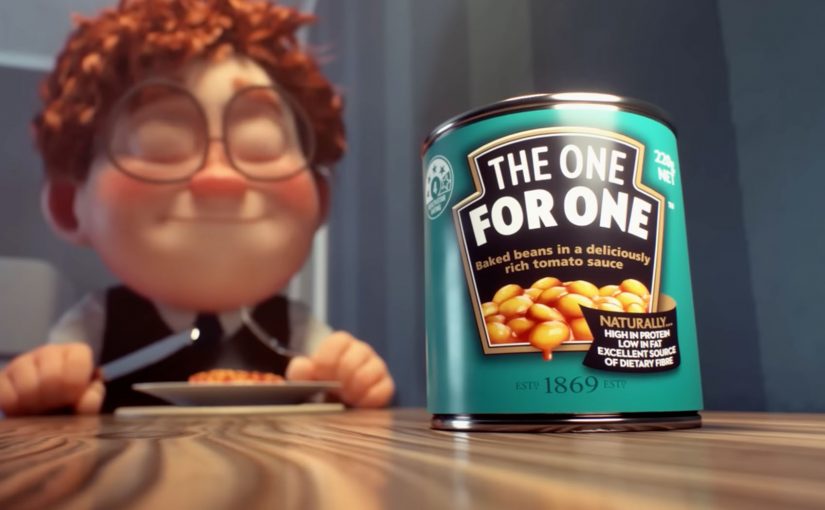
Kraft launches four new sizes of Heinz baked bean cans with a three-minute “life narrative” film. It follows Geoff, a man addicted to beans, and his future wife, whom he meets in the spaghetti department. The story builds to the punchline. Geoff “invents” a range of can sizes that feels perfect for different Australian occasions.
The creative choice is doing a lot of work. It turns something that is normally functional and forgettable. Pack size. Into a character-driven narrative that is easy to watch and easy to remember.
The insight behind the pack strategy
In 2016, Kraft commissions consumer and shopper research to understand how Australians use Heinz beans and spaghetti. The key finding is straightforward. People want ideal can sizes that suit different occasions.
Four sizes is not “more choice” for its own sake. It is a response to a usage reality. One household does not always need the same portion format.
Why a film is the right container for a packaging story
Packaging benefits can sound like rational product copy. This film makes the point emotionally, then lands it practically.
Extractable takeaway: When the product change is useful but easy to ignore, story can turn the format logic into something people can retell.
In FMCG portfolios, format expansion only scales when shoppers can instantly see why each variant exists.
This is the right strategic move because the job is not to announce four SKUs. It is to make each size feel like an intuitive answer to a real usage moment, so the portfolio looks helpful instead of bloated.
The real question is whether the audience immediately understands why more pack formats improve everyday use.
The narrative format also solves a distribution problem. It gives the campaign a reason to be watched and shared even by people who do not currently care about can sizes.
What to steal if you are launching format variants
- Start with a concrete usage insight, not a portfolio decision.
- Give the variant story a memorable mental model. Here, “a can size for every occasion.”
- Use entertainment to earn attention. Then let the product logic feel obvious, not forced.
A few fast answers before you act
What is being launched here?
Four new sizes of Heinz baked bean cans.
What insight drives the launch?
Kraft’s research shows Australians are looking for ideal can sizes to suit different occasions.
How is the launch communicated?
Through a three-minute life narrative film featuring Geoff and his future wife in the spaghetti department.
What is the core marketing technique?
Use story to make a functional packaging benefit feel human, memorable, and worth sharing.
Why not just announce the new sizes directly?
Because the film helps the audience feel the usefulness of the size range, rather than processing it as a dry packaging update.