
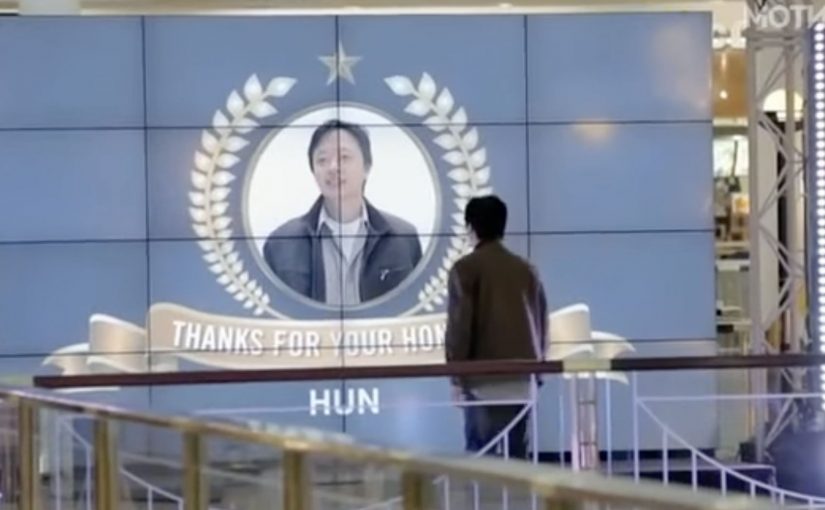
NAB: The Honesty Experiments

Australian bank NAB positions Australians as an honest lot, and argues they deserve honest credit cards to match. To bring that promise to life, they conducted a series of “honesty experiments” and published the results on YouTube.

Incorrect Change

Lost Wallet

Leaky Pockets

From a product claim to a public proof loop

The mechanism is a classic credibility builder. A “public proof loop” means turning a claim into a repeatable test, then publishing the outcome so the audience can judge it. Run simple real-world tests where people can choose honesty, film the outcome, then let the audience do the judging rather than the brand doing the telling.

In retail banking categories, trust is built faster through observable behaviour than through promises and price claims.

The real question is whether a trust claim can be converted into something people can judge for themselves.

For trust-starved categories, this is a stronger play than another round of product-feature messaging.

Why it lands

These films work because they invite a low-friction emotional conclusion. People want to believe the best of others, and the experiments are structured to deliver that relief, then attach it to the brand stance. The content is also inherently shareable because it is about character, not about banking mechanics.

Extractable takeaway: If you want to own “trust,” do not describe it. Show a behaviour that audiences can recognise as trust in action, then connect it back to the product promise in one simple line.

Then NAB escalates to “thank you” in real time

To say thanks in the biggest possible way, NAB followed the experiments with a real-time stunt that thanked honest passers-by immediately after they returned lost objects.

What the second phase adds that video alone cannot

  • Immediate reciprocity. Honesty is met with an instant reward, not abstract praise.
  • A bigger emotional beat. Surprise gratitude creates a stronger memory than “you did the right thing.”
  • Proof at street level. The brand shows up in the moment of integrity, not after the fact.

What to replicate from NAB’s honesty experiments

  • Pick one human truth. “Most people are honest” is clearer than a bundle of values.
  • Design the choice point. The story lives in a single decision. Keep it simple and legible.
  • Let people self-identify. The viewer should be able to imagine themselves in the situation.
  • Add a second act. If phase one proves the belief, phase two can reward it and deepen the brand role.
  • Protect credibility. Be transparent about rules and ensure the reward does not feel staged or selective.

A few fast answers before you act

What are the “honesty experiments” in one sentence?

A set of filmed, real-world tests where strangers can choose to act honestly, used to support NAB’s “honest credit cards” positioning.

Why do social experiments work for trust-based brands?

They replace claims with observable behaviour. Viewers decide what the outcome means, which feels more credible than advertising language.

What does the real-time thank-you stunt add?

It turns the brand from narrator into participant, rewarding honesty immediately and creating a stronger emotional memory.

What is the biggest risk with this format?

Credibility erosion. If viewers suspect manipulation, selective editing, or unclear rules, the trust message can backfire.

What should you measure beyond views?

Brand trust lift, message association with the product, sentiment, share rate, and whether the work changes consideration versus competitors in the same period.

Carlsberg: Bikers in cinema experiment

In a Belgian cinema, an “easy night out” turns into a small test of nerve. A couple walks in with tickets in hand. The room looks full. The only two empty seats are in the middle. The twist is that the audience is packed with intimidating bikers.

Carlsberg and Duval Guillaume Modem set this up as an experiment to reinforce the brand’s association with making the right choices. Reactions were recorded and edited into a viral film that rewards the people who stay seated rather than turn around.

The mechanism that makes it work

The mechanics are simple and deliberate. Fill the room. Leave two seats. Let unsuspecting pairs make a binary decision in public. Stay or leave. The tension is real because the setting is real, and the social pressure is visible to everyone watching.

Once a couple commits and sits down, the room flips from threat to approval. The bikers applaud, and the moment turns into a reward scene that makes the brand feel like it “saw” the better choice.

In crowded FMCG categories, social experiments work when they dramatize a value claim in a single, easy-to-retell moment.

The real question is whether you can borrow social risk to create attention without breaking participant trust.

Why it lands: social risk, then social proof

The audience experiences the same internal dialogue as the couples. Do I trust my instincts. Do I judge by appearance. Do I avoid discomfort. That tension is the hook. The applause is the release. Here, “social risk” is the fear of being judged in public, and “social proof” is the crowd signalling approval once the choice is made.

Extractable takeaway: When you borrow social pressure as the hook, you must also design visible approval as the proof, so the value claim is retellable in one line.

It also produces a clean moral without preaching. The brave are rewarded. The crowd is not actually hostile. The viewer walks away with a feeling that maps neatly onto the brand’s “good decision” positioning.

What Carlsberg is buying with this stunt

This is not about product attributes. It is about emotional territory. Confidence. Decency under pressure. And the idea that choosing Carlsberg is the grown-up, correct move when there are multiple options. This is a smart brand play because it turns “making the right choice” into observable behaviour, but it only works when the participants are treated carefully.

It is also engineered for sharing. The setup can be explained in one sentence, and the payoff is satisfying even if you only watch the last third of the video.

Design rules for your own brand experiments

  • Make the choice binary. The story works because there is a clear yes or no moment.
  • Stage tension, then earn release. If you create discomfort, you must repay it with warmth or justice.
  • Keep the “why” instantly readable. Viewers should understand what is being tested without narration.
  • Reward the behaviour you want to own. The applause is not decoration. It is the message.
  • Protect trust. If participants feel tricked or harmed, the brand loses the moral high ground.

A few fast answers before you act

What is the Carlsberg “bikers in cinema” experiment?

It is a filmed cinema stunt where unsuspecting couples enter a theatre filled with bikers and find only two seats left among them. Their decision to stay or leave becomes the story, and the people who stay are rewarded.

Why is this more shareable than a typical ad?

Because the premise is instantly understandable and the emotional arc is clean. Tension, decision, payoff. That structure travels well as a short video.

What brand message does the stunt communicate?

That “making the right choice” is a real behaviour under pressure, not a slogan. The brand borrows credibility by rewarding the choice on camera.

What is the biggest risk with social-experiment advertising?

Breaking trust. If the situation feels unsafe, humiliating, or coercive, the audience will side with the participants, not the brand.

How do you adapt this pattern without copying the stunt?

Create a public moment with a clear decision, then design a surprising but positive reward that proves your positioning. Keep the stakes emotional, not harmful.

Fanta: Lift & Laugh

A school elevator that refuses to stay boring

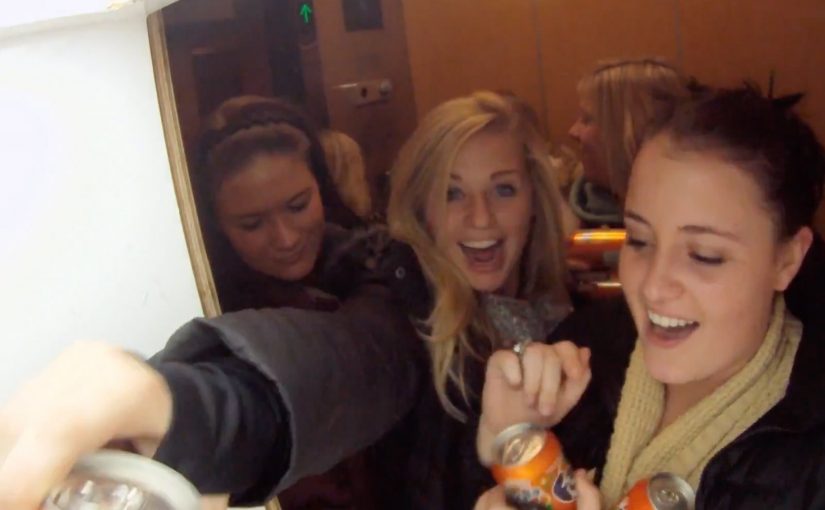
Ogilvy Brazil sought to reinforce Fanta’s brand image of “joy” in the USA. So they came up with an elevator prank called “Lift & Laugh”.

An elevator in a school in Atlanta was chosen to arouse students curiosity and laughter. In the elevator they installed a device that responded to the movements and comments from the students.

The mechanic: a responsive space that reacts back

This works by turning a routine moment. waiting for an elevator ride. into an interaction loop. The environment listens, then answers in real time, so the people inside start experimenting to see what triggers the next reaction.

An ambient ad is a brand experience placed in an everyday setting, where the setting itself becomes the medium and the message is delivered through participation.

In youth and soft drink marketing, “joy” only sticks when it is felt in-the-moment, not just claimed in a tagline.

The real question is whether your experience design can make play discoverable without instructions.

Why the prank lands with students

It creates instant permission to play. The elevator is a confined stage, the reactions are immediate, and the group dynamic amplifies everything. If one person laughs, everyone joins, and the experience escalates without needing instruction.

Extractable takeaway: When the audience’s own movement or words trigger an immediate response, the fun feels earned and becomes more likely to be retold.

The business intent: make joy a repeatable brand behavior

This is not just a one-off gag. It is a proof point for a positioning idea. Fanta turns dull places into fun places. If the experience is good enough, the brand gets earned attention plus social retell value without needing to push product features.

In the end many students did not want to get off the elevator and asked for a repeat trip.

What to steal if you want an experience people replay

  • Make the interaction discoverable. People should learn the rules by trying, not by reading.
  • Reward experimentation fast. Short feedback loops create momentum.
  • Design for groups, not individuals. Laughter spreads socially. Build for that amplification.
  • Anchor the behavior to your brand. The “why” should map cleanly to what you stand for.

A few fast answers before you act

What is Fanta’s Lift & Laugh?

It is an elevator prank experience where the elevator reacts to students’ movements and comments, turning a normal ride into a playful, responsive brand moment for Fanta.

Where did the activation take place?

It was staged in a school in Atlanta, using a real elevator as the experience space.

How does the elevator prank create engagement?

It uses immediate cause and effect. People try something, the elevator responds, and the group starts experimenting together to trigger more reactions.

Why does this work especially well with students?

The elevator becomes a contained stage and laughter spreads socially. One reaction gives others permission to play, which escalates the experience quickly.

What makes this “ambient advertising” rather than a standard ad?

The everyday environment becomes the medium. The message is delivered through participation in a real situation, not through a screen or a slogan.

What should brands learn from this format?

If you want “fun” as a brand attribute, build it into a situation people already live. Then make participation the delivery mechanism, not a message about participation.