Lupine: The Brightest Online Ad

Lupine: The Brightest Online Ad

A magazine you can only read in the dark

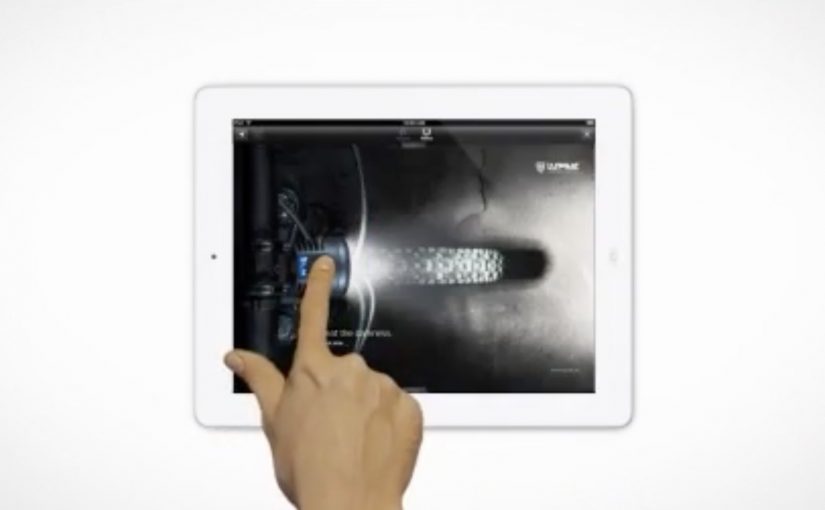
Publicis Germany created a cross-promotion for Lupine’s bike lighting system with BIKE Online Magazine that turns product use into the gatekeeper of content.

Subscribers could only read the magazine if they switched on a Lupine bike lamp. That simple constraint forces 100% attention onto the lamp because it is literally the way into the content. When readers shared the idea on social networks, their post distributed a link to a sneak preview where the lamp “illuminated” only a small part of the magazine. To read the full issue, users were prompted to order a trial subscription.

Click here to watch the video on the AdsSpot website.

The mechanic that makes it work

This is a clean attention trade. You get the content, but only if you demonstrate the product’s purpose in the moment you want to consume it. The campaign combines a physical trigger (the lamp) with a digital reward (magazine access), then uses sharing to distribute a constrained teaser that naturally pushes people toward the trial subscription step.

In enthusiast categories, tying media access to product behavior is a reliable way to turn curiosity into a demonstration people complete without being asked twice.

Why it lands

It does not ask you to “notice” a product. It makes the product the condition for progress. That flips advertising from interruption to utility, and it also reframes the lamp from a spec-sheet item into a felt experience: bright enough to read, controllable enough to focus, and instantly associated with the moment cyclists actually need light.

Extractable takeaway: When a product’s value is experiential, build a rule that forces the audience to experience it in context, then let sharing distribute a teaser that proves the rule rather than describing it.

What Lupine is buying with the stunt

The immediate goal is obvious: attention and trial subscriptions. The deeper goal is mental availability. The real question is how to make product use inseparable from the value people already want. Once “light equals access” is planted, the lamp is no longer a commodity accessory. It becomes the enabler of something people already value, and that is a stronger buying cue than another brightness claim.

The execution is also the kind of idea awards juries like because the medium and the message are welded together. It is listed with awards recognition including Cannes Lions Mobile Lions Bronze (2013) and The One Show Interactive Merit (2014).

What to borrow from Lupine’s access rule

  • Make the product the permission slip. If you can gate a valued experience with the product’s real function, you remove the need for persuasion copy.
  • Ship a “teaser mode” for sharing. Constrain the preview so it demonstrates the idea, then let curiosity do the rest.
  • Pick a partner with built-in habit. BIKE readers already have a reason to open the magazine. Your job is to attach your product to that routine.
  • Keep the conversion step aligned. Trial subscription is consistent with “try it to unlock it.” Anything more complex would break the spell.

A few fast answers before you act

What is “The Brightest Online Ad” for Lupine?

It is a cross-promotion with BIKE Online Magazine where the magazine is only readable when a Lupine bike lamp is switched on, turning product use into the mechanism for accessing content.

Why does “lamp-gated reading” create 100% attention?

Because the lamp is not adjacent to the content. It is the condition for seeing it. The user must interact with the product to continue.

What role does social sharing play in the concept?

Sharing distributes a constrained preview that demonstrates the idea while withholding the full experience, which naturally pushes interested people toward the trial subscription prompt.

What’s the transferable principle for other brands?

When your product’s value is best understood through use, make it the enabler of something the audience already wants, and let the enabling action become the message.

What would be the common failure mode of copying this?

Gating something people do not care about, or adding friction that feels punitive. The gate must feel like a fair trade, not a trap.

Sony: Headphone Music Festival AR posters

Sony: Headphone Music Festival AR posters

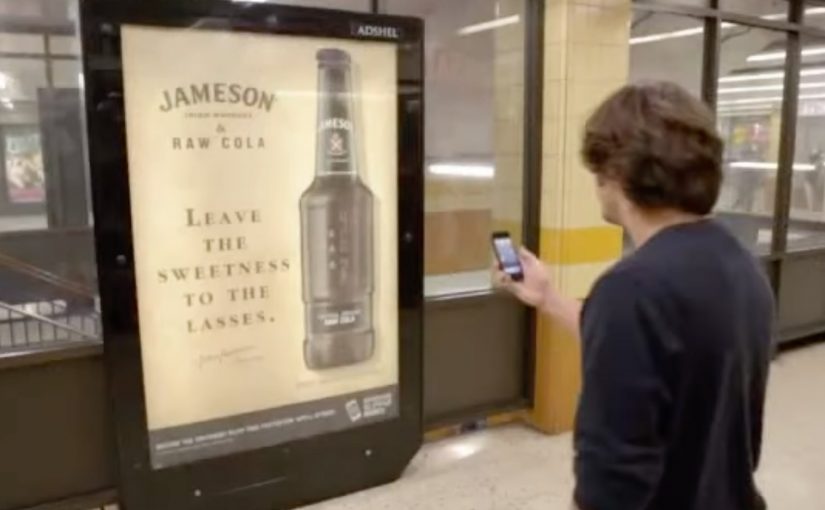
People in Tokyo who wear headphones, or simply want to try new ones, were treated to an augmented reality music festival from Sony Japan. Four popular local rock groups were turned into original AR performances, then “played” through band tour posters placed in busy locations. Sony-branded headphone trial stations were set up nearby so anyone could join in.

The loop is clean. Spot the poster. Scan it. Get a performance that feels like it is happening in your surroundings. Then step over and compare that moment on Sony headphones.

What makes this feel like a festival, not a tech demo

The execution is essentially a pop-up concert system distributed across the city. The posters act as stages. The phone acts as the ticket. The headphone stand acts as the product trial. That chain of touchpoints is why the experience reads as “festival” rather than “app feature.”

The mechanism: posters as portals

Instead of forcing people into a microsite or a branded app maze, Sony uses a familiar object. The tour poster. The poster becomes the launch surface for AR content. That matters because it removes the biggest friction in mobile AR. The “what do I point my camera at” question.

In supporting materials, the technology is described as Sony’s SmartAR and a smartphone app that recognises the posters and overlays 3D performance content into the live camera view. The mechanics stay invisible to the audience. They just see the band appear.

In dense urban retail markets, AR works best when it turns everyday street media into an immediate try-before-you-buy demo.

The real question is whether your AR trigger reduces friction enough that product trial becomes the next obvious step.

Why it lands for headphone marketing

Headphones are hard to sell with words. Most people cannot translate driver specs into feeling. This activation sells through a direct comparison. You hear a performance, then you hear it again through the product the brand wants you to try.

Extractable takeaway: A retail AR activation lands when the trigger is already in public view, the payoff is instant, and the path from wow-moment to product trial is one physical step away.

It also frames Sony as the host of the music moment, not just the logo next to it. That is a stronger association than “better sound.” It is “better access to the thing you love.”

The business intent behind the street setup

The intent is not just awareness. It is footfall and trial. The AR content pulls people in, but the trial stations convert curiosity into a product experience. If you can get someone to listen for 30 seconds, you can start building preference.

Steal this for poster-triggered AR trials

  • Anchor AR to a physical trigger people already understand. Posters, packaging, signage, tickets.
  • Make the payoff immediate. The first five seconds decide whether AR feels magical or annoying.
  • Keep the bridge to trial short. If you sell hardware, put the demo within sightline of the trigger.
  • Use content that earns replays. Music clips, reveals, limited drops, rotating “sets” work better than static overlays.
  • Design for scanning in real conditions. Glare, crowds, bad signal, rushed users. Make recognition forgiving.

A few fast answers before you act

What is the Sony “Headphone Music Festival” idea?

It is a street-based AR activation where tour posters trigger AR music performances on a phone. Sony pairs that content with nearby headphone trial stations so people can immediately test the product while they are engaged.

Why use posters instead of geofencing or QR codes?

Posters provide a clear camera target and an obvious reason to scan. They also carry cultural meaning. A tour poster already signals music and discovery, so the AR layer feels natural.

What makes AR effective for selling headphones?

It creates a controlled listening moment in an uncontrolled environment. The activation gives you a reason to put headphones on right now and compare the experience immediately.

What is the biggest pitfall in poster-triggered AR campaigns?

Recognition friction. If the scan fails or the experience takes too long to load, people abandon it. The trigger must be reliable and the content must appear quickly.

How do you measure success for this kind of activation?

Track scans per poster location, completion rates for the AR experience, and trial-station interactions. If possible, connect trial interactions to store visits or product interest signals.

Jameson Irish Whiskey: Blippar Space Invaders

Jameson Irish Whiskey: Blippar Space Invaders

Outdoor ads that turn into a game

Jameson Irish Whiskey recently launched a huge outdoor campaign, teaming up with augmented reality specialist Blippar for image recognition technology. Here, “image recognition” means the app matches what the camera sees to known Jameson creative and then triggers the experience.

People with the Blippar app could scan any Jameson Irish Whiskey ad or bottle and immediately get immersed in a Jameson Irish Whiskey version of Space Invaders.

How the Blippar scan-to-play mechanic worked

The mechanism was straightforward. A phone camera scan triggered Blippar’s image recognition. That recognition launched an interactive AR experience on the device.

In practice, the physical media became the “portal”. The ad or bottle was the entry point. The phone was the display and controller. The game was the reward.

In spirits and FMCG outdoor campaigns, scan-to-play AR works best when the payoff is immediate and the controls feel natural in a standing, on-the-street context.

Why it landed, and where the interaction could be smoother

The win is immediacy. Scan and you are inside the brand world without a long setup. Because recognition launches the game instantly, it converts a fleeting poster glance into play time.

Extractable takeaway: If you turn physical media into a “scan to reward” portal, deliver the reward within seconds and design controls that match the real-world posture of the moment.

After playing the game myself, I found it would have been a better experience if they had allowed viewer control through tilting the phone around, instead of non-stop tapping at the screen. However, it is still good to see more brands innovating like this.

What the brand was really buying

This was not just about novelty. It was about extending an outdoor campaign into a personal, interactive moment that people could not get from a standard print execution.

The real question is whether your outdoor media can earn voluntary attention, not just reach.

The intent was clear. Increase attention time. Add talk value. Create a reason to engage with the bottle and the ads beyond the first glance.

This pattern is worth copying when you can reward immediately and keep interaction comfortable enough to sustain play.

What to steal for your next AR activation

  • Make the entry point universal. “Scan any ad or bottle” reduces friction and increases participation.
  • Reward immediately. If the scan does not pay off fast, the experience loses the environment it depends on.
  • Design the controls for comfort. Favor natural motion and simple gestures over repetitive tapping when sessions run longer than a few seconds.
  • Use AR to earn time, not impressions. The value is the extra seconds of focused attention, not the novelty headline.

If you would like to give it a try, download the Blippar app on your smartphone and scan the below bottle to start playing.

Jameson Irish Whiskey


A few fast answers before you act

What was Jameson doing with Blippar?

They used Blippar’s image recognition so people could scan Jameson ads or bottles and launch an interactive AR game experience on a smartphone.

What was the core mechanic?

Scan the physical creative with the Blippar app. The scan triggers recognition. The phone immediately launches the game.

Why does scan-to-play work well for outdoor advertising?

It turns a passive glance into an active moment. The ad becomes a portal to content that holds attention longer than print.

What interaction improvement could make this smoother?

More natural viewer control, such as tilting the phone, can reduce fatigue compared to continuous tapping during gameplay.

What is the main takeaway for brands?

Use AR to earn time and engagement by delivering an immediate reward, and make the control scheme comfortable enough to sustain play.