
Waternet Queen’s Day Challenge: Pee Race

Waternet Queen’s Day Challenge: Pee Race

Turning a messy problem into a canal-side race

Queen’s Day in Amsterdam brings huge crowds and heavy celebrations. It also brings a very practical problem for Waternet, the city’s water supplier: too many people treat the canals like a public toilet.

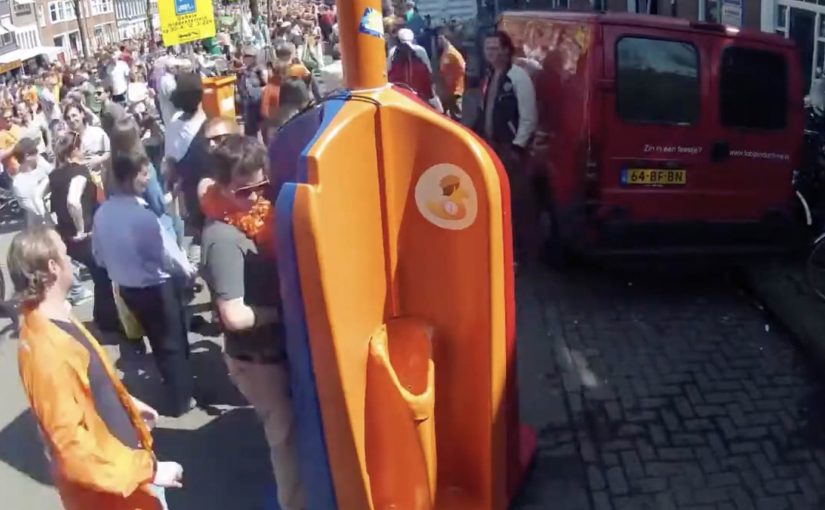
Instead of posting warnings, Waternet worked with Achtung! and installed several brightly colored urinals at different points along the canal. Each unit had four stalls and connected to a digital screen that turned peeing into a live race, with a simple incentive that makes people want to participate.

The mechanics that make it work

This is a strong example of ambient behavior-change design. Here “ambient” means the intervention lives in the environment, right where the decision happens, not in a banner ad or a TV spot.

Extractable takeaway: When the right behavior is a public, low-friction default with instant feedback, you can change behavior without asking people to absorb a lecture.

It works because the feedback is immediate, the experience is social by default, and the “right” behavior feels more fun than the “wrong” behavior. That combination reduces friction and replaces shame with competition. This is the kind of public-space activation brands should copy when the goal is behavior change, not sentiment.

In crowded city-center celebrations, playful public interactivity often changes behavior faster than moralizing signage.

Steal the ambient interactivity pattern

The real question is how to make the right behavior feel like the obvious choice in public, without needing anyone to read a sign.

  • Move the message to the moment. Put the interaction where the behavior happens, not weeks earlier in a campaign feed.
  • Make the desired action the easiest action. People choose the path that feels obvious and frictionless in public.
  • Use visible progress. A shared screen and a simple scoreboard create instant social proof.
  • Reward participation, not perfection. Even a small, symbolic payoff can tip the choice at scale.

A few fast answers before you act

What is the Waternet Queen’s Day Challenge?

It is a Queen’s Day activation in Amsterdam where Waternet installs canal-side urinals and turns their use into a multiplayer race on a connected screen, discouraging people from urinating into the canals.

How does the “pee race” work?

Four stalls connect to a shared screen. Participants use the urinal and the screen visualizes a race, making the act feel like a public, competitive mini-game rather than a private necessity.

Why does this kind of gamification change public behavior?

It replaces a negative instruction (“don’t do this”) with a positive, easy alternative that gives immediate feedback and a social payoff, which is especially effective in crowded, high-energy settings.

What makes an ambient activation succeed in public space?

Clear purpose, low friction, instant comprehension, and feedback people can see without explanation. If it needs a guide, it usually fails on the street.

How can brands use this pattern without relying on shock value?

Keep the mechanism. Swap the provocation. Put the interaction at the point of decision, make progress visible, and attach a small reward to the behavior you want to encourage.
Flashmob Marketing Hits: April 2012

Flashmob Marketing Hits: April 2012

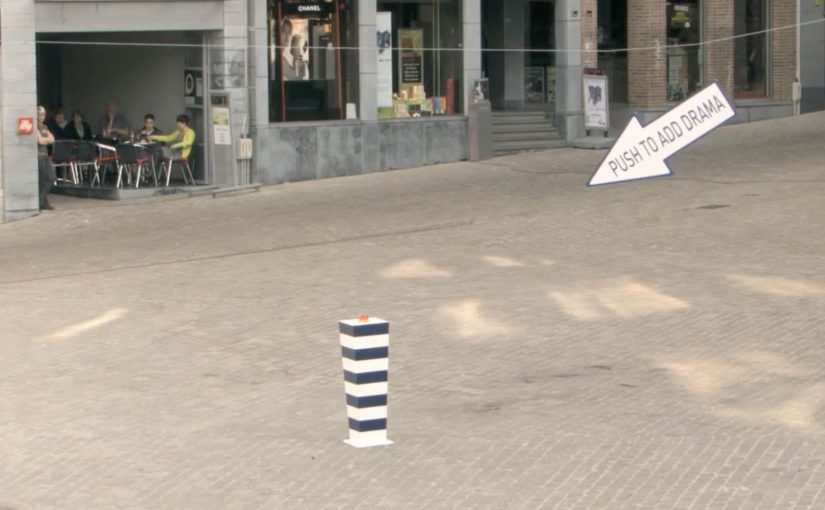
A big red push button sits in a quiet Flemish square. A sign says “Push to add drama”. Someone presses it, and the street turns into a live TV scene.

Flashmob marketing has been quite a fad in the last weeks. If you are unfamiliar with the concept, a flashmob is a large group of people who assemble suddenly in a public place, perform an unusual and pointless act for a brief time and then disperse. The whole act is normally recorded on video and then put on the web to generate more buzz.

Flash mobs can convert physical spectacle into shareable media without buying every impression. Here, “earned attention” means reach generated by people choosing to watch and share, rather than by paid placement.

Three street moments worth watching again

Daily dose of drama

To launch their new digital channel in Belgium, TNT placed a big red push button in a quiet Flemish square. A sign with the text “Push to add drama” invited people to use the button. And then the “ordinary day” collapses into staged chaos.

Why it lands: the invitation is frictionless, the payoff is immediate, and the viewer at home gets the same shock that the passer-by gets on the street.

The worst breath in the world

Tic Tac turns a simple “can you help me with directions” moment into social dread. A lost tourist asks for help in a busy square. Then, one person after another reacts as if the breath is so bad it triggers an apocalyptic chain reaction.

Why it lands: it weaponizes a universal fear, then exaggerates it so far that embarrassment becomes comedy. The crowd reaction becomes the story.

The Wouaaah Effect

For its Q10 Plus product, NIVEA in France creates a playful attention ambush on the streets of Paris. An unsuspecting woman tries a cream sample, walks on, and is suddenly met by a sequence of people lavishing her with attention.

Why it lands: it makes a product promise feel physical. The benefit is not “told”. It is acted out as a mini social fantasy.

Why the pattern behind the fad travels

The mechanism is simple. Create a one-line invitation, trigger a public spectacle, and film genuine reactions from the “mark” (the unsuspecting participant who triggers the stunt) and the bystanders. The distribution is the video, not the street corner. The street corner is the credibility engine because the live setting makes the reactions feel real, which makes the clip easier to share.

Extractable takeaway: If the trigger is simple and the payoff is instantly legible, real human reactions carry the persuasion when the video leaves the street.

In European consumer marketing teams trying to earn reach through social sharing, the street is only the proof point, not the media plan.

The real question is whether your spectacle earns a story people want to retell, or just a clip they scroll past.

What the brands are buying

These are not careful, message-heavy campaigns. They are attention accelerators. Flash mob-style stunts are worth doing only when the payoff embodies a brand promise you can show through human reactions. The business intent is to earn reach through surprise and shareability, then let the brand borrow the emotional afterglow of the moment.

How to steal the good parts without copying the gimmick

  • Start with a legible trigger. One button. One question. One sampling moment.
  • Design the escalation curve. The first five seconds decide if people stay for the next thirty.
  • Make reactions the hero. The crowd is your proof and your punchline.
  • Give the video a clean “retell”. If the concept cannot be explained in one sentence, it will not travel fast.

A few fast answers before you act

What qualifies as a flash mob in marketing terms?

A staged public action that appears spontaneous to bystanders, is filmed for real reactions, and is distributed primarily as a video asset to generate buzz.

Why do flash mob videos spread more than many traditional ads?

They feel like captured reality. The viewer gets surprise, spectacle, and social proof in the same clip, which makes sharing feel like passing on entertainment, not advertising.

What is the biggest creative risk with flash mob marketing?

People can read it as forced or manipulative. If the trigger feels like a trick, the audience turns on it and the brand takes the hit.

How do you keep a flash mob idea brand-relevant?

Make the payoff embody the brand promise. Drama for a drama channel, breath anxiety for mints, and attention for a beauty benefit are all direct translations.

What is the practical “steal” for marketers who cannot stage a street stunt?

Borrow the structure. A simple trigger, a clear escalation, and authentic human reactions, then build it for a format that you can execute safely and repeatedly.

Zoo Records: Hidden Live

Zoo Records: Hidden Live

Thousands of Hong Kong’s alternative music fans crave the raw energy, focus, passion, and participation of a live performance. Zoo Records faces a simple challenge. How do you bring that live experience directly to the fans.

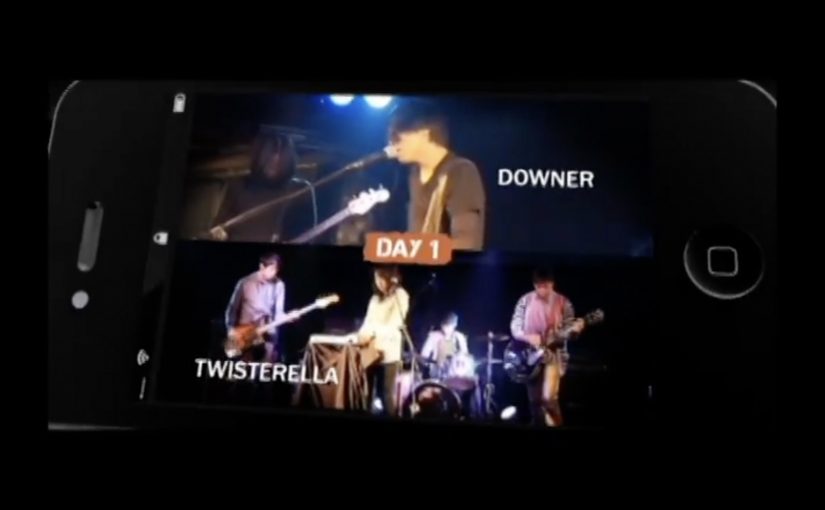
With Leo Burnett Hong Kong, Zoo Records creates “Hidden Live”, billed as a live mobile music festival. Eight indie bands perform across four nights, but the “venue” is not a stage. It is your phone. Tickets contain a hidden code. Scan it and your device becomes the gateway to the gig. Viewers can interact with bands in real time and even buy albums directly through mobile.

The mobile-ticket mechanism

The mechanic is a controlled unlock. In practice, that means entry depends on a visible code that changes the phone from passive screen to active venue. Free tickets are released shortly before each show, and the hidden code on the ticket is the key. Because the code makes entry feel earned and visible, the phone starts to behave like a venue rather than just another media player, which gives people a clearer reason to share and join. A friend’s device is not just showing a clip. It is hosting a live event.

In high-density cities where culture travels through phones first, turning personal devices into venues can scale live experiences beyond physical capacity.

Why it lands

This works because it keeps the emotional core of live music while removing the usual bottleneck. Venue size. Queue friction. Location limits. It also builds interactivity into the experience, so fans feel present rather than merely watching, and the album-buying layer makes the moment commercially useful without interrupting the performance.

Extractable takeaway: If your audience is starved of access, design an “unlock” that turns their existing device into the venue, then attach real-time interaction and a low-friction purchase path to the same moment.

What Zoo Records is really doing

The real question is how to make mobile access feel like attendance, not just distribution. The visible goal is to bring indie live energy to fans. The strategic goal is to convert participation into retail outcomes. Discovery that leads straight to purchase, while the scene still feels authentic. The campaign’s language is about “hidden” culture becoming reachable, and the mechanism makes that promise concrete.

The smart move here is making access itself part of the performance, not treating mobile as a secondary channel.

What to steal from Hidden Live

  • Make access the headline. Do not market “content”. Market the ability to enter something live.
  • Use a key people can show. Codes, tickets, and unlock moments create status and sharing.
  • Design interactivity on purpose. Real-time touchpoints turn viewing into participation.
  • Attach commerce to peak emotion. If buying is one tap while the set is live, it feels like support, not an upsell.

A few fast answers before you act

What is “Hidden Live”?

A Zoo Records campaign where live indie performances are unlocked via mobile by scanning a code on a ticket, turning phones into the concert venue.

Why use ticket codes for a mobile experience?

Codes create scarcity and a ritual. They also provide a simple, visible unlock moment that fans can share and explain quickly.

What makes it feel like a festival rather than a stream?

Scheduled live sets across multiple nights, real-time interaction with bands, and a shared participation loop around access and attendance.

How does the campaign connect to sales?

By letting fans buy the performing bands’ albums directly through mobile while the performance is live.

When is this pattern most useful?

When demand exceeds physical capacity, when fans already behave mobile-first, and when you can make access feel exclusive without making it complicated.