
Skip to content
SunMatrix Ramble

SunMatrix Ramble

What Matters in Marketing and Digital Innovation

  • ABOUT
  • CONCEPT INDEX
  • CONTACT

Categories

Tag: mobile engagement

Nike x Google: Real-Time World Cup Remix

Social media and mobile devices have driven fundamental changes in consumer behaviour and opened up new avenues for consumers to engage with brands. The need to move faster is greater now than it has ever been. Hence more and more brands around the world have been learning from social media and deploying real time digital and traditional media strategies. Here, “real time” means publishing remix-ready content seconds after a live moment, while the conversation is still alive.

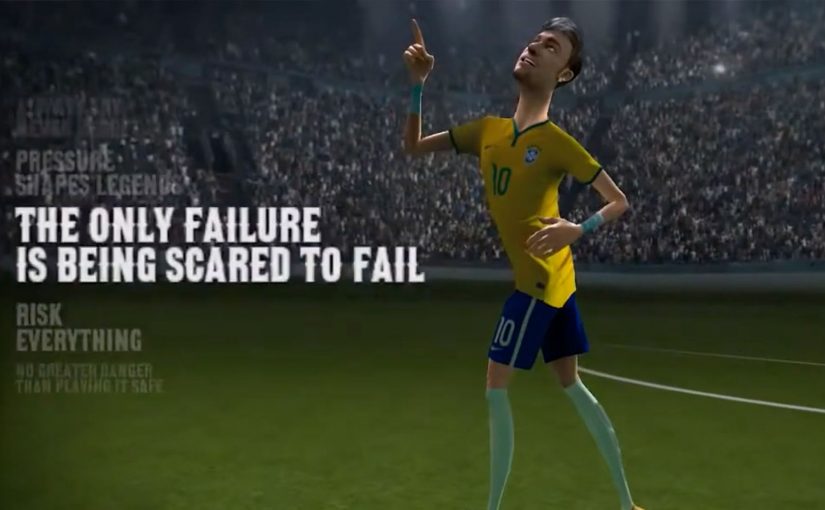
During the recently concluded World Cup in Brazil, Google teamed up with Nike to generate eight different real time campaigns that allowed fans to celebrate, remix and share memorable sports moments, just seconds after they happened. As a result Nike got over two million fan interactions across 200 different countries.

Eight campaigns built for the moment, not the recap

The mechanism is speed plus participation. The content is designed to appear while emotion is still peaking. Fans are not just watching highlights later. They can react and reshape the moment immediately, then distribute it across their networks while the conversation is still alive.

That “seconds after it happened” detail is the whole point. It signals an operating model where creative, production, approvals, and publishing are built to run at match tempo.

In global brands running live-event marketing, real-time only matters when the operating model is built to publish at the same tempo as the audience’s emotion.

The real question is whether your creative, approvals, and publishing can keep up without slowing the moment down.

Why it lands: fans want to do something with the moment

Sport is a live social experience. When something memorable happens, people do not only want to witness it. They want to respond. They want to signal allegiance, emotion, and identity. Giving fans remix and share tools turns that impulse into action, and action becomes interaction at scale.

Extractable takeaway: When you give fans a simple way to respond in the moment, the brand stops interrupting the experience and becomes part of how people express it.

The intent behind real-time media

The business intent is simple: ride the peak of attention and convert it into participation. Real-time campaigns let Nike earn visibility through fan activity rather than purely through paid reach. They also make the brand feel culturally present, not days later, but right now.

Real-time is an operating model decision, not a creative flourish.

Real-time remix moves worth copying

  • Design for reaction loops. Build formats that make it easy to celebrate, remix, and share instantly.
  • Pre-build the system. Real-time is a workflow capability, not a last-minute social post.
  • Use live events as triggers. Tie publishing to moments that already have emotion and attention.
  • Mix digital and traditional smartly. Real-time can spill into any channel if production is ready.
  • Measure participation, not just impressions. Interaction is the proof that the moment mattered.

A few fast answers before you act

What did Google and Nike do during the World Cup in Brazil?

They created eight real-time campaigns that let fans celebrate, remix, and share memorable moments seconds after they happened.

Why does “real-time” matter in sports marketing?

Because emotion peaks during the live moment. If fans can react instantly, they will share while attention is highest.

What makes a campaign truly real-time?

A system that can publish fast. Creative templates, production readiness, approvals, and distribution must be designed for speed, not adapted on the day.

What kind of engagement did this approach generate for Nike?

According to the campaign summary, it drove over two million fan interactions across 200 different countries.

What is the practical takeaway for brands?

If you want to win live moments, build repeatable remix formats and the operating model behind them, so your audience can act while the moment is still hot.
Posted on July 15, 2014February 27, 2026Categories Ads, Emerging Trends, Marketing Strategies, Mobile, Power of Online, Social MediaTags #artcopycode, Art Copy & Code, Brazil, Brazil 2014, digital campaign, facebook, fan participation, google, Google Display Network, memorable sports moments, mobile engagement, moment marketing, Nike, Real Time Marketing, remix culture, social media strategy, twitter, World Cup, World Cup 2014

CJ Entertainment: The Wi-Fi Poster

CJ Entertainment relies heavily on conventional movie posters, but posters are less and less likely to interrupt the smartphone generation. So instead of fighting the phone, CJ and Cheil put the poster inside the phone’s everyday behavior.

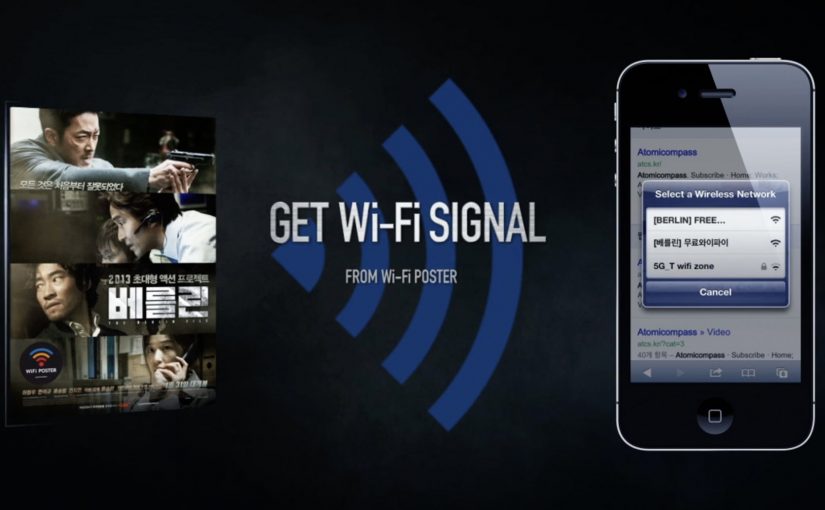
The Wi-Fi Poster turns a print billboard into something you can “tap” without installing anything. The poster includes a Wi-Fi access point. When you open your Wi-Fi menu, the film title appears as a network name. Tap it, and you get a pop-up style landing experience with links to Full HD trailers, promotional events, and online box office pages.

A low-friction alternative to QR code behaviors

Unlike QR executions that often depend on an app download and an extra scan step, this approach uses a native menu people already open. The discovery surface is the Wi-Fi list itself. The call to action is implicit. The “button” is the network name.

The real question is whether the interaction lives inside a default phone behavior or asks people to learn a new one.

This is the more defensible pattern for making print actionable: reduce steps by building on native phone UI, then deliver value immediately.

In dense, urban out-of-home environments where attention is already filtered through the smartphone, the best poster innovations behave like utilities rather than additional media.

Why it lands with young moviegoers

This idea is persuasive because it makes the poster actionable in one step, and it rewards the action immediately with content that matches intent. If someone is curious enough to tap, they are already in “tell me more” mode, so trailers and ticket links feel helpful rather than intrusive.

Extractable takeaway: When a medium is becoming invisible, do not add complexity to “modernize” it. Remove steps. Attach the experience to a native phone behavior, then pay the user back instantly with something they actually came for.

Reported outcomes that matter to marketers

Case write-ups for the work report a 28.5% increase in official-site traffic from wireless users, and that Wi-Fi Poster visitors stayed on the site around five times longer than regular users. The same write-ups also describe access points logging connections, page views, and paths toward online ticket sales, tying the novelty back to measurable intent and conversion.

Patterns to copy from the Wi-Fi Poster

  • Use the phone’s default UI. Build on menus people trust, not on new behaviors you need to teach.
  • Make the first interaction binary. Tap once. Get value immediately.
  • Let naming do the branding. A network name can carry the message without shouting.
  • Instrument the experience. If you can log connections and downstream actions, you can defend the idea beyond “cool.”

A few fast answers before you act

What is the Wi-Fi Poster concept?

A movie poster fitted with a Wi-Fi access point that appears in a phone’s Wi-Fi network list as the film title. Tapping it opens a mobile landing experience with trailers, events, and ticket links.

Why is it better than a QR-code poster in many situations?

It removes steps. No scan flow and no app dependency. The interaction starts in a native phone menu, which lowers friction and increases the chance of completion.

What is the core mechanism that makes it work?

Discovery through the Wi-Fi list, followed by a captive-portal style content gateway, meaning a web page that opens immediately after you join the network, which converts curiosity into immediate information and next actions.

What should you measure if you run something like this?

Connections per location, completion rate to the landing experience, content engagement time, click-through to ticketing or key pages, and conversion proxies like advance sales or sign-ups.

What can make this fall flat?

Confusing network naming, slow join and load times, or a landing experience that does not pay back the tap immediately will cause drop-off. Keep the first screen fast, clear, and aligned to “watch trailer” or “buy tickets.”

Posted on March 26, 2013March 5, 2026Categories Ads, Emerging Trends, Marketing Strategies, Mobile, Power of OnlineTags billboards, captive portal, Cheil, Cheil Seoul, Cheil Worldwide, CJ Entertainment, conversion design, earned attention, Mobil Advertising, mobile engagement, movie marketing, Movie Poster, OOH innovation, out-of-home advertising, poster campaigns, poster design, qr code, QR code alternative, Smartphone, smartphone marketing, South Korea, Wi-Fi, Wi-Fi Poster, Wi-Fi Posters, Wireless Hotspots

Budweiser: The Budclock

Happy hours always end. The clock runs out, the discount disappears, and the night moves on.

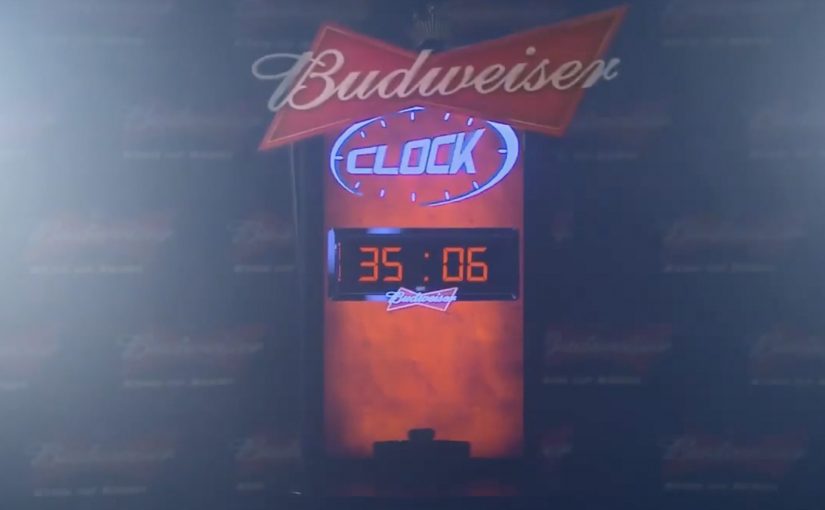
Budweiser’s Budclock in Ecuador turns that inevitability into a collective challenge. Each time someone scans a special QR code coaster at the Budclock machine, happy hour is extended by one minute.

A simple mechanic that turns the whole bar into a team

The mechanism is a visible countdown with a clear lever. Scan a coaster. Add time. The reward is shared, so the action naturally spreads across the table and across the room.

In bars and other in-venue settings, the most effective promotions tie a brand action to an immediate, social payoff that everyone can feel at the same time.

Why it lands, and why QR is not the headline

The QR scan is just the trigger. The real idea is time as currency. The real question is whether the reward can feel communal without adding friction. QR is a commodity here, and the differentiator is a visible countdown that makes the shared outcome feel earned. A minute is small enough to feel achievable, but meaningful enough to create momentum as people watch the clock move.

Extractable takeaway: If you want participation to scale inside a venue, design a mechanic where individual actions stack into a shared outcome, and make the progress visible so the room recruits itself.

What the brand is really buying

This is less about discounting and more about ritual. The Budclock gives people a reason to coordinate, repeat the behavior, and associate the brand with keeping the night going. The bar gets energy and dwell time. Budweiser gets repeated, voluntary engagement at the point of purchase.

How to reuse the Budclock pattern

  • Make the lever obvious. One action, one immediate change people can see.
  • Stack actions into a shared win. Reward the table, not the scanner.
  • Make progress public. A visible countdown turns participation into social proof.
  • Keep the unit small. Small increments feel achievable and invite repetition.

A few fast answers before you act

What is the Budweiser Budclock?

It is a bar activation where scanning QR code coasters at a Budclock machine extends happy hour by one minute per scan, turning a promotion into a visible countdown game.

Why does extending time work as a reward?

Time is instantly understood and socially shared. Everyone in the venue benefits at once, so the incentive feels communal rather than transactional.

What makes this different from a standard QR campaign?

The QR code is not used as a link to content. It is used as a lever that changes the real-world environment, and that change is immediately visible.

Where does a “shared clock” mechanic work best?

It works best when everyone can see the same progress indicator and the reward is immediately relevant to the whole room.

What should you measure if you run a mechanic like this?

Scan volume per hour, incremental dwell time, uplift in promoted products during the activation window, and repeat participation across groups and nights.

Posted on August 28, 2012March 5, 2026Categories Emerging Trends, Live Communication, Marketing StrategiesTags Bar marketing, Budclock, Budweiser, Creative QR Codes, Ecuador, Experiential Marketing, gamification, happy hour, interactive promotion, interactive vending machines, mobile engagement, nightlife marketing, Point of sale, QR coasters, qr code, QR Code coaster, QR Codes, time-based mechanic, Y&R Ecuador

Posts pagination

Page 1 Page 2 Next page
SunMatrix Ramble: Independent perspectives on marketing and digital innovation since 2009