
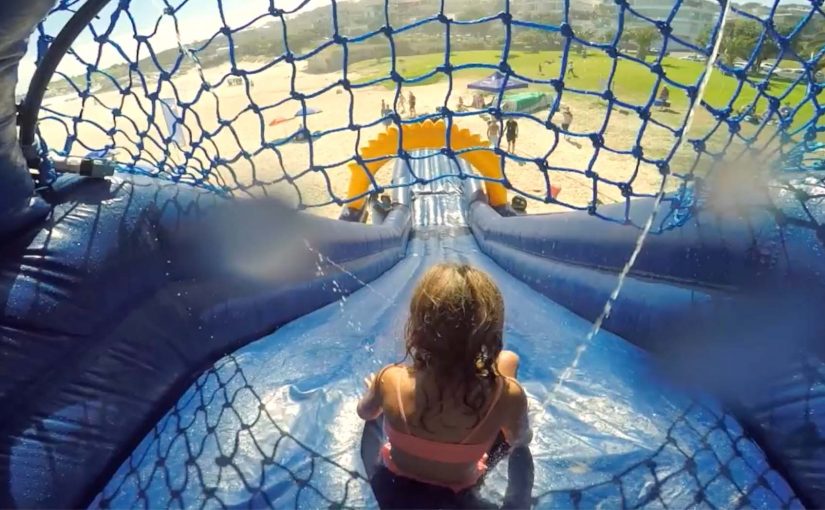
Nivea SunSlide

Kids are at the beach. They want to run, swim, and slide for hours. Parents want one thing first: sunscreen. That usually means a negotiation. Nivea flips the dynamic by turning sun protection into the game itself. It builds a slip-and-slide that sprays water-resistant SPF 50+ as kids go down. One ride applies the sunblock. The line is simple and strong: the “funnest” way to apply sunscreen. The claim is even better because it is measurable: one slide covers about 100 kids per hour.

The idea in one line

Remove the biggest friction in kids’ sun protection by embedding sunscreen into something they already want to do.

The real problem it solves

Parents do not struggle with intent. They struggle with compliance.
Kids do not resist sunscreen because they hate protection. They resist because applying it interrupts fun.

SunSlide is a behavioral design solution. It makes the protected action the entertaining action.

What gets built

A physical slide that sprays sunscreen as part of the ride. The experience does not ask kids to pause. It rewards them for participating.

In some coverage, the wider campaign context frames this against South Africa’s high skin-cancer risk and the heightened vulnerability of children, which is why “make protection automatic” becomes the creative strategy.

Why it works as brand experience

Utility is the message

The campaign does not tell you to protect your kids. It shows a mechanism that does it.

The product truth is delivered through physics

Water-resistant SPF is not a claim on a pack. It is the substance literally flowing through the experience.

The story is instantly repeatable

“A slide that applies sunscreen” is a one-sentence idea that travels without explanation.

What to borrow if you design activations

Find the one moment people always skip

Do not start with awareness. Start with the behavioral gap. Here, it is the interruption moment.

Convert interruption into participation

If the solution feels like a rule, people resist. If it feels like play, they opt in.

Make the benefit visible and countable

“100 kids per hour” makes the idea feel real. It turns a stunt into a scalable concept.

The deeper point

This is what brand-led innovation looks like when it is honest. It takes a genuine consumer pain point, removes friction with a physical design, and makes the brand feel helpful rather than preachy.


A few fast answers before you act

What is SunSlide?

A slip-and-slide that sprays water-resistant SPF 50+ sunscreen onto kids as they ride, making sun protection automatic.

What problem does it solve?

It removes the recurring “stop and apply sunscreen” interruption that kids resist and parents dread.

Why is it effective as marketing?

Because the product benefit is experienced, not explained. The activation becomes the proof.

What is the key behavior design lesson?

If you can embed the desired behavior into something people already enjoy, compliance becomes participation.

What is the biggest risk with this kind of idea?

If the experience feels unsafe, messy, or untrustworthy, parents opt out immediately. The execution must feel controlled, clean, and credible.
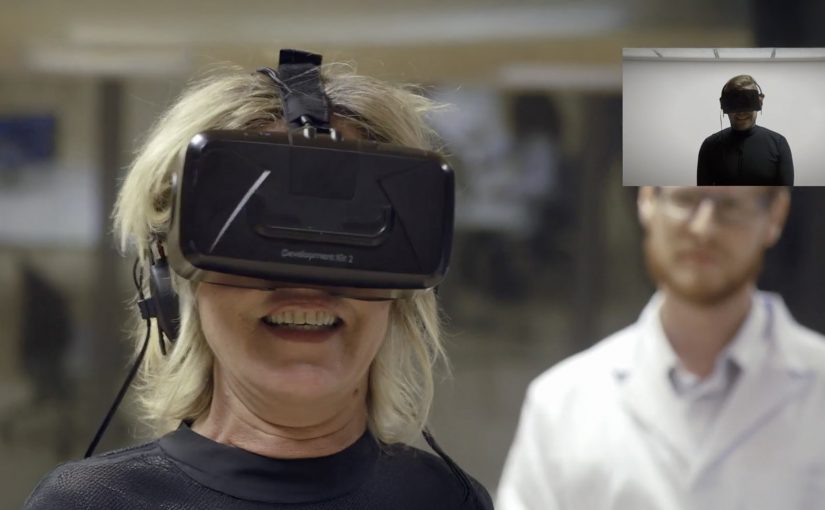
NIVEA Creme: Second Skin Project

A mother puts on a headset and a skin-like suit. Her son does the same, thousands of kilometres away. The promise is simple. If they cannot be together for Christmas, technology will let them feel a hug anyway.

That is the set-up in NIVEA Creme’s “Second Skin Project” with Leo Burnett Madrid. The film introduces Laura in Madrid and her son Pablo, who is away volunteering in Paraguay. They are invited to test a “Second Skin” garment that is presented as a high-tech fabric designed to simulate human skin and transmit the sensation of touch at distance, paired with virtual reality headsets.

In global consumer brands where heritage products compete with endless alternatives, emotional proof often carries more weight than functional claims.

The story then pivots. What looks like a tech demo is used to make a point about touch, not technology. The most persuasive moment is not the suit. It is the human reunion that follows, designed to underline NIVEA Creme’s belief that nothing beats skin-to-skin contact.

The “Second Skin” mechanism that pulls you in

The film borrows credibility from advanced-sounding materials and VR. That framing creates anticipation, because the viewer wants to know whether the experiment can actually work. The suit and headset are the narrative engine that earns attention for long enough to land the real message.

The twist that protects the brand meaning

There is a risk with tech-led emotion. The technology can become the hero and the brand becomes a sponsor. This script avoids that by using the tech as a decoy. The reveal shifts the spotlight back to the product truth. A hug is still the best “gift” and NIVEA Creme wants to be associated with that intimacy.

What to steal if you are tempted by “purpose + tech”

  • Use technology as the hook, not the conclusion. Let it earn attention, then pay it off with a human truth.
  • Make the brand stance explicit. Here the stance is clear. Technology can be amazing, but touch matters more.
  • Cast real stakes. Distance, holidays, and family history make the outcome feel earned.
  • Keep the product role emotional, not technical. NIVEA Creme is not “the innovation”. It is the comfort cue that frames the story.

A few fast answers before you act

What is the NIVEA Creme Second Skin Project?

It is a Christmas-season film and experiment setup where a mother and son test a VR-led “Second Skin” suit that is presented as transmitting the feeling of touch at distance, then the story reveals the value of real human contact.

Why does the campaign use VR and a “second skin” suit?

Because it creates a believable question the audience wants answered. Can technology replicate a hug? That curiosity holds attention long enough for the campaign’s real point to land.

What is the core message NIVEA Creme is trying to own?

That skin-to-skin contact matters. The work uses technology to highlight that, even in a world of advanced tools, nothing replaces human touch.

What makes this more than a generic emotional video?

The narrative structure. It starts as a tech experiment, then pivots into a human reunion. That contrast makes the conclusion feel stronger than a straight sentimental story.

What is the biggest risk with “tech-as-story” campaigns?

Audience misattribution. People remember the gadget and forget the brand meaning. The fix is to ensure the emotional payoff clearly belongs to the brand stance, not the device.

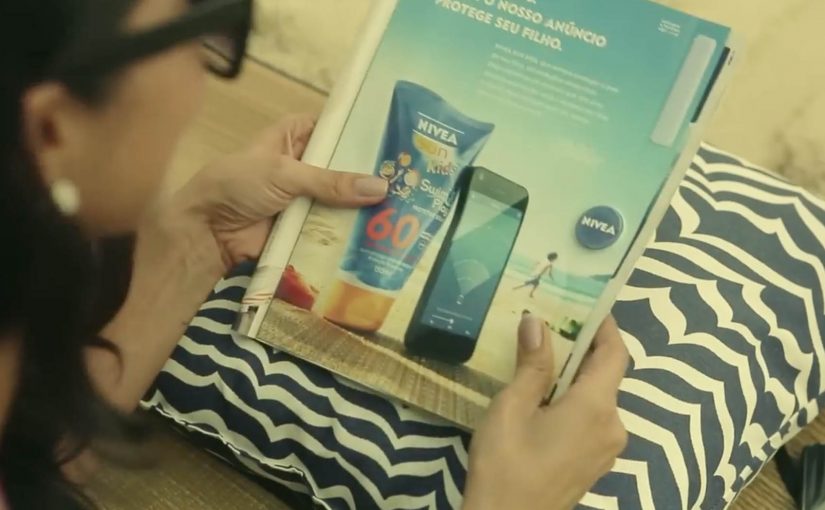
NIVEA: Protection Ad

Last year NIVEA transformed a regular print ad into a portable solar charger for smartphones. Now in its latest ad, NIVEA has made the right side detachable, so people on the beaches of Brazil can use it as a trackable bracelet.

Parents who want to keep an eye on their children can rip off the bracelet, attach it to a child’s arm, and then download the companion app. In the app, they can add each child’s name and set the maximum distance each child can wander. If a child goes too far, the app sends a loud alert.

From print to proximity

The clever part is that it is not just a “detachable freebie”. The bracelet is described as embedding Bluetooth proximity tech, so the printed unit becomes a functional signal that a phone can detect and monitor.

In FMCG innovation, utility-based media works best when the object removes a real anxiety in the exact moment the product is used.

Why the idea lands on the beach

NIVEA’s product promise is protection, but protection on a beach is not only about skin. It is also about the panic of losing sight of a child in a crowded, noisy, high-movement environment. The bracelet reframes the brand benefit from a claim to a service.

The mechanism is also instantly explainable. Tear it out. Put it on. Set a safe radius. Get alerted. That simplicity is what turns a print placement into something people talk about, and something press can repeat without over-explaining.

Business intent

This is a campaign designed to win preference in a category full of parity. It makes NIVEA Sun Kids feel like an innovator in a place where it matters, and it creates a reason to choose the brand that is not only SPF.

The work later received major awards recognition, including winning the Mobile Lions Grand Prix at Cannes Lions.

What to steal

  • Turn media into a usable object. If it solves a real problem, people keep it and share it.
  • Map the utility to the brand promise. The best “useful ads” make the benefit feel literal.
  • Make setup frictionless. Clear instructions and a fast pairing experience are the difference between buzz and abandonment.
  • Design for the real environment. Beach. Noise. Distance. Movement. The alert has to work in the messy world.

A few fast answers before you act

What is NIVEA’s Protection Ad?

It is a print ad that includes a tear-out bracelet for children, paired with a mobile app that alerts parents if a child moves beyond a preset distance on the beach.

How does the bracelet connect to the phone?

Coverage describes the bracelet as using Bluetooth proximity technology. The phone detects the bracelet, and the app uses distance thresholds to trigger alerts.

Why does this count as strong “useful advertising”?

Because the ad delivers a real service in-context. It does not only talk about protection, it provides an extra layer of it during a real beach day.

What is the biggest risk with safety-themed tech campaigns?

Trust and reliability. If pairing fails, alerts misfire, or the experience feels unclear, the concept turns from reassurance into frustration.

What should you measure if you build something similar?

Redemption and pairing success rate, app installs driven by the ad unit, repeat usage during real outings, and brand preference uplift versus a control region or period.