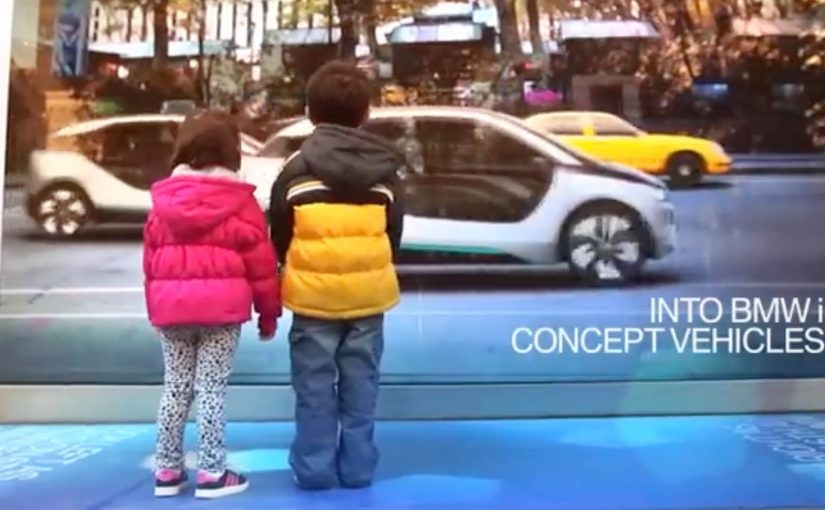
A street-level window in New York City behaves like a digital mirror. Here, “digital mirror” means a live street scene that can replace the cars in the image in real time. As traffic passes, the “reflection” transforms everyday cars into BMW i3 and i8 vehicles, giving passersby a glimpse into the near future.
The context. BMW i and “Born Electric”
The upcoming BMW i vehicles look distinctly futuristic and are positioned to arrive as early as late 2013. To build awareness for the BMW i Born Electric Tour in New York City, BMW reinforces a simple message. The future is closer than you think.
The real question is whether you can make a future-state product promise feel present without asking people to opt in.
This kind of work succeeds when the transformation is unmistakable from a distance and repeats for every passerby.
The execution. A live reflection that rewrites reality
BMW turns a window at the event location into a real-time “reflection” of passing traffic. The system captures what is happening on the street and swaps the vehicles in the live view for BMW i models, so the future feels present in the exact moment people walk by.
In public spaces, low-friction interactive experiences win when they are legible from a distance and require no download or instruction.
Why this works. Low friction, high surprise
The interaction requires no download, no instruction, and no commitment. It is immediate, legible from a distance, and designed for public curiosity. Because the swap happens in the same sightline people already have, surprise arrives before skepticism. The value is the reveal. A familiar street scene. Then a future version of that same scene.
Extractable takeaway: If you want people to believe “the future is close,” show the future inside a familiar frame, in real time, with one unmistakable before-and-after.
Make the promise feel present
- Borrow a default behavior. Use a frame people already check, like a reflection or a window, so attention is automatic.
- Make the change binary. One clear swap that anyone can spot, even in motion.
- Let repetition do the work. Design it so the reveal happens again and again for new passersby, without setup.
A few fast answers before you act
What is BMW i Window Into the Near Future?
A street-level installation that turns a window into a live digital “reflection,” transforming passing traffic into BMW i3 and i8 vehicles.
What is it promoting?
Awareness for the BMW i Born Electric Tour in New York City, and the idea that the future is closer than you think.
What is the main user behavior?
Walk by, notice the window, and experience the surprise as the street scene is transformed in real time.
Why is the window format effective?
It uses a natural behavior, looking at reflections, then subverts it with a future-state overlay.
What is the transferable pattern?
Place the experience where attention already exists, then deliver one high-clarity transformation that makes the product promise tangible.