
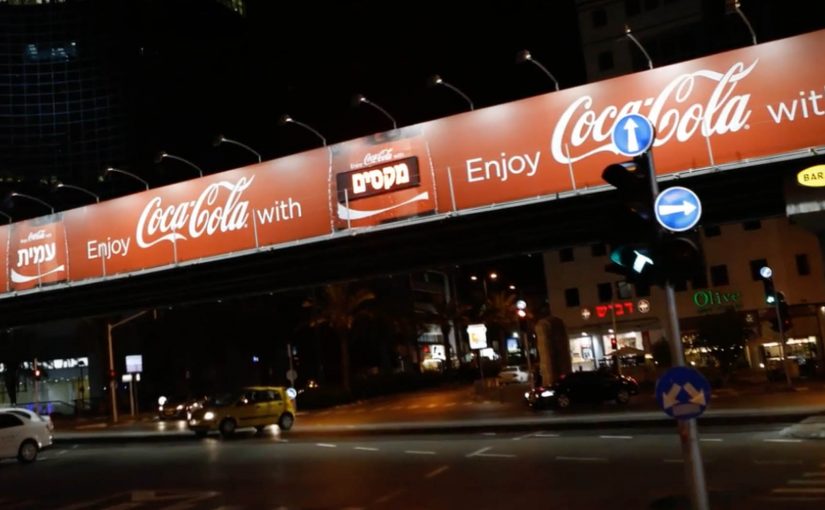
Coca-Cola: Personal Road

Coca-Cola: Personal Road

Coca-Cola has an ongoing global campaign that allows consumers to personalise bottles and cans…

The real question is how you extend a personalization promise beyond the package without turning it into a gimmick.
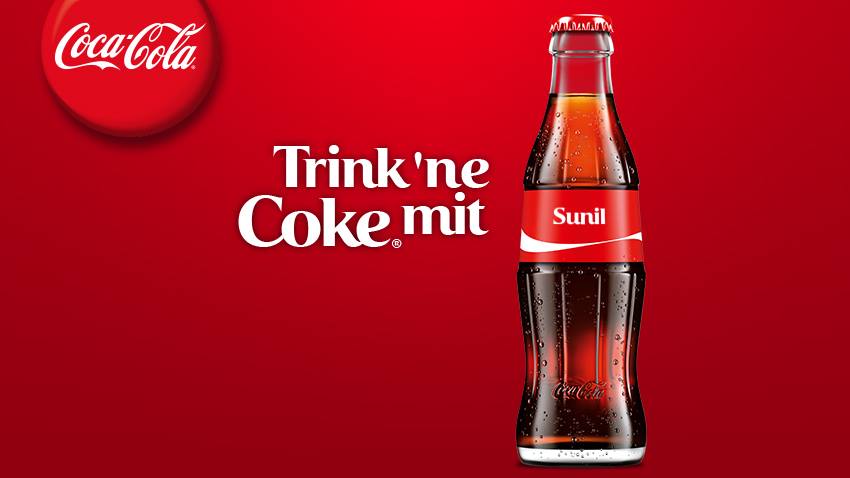
Enjoy a Coke with Sunil

Building on the success of this campaign Coca-Cola Israel decided to take the idea further with personalised billboards.

A mobile app was developed where consumers could enter their name. Then using geo-fence technology, the Coca-Cola billboard displayed the name when it was approached. Geofencing here means the app detects when you enter a defined area around the billboard. The same trigger also sends a phone message, which is what makes the public moment feel personal and easy to share.

In global consumer brands running mass-personalization campaigns, this kind of simple, location-triggered reveal is a clean way to turn a name into a real-world moment.

Since its launch the app has reached 100,000 downloads and is currently ranked #1 in Israel’s app store.

Why this extension makes sense

It keeps the original “Share a Coke” promise intact, then amplifies it with one visible surprise that is immediately confirmed on the device you are already holding.

Extractable takeaway: If you want personalization to stick, pair one unmistakably personal output people can see with one immediate confirmation they can keep.

  • It keeps the personalization promise. The name is not only on the package. It shows up in the world around you.
  • Location makes it feel “for me”. The moment you approach the billboard, the experience becomes uniquely yours.
  • Mobile closes the loop. The phone notification confirms the moment and turns it into something you can share.

The reusable pattern

Start with a personalization mechanic people already understand. Then add a single “surprise and confirm” moment in the real world, powered by location and a simple mobile action.

  • Keep the input tiny. Ask for one thing, like a name, and make it obvious what happens next.
  • Make the output public and specific. Put the person’s name somewhere they cannot miss in the real world.
  • Confirm on mobile. Send a message at the same moment so the experience is memorable and shareable.

A few fast answers before you act

What is Coca-Cola “Personal Road”?

It is a Coca-Cola Israel extension of the personalised-name campaign that uses a mobile app and geofencing so a billboard displays your name as you approach, and your phone notifies you.

How does the billboard know when to show a name?

The app uses geo-fence technology to detect proximity, then triggers the personalised billboard moment when the user approaches.

Why pair the billboard moment with a smartphone message?

The message confirms what just happened and makes it easy for the consumer to capture and share the experience.

What is the key takeaway for location-based campaigns?

Make the rule simple and the payoff instant: one input from the consumer, one visible personalised output, and one mobile confirmation that seals the memory.
Ben & Jerry’s #CaptureEuphoria: Instagram OOH

Ben & Jerry’s #CaptureEuphoria: Instagram OOH

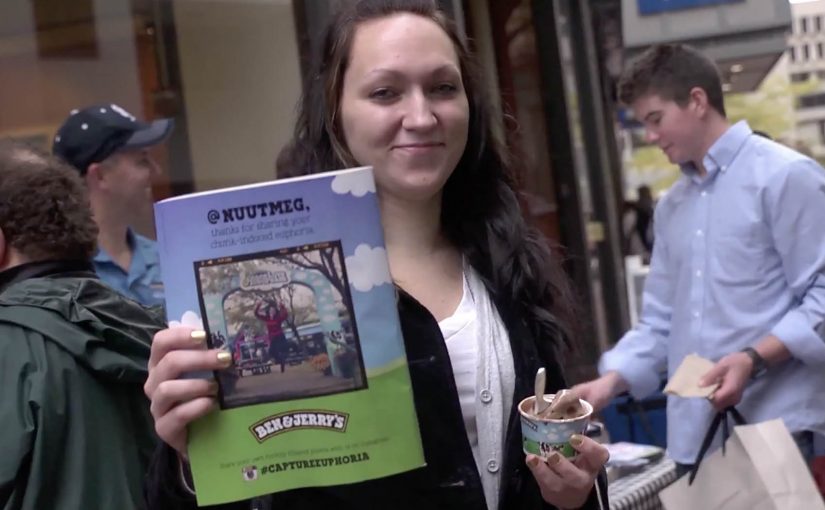
Ben & Jerry’s jumps onto the Instagram wave with a photo contest that challenges fans to capture their “euphoria” towards the brand. Winners from around the world are then featured in special Ben & Jerry’s advertising, including local print, bus station placements and billboards that appear near their homes.

The mechanic: a hashtag that turns into local visibility

The idea is straightforward. Fans post Instagram photos that represent “euphoria” and tag them with #captureeuphoria. Ben & Jerry’s curates a set of winners, then brings those images into the real world by placing them as local advertising close to where the photographer lives.

This is hyperlocal out-of-home (OOH) as a reward. Instead of giving people a generic prize, the campaign gives recognition that is geographically personal.

Recognition-based rewards are the better default when the goal is to deepen community, not just spike entries.

The real question is whether your reward shows up in the participant’s physical world, not just their feed.

In global FMCG marketing, the strongest social contests create an offline payoff that feels personal, not promotional.

Why it lands: recognition beats “stuff”

Most contests promise products, vouchers, or a one-time win. This one promises status. Your photo becomes the ad. Your community becomes the audience. That flips the usual relationship between brand and fan, and it makes participation feel less like a transaction and more like belonging.

Extractable takeaway: A social contest gets more powerful when the payoff is not only online. It is something the participant can physically encounter in their own neighborhood.

What Ben & Jerry’s reinforces by calling it “euphoria”

By anchoring the idea to a feeling rather than a product shot, the campaign invites more creative submissions and a wider interpretation of what “Ben & Jerry’s moments” look like. The brand gets a stream of fan-made images that reflect joy and personality, and the best of it becomes media.

What to steal for your next community-first contest

  • Reward participation with identity, not only incentives. Public recognition can outperform discounts when the brand has true fans.
  • Make the submission format native. A hashtag plus a photo is a low-friction action people already understand.
  • Close the loop in the real world. If you can turn online creation into offline visibility, the story becomes more memorable.
  • Keep the brief emotionally clear. “Capture euphoria” is an instruction people can interpret without overthinking.

A few fast answers before you act

What is Ben & Jerry’s #CaptureEuphoria?

It is an Instagram photo contest where fans post images tagged #captureeuphoria, and selected winners have their photos featured in local advertising near where they live.

Why is the offline ad placement the key twist?

Because it turns participation into public recognition. The reward is visible, personal, and rooted in the winner’s own community.

What makes this different from a standard user-generated content (UGC) contest?

Instead of only reposting winners online, it converts fan content into out-of-home and print media, which raises the perceived value of being selected.

What should a brand be careful about with hashtag-based submissions?

Moderation and curation. If the hashtag stream is unfiltered, off-brand or disruptive content can hijack the gallery effect.

How do you measure success for a contest like this?

Track volume and quality of submissions, unique participants, sentiment, earned reach from reposting, and the lift in brand engagement during the campaign window.

Aldo: Ring My Bell

Aldo: Ring My Bell

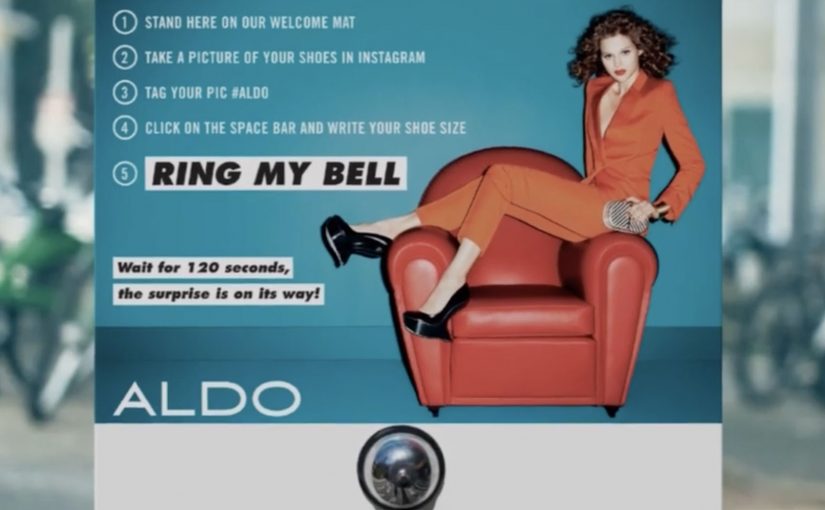
You stand on a welcome mat in the middle of the street, photograph your shoes, post to Instagram with #ALDO, add your shoe size, then ring a bell and wait 120 seconds. If you complete the steps, you get a surprise gift.

How the stunt turns a hashtag into a real-world trigger

The mechanism is a five-step participation script, a fixed sequence of actions that any passer-by can copy, that converts street curiosity into a trackable social action. The welcome mat marks the “stage”. The Instagram post captures proof and size data. The bell is the commitment moment. The 120-second wait creates tension. Then the brand pays off with a physical surprise delivered to the participant.

In high-footfall urban shopping streets where social posting is second nature, the fastest activations are the ones that turn a simple post into an immediate, tangible reward.

Why it lands

This works because it is friction-light and outcome-heavy. The instructions are short enough to follow at a glance, and the payoff happens quickly enough that the crowd stays to watch. The bell and countdown also make the moment public, which naturally pulls in the next participant.

Extractable takeaway: If you want social behaviour in the wild, write the participation flow like a street recipe. One clear prompt, one proof action, one suspense beat, one fast reward.

What the brand is really buying

The real question is not whether a hashtag can spread, but whether it can trigger a public action that proves the reward is real. This is less about reach in the abstract and more about engineered proof. By engineered proof, the brand makes the promised reward visible in real time so the next person believes it will work for them too. People do not just see a poster. They see someone trigger a reward in real time, which makes the campaign feel trustworthy and repeatable.

What to steal from a street-triggered reward loop

  • Make the call-to-action executable in under a minute. Anything slower loses passers-by.
  • Use a public commitment moment. A bell, button, or scan turns observers into a queue.
  • Time-box the suspense. The 120 seconds creates attention and crowd energy.
  • Design the payoff for spectators too. The best street rewards recruit the next person automatically.

A few fast answers before you act

What is “Ring My Bell”?

A street activation where pedestrians post a shoe photo to Instagram with #ALDO and their size, ring a bell, wait 120 seconds, then receive a surprise gift.

What is the core mechanism?

A simple participation script that links a social post to a physical reward, with a short countdown to keep attention on-site.

Why collect shoe size in the post?

So the reward can be prepared or matched quickly, and so the brand can fulfill immediately without follow-up friction.

What makes this work as OOH?

It turns signage into an interaction, and it makes the result visible to everyone nearby, which creates instant social proof on the street.

What is the safest reusable lesson?

Build an offline-to-online loop where the social action is the trigger, and the reward is fast enough to be witnessed in the moment.