
LEGO France: Creativity Forgives Everything

A child gets caught mid-creation. The scene looks like trouble at first glance, then the line flips the judgement: “We forgive everything to their creativity”. LEGO has recently launched this campaign in France around that exact tension between mess and imagination.

Click here to watch the video on AdsSpot website.

Turning “naughty” into proof of imagination

The core mechanism is a simple reframe. Instead of defending play as “educational”, the work leans into the moments parents normally correct. The child’s act is still a transgression, but it is also a creative act. The signature gives parents permission to smile first, and judge later.

In brand advertising for physical toys competing with screens, the fastest way to win attention is to make imagination look like something happening right now in the room.

Why the line sticks

“Creativity forgives everything” works because it treats creativity as a social contract, not a product feature. Here, “social contract” means an unspoken trade-off: parents tolerate the mess because it signals imagination at work. Parents recognise the micro-drama instantly. You want boundaries, but you also want your child to be bold, curious, and inventive. The campaign positions LEGO as the tool that triggers that boldness, even when it comes with collateral damage.

Extractable takeaway: If your category is crowded with functional claims, choose a human tension your audience already lives with. Then write a line that resolves the tension emotionally, and let the product become the enabler of that resolution.

What LEGO is protecting

This is brand defence disguised as humour. The real question is how LEGO stays culturally distinctive when screens can deliver endless entertainment without leaving any real-world evidence. It keeps LEGO out of a specs battle and away from “learning toy” cliches. By celebrating the messy edge of creativity, the brand claims a territory that is hard for digital entertainment to steal. Real-world play that leaves evidence.

What brands can borrow from LEGO here

  • Use a permission-giving signature. A great brand line does not just describe. It authorises a feeling or behaviour.
  • Stage recognisable “caught in the act” moments. When the scenario is instantly familiar, the audience supplies the backstory for you.
  • Make the brand the ally. The work does not lecture parents. It makes them complicit, which is more persuasive.
  • Let the theme travel across formats. This idea naturally fits film, print, and outdoor because the tension can be captured in a single moment.

A few fast answers before you act

What is LEGO’s “Creativity forgives everything” campaign?

It is a LEGO France brand campaign built around the idea that adults can forgive children’s small “misbehaviours” when they are clearly driven by creativity and imaginative play.

What is the core idea in one sentence?

Reframe mischief as imagination, then position the product as the trigger for that imagination.

Why does this positioning work for LEGO specifically?

Because LEGO is a physical system for building anything. The campaign connects that open-endedness to real, observable behaviour rather than abstract “learning” benefits.

How do you adapt this approach to another category?

Identify a daily tension your audience recognises, write a line that gives emotional permission, then demonstrate the product as the enabling tool inside that tension.

What should you avoid when copying the pattern?

Avoid moralising. The power comes from empathy and recognition, not from telling the audience how they should behave.
Ben & Jerry’s #CaptureEuphoria: Instagram OOH

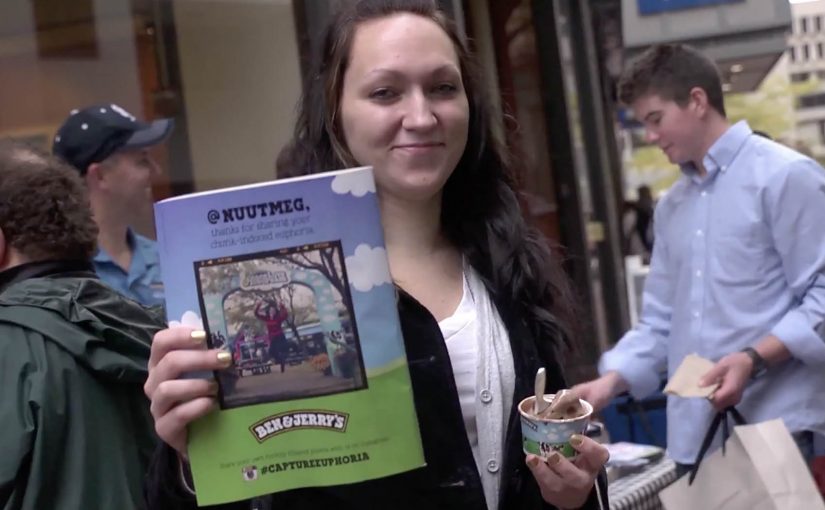
Ben & Jerry’s jumps onto the Instagram wave with a photo contest that challenges fans to capture their “euphoria” towards the brand. Winners from around the world are then featured in special Ben & Jerry’s advertising, including local print, bus station placements and billboards that appear near their homes.

The mechanic: a hashtag that turns into local visibility

The idea is straightforward. Fans post Instagram photos that represent “euphoria” and tag them with #captureeuphoria. Ben & Jerry’s curates a set of winners, then brings those images into the real world by placing them as local advertising close to where the photographer lives.

This is hyperlocal out-of-home (OOH) as a reward. Instead of giving people a generic prize, the campaign gives recognition that is geographically personal.

Recognition-based rewards are the better default when the goal is to deepen community, not just spike entries.

The real question is whether your reward shows up in the participant’s physical world, not just their feed.

In global FMCG marketing, the strongest social contests create an offline payoff that feels personal, not promotional.

Why it lands: recognition beats “stuff”

Most contests promise products, vouchers, or a one-time win. This one promises status. Your photo becomes the ad. Your community becomes the audience. That flips the usual relationship between brand and fan, and it makes participation feel less like a transaction and more like belonging.

Extractable takeaway: A social contest gets more powerful when the payoff is not only online. It is something the participant can physically encounter in their own neighborhood.

What Ben & Jerry’s reinforces by calling it “euphoria”

By anchoring the idea to a feeling rather than a product shot, the campaign invites more creative submissions and a wider interpretation of what “Ben & Jerry’s moments” look like. The brand gets a stream of fan-made images that reflect joy and personality, and the best of it becomes media.

What to steal for your next community-first contest

  • Reward participation with identity, not only incentives. Public recognition can outperform discounts when the brand has true fans.
  • Make the submission format native. A hashtag plus a photo is a low-friction action people already understand.
  • Close the loop in the real world. If you can turn online creation into offline visibility, the story becomes more memorable.
  • Keep the brief emotionally clear. “Capture euphoria” is an instruction people can interpret without overthinking.

A few fast answers before you act

What is Ben & Jerry’s #CaptureEuphoria?

It is an Instagram photo contest where fans post images tagged #captureeuphoria, and selected winners have their photos featured in local advertising near where they live.

Why is the offline ad placement the key twist?

Because it turns participation into public recognition. The reward is visible, personal, and rooted in the winner’s own community.

What makes this different from a standard user-generated content (UGC) contest?

Instead of only reposting winners online, it converts fan content into out-of-home and print media, which raises the perceived value of being selected.

What should a brand be careful about with hashtag-based submissions?

Moderation and curation. If the hashtag stream is unfiltered, off-brand or disruptive content can hijack the gallery effect.

How do you measure success for a contest like this?

Track volume and quality of submissions, unique participants, sentiment, earned reach from reposting, and the lift in brand engagement during the campaign window.

Coke Zero: Unlock the 007 in You

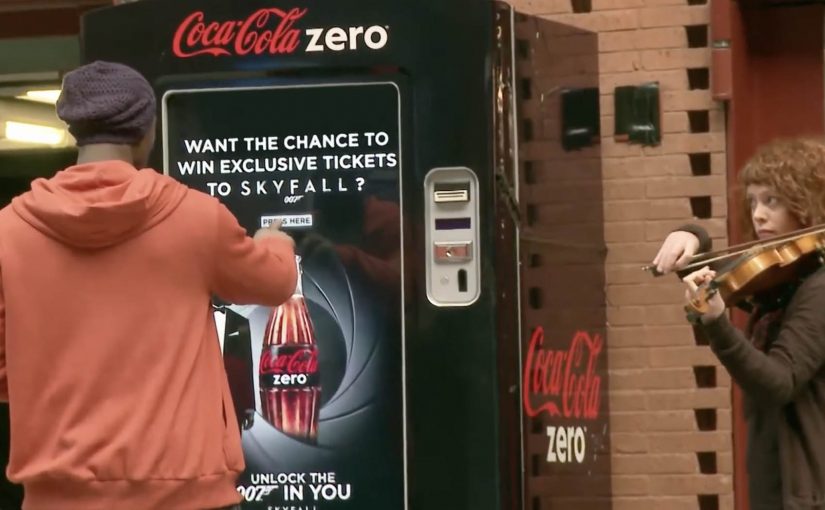
At Antwerp Central Station, Coke Zero challenges unsuspecting passengers to unlock the 007 in them for a chance to win exclusive tickets for the new James Bond movie Skyfall.

The catch is simple. The tickets aren’t free. You have to earn them by going the extra mile and completing the challenge in under 70 seconds.

A station takeover that turns waiting time into play

The setup is built for instant comprehension. A public space. A clear prize. A visible timer. A single instruction: move fast and stay cool.

That clarity matters. In a busy station, you do not have time to explain a brand story. You need a trigger that people understand in one glance and a mechanic that draws a crowd.

The mechanic: a timed “prove you’re 007” sprint

The experience is a countdown challenge. You step in, the clock starts, and you run a sequence of quick tasks designed to test speed, coordination, and composure. Finish within 70 seconds and you win.

This works because the timer turns a movie fantasy into visible stakes that both participants and bystanders can understand instantly.

In high-traffic transit hubs, timed challenges can turn waiting time into a shareable brand moment.

Why it lands: it makes the fantasy feel physical

Bond is not just a character. It is a posture: calm under pressure. The campaign translates that posture into something you can demonstrate with your body, in public, with a deadline.

Extractable takeaway: If your brand borrows meaning from a cultural icon, make the audience perform the meaning in a simple, timed ritual. A clock plus a visible finish line converts “cool story” into “I can do this”.

The station setting also does the work. People already have a reason to be there. The activation adds a burst of purpose to an otherwise idle moment, and the crowd reaction becomes part of the reward.

The business intent: earn attention that travels beyond the station

This is not a subtle idea. It is designed to be watched. Spectators gather, phones come out, and the experience becomes content. Even for people who do not play, the brand still wins a memorable association: Coke Zero equals fast, bold, and game-for-a-challenge.

The real question is whether you can turn borrowed cultural meaning into a public ritual people want to attempt and others want to watch.

What to steal from this timed station challenge

  • Start with a single rule: one sentence that explains how to win.
  • Use an obvious constraint: a countdown is the fastest way to create stakes.
  • Make it watchable: design for a crowd, not just the participant.
  • Reward participation, not perfection: the attempt should feel fun even if people fail.
  • Keep the prize culturally aligned: the reward should match the fantasy you are selling.

A few fast answers before you act

Why do timed challenges work so well in public spaces?

A timer creates instant stakes and makes the outcome easy to understand for both players and spectators. That clarity is what pulls a crowd in seconds.

What’s the core psychological hook in this activation?

It turns identity into action. You are not told to “feel like 007”. You are invited to prove it under pressure.

What should you measure for a stunt like this?

Footfall around the installation, participation rate, completion rate, average watch time for spectators, social shares per participant, and earned media pickup.

What’s the biggest execution risk?

Friction. If onboarding takes too long or rules are unclear, people will not step in. In transit environments, attention is short and drop-off is ruthless.

How do you adapt this idea without a movie tie-in?

Anchor the challenge to any role people want to inhabit: “be the expert”, “be the fastest”, “be the calm one”. Then translate that role into a simple timed sequence with a visible finish line.