
LEGO France: Creativity Forgives Everything

A child gets caught mid-creation. The scene looks like trouble at first glance, then the line flips the judgement: “We forgive everything to their creativity”. LEGO has recently launched this campaign in France around that exact tension between mess and imagination.

Click here to watch the video on AdsSpot website.

Turning “naughty” into proof of imagination

The core mechanism is a simple reframe. Instead of defending play as “educational”, the work leans into the moments parents normally correct. The child’s act is still a transgression, but it is also a creative act. The signature gives parents permission to smile first, and judge later.

In brand advertising for physical toys competing with screens, the fastest way to win attention is to make imagination look like something happening right now in the room.

Why the line sticks

“Creativity forgives everything” works because it treats creativity as a social contract, not a product feature. Here, “social contract” means an unspoken trade-off: parents tolerate the mess because it signals imagination at work. Parents recognise the micro-drama instantly. You want boundaries, but you also want your child to be bold, curious, and inventive. The campaign positions LEGO as the tool that triggers that boldness, even when it comes with collateral damage.

Extractable takeaway: If your category is crowded with functional claims, choose a human tension your audience already lives with. Then write a line that resolves the tension emotionally, and let the product become the enabler of that resolution.

What LEGO is protecting

This is brand defence disguised as humour. The real question is how LEGO stays culturally distinctive when screens can deliver endless entertainment without leaving any real-world evidence. It keeps LEGO out of a specs battle and away from “learning toy” cliches. By celebrating the messy edge of creativity, the brand claims a territory that is hard for digital entertainment to steal. Real-world play that leaves evidence.

What brands can borrow from LEGO here

  • Use a permission-giving signature. A great brand line does not just describe. It authorises a feeling or behaviour.
  • Stage recognisable “caught in the act” moments. When the scenario is instantly familiar, the audience supplies the backstory for you.
  • Make the brand the ally. The work does not lecture parents. It makes them complicit, which is more persuasive.
  • Let the theme travel across formats. This idea naturally fits film, print, and outdoor because the tension can be captured in a single moment.

A few fast answers before you act

What is LEGO’s “Creativity forgives everything” campaign?

It is a LEGO France brand campaign built around the idea that adults can forgive children’s small “misbehaviours” when they are clearly driven by creativity and imaginative play.

What is the core idea in one sentence?

Reframe mischief as imagination, then position the product as the trigger for that imagination.

Why does this positioning work for LEGO specifically?

Because LEGO is a physical system for building anything. The campaign connects that open-endedness to real, observable behaviour rather than abstract “learning” benefits.

How do you adapt this approach to another category?

Identify a daily tension your audience recognises, write a line that gives emotional permission, then demonstrate the product as the enabling tool inside that tension.

What should you avoid when copying the pattern?

Avoid moralising. The power comes from empathy and recognition, not from telling the audience how they should behave.
Ford Selección: Olor a Nuevo

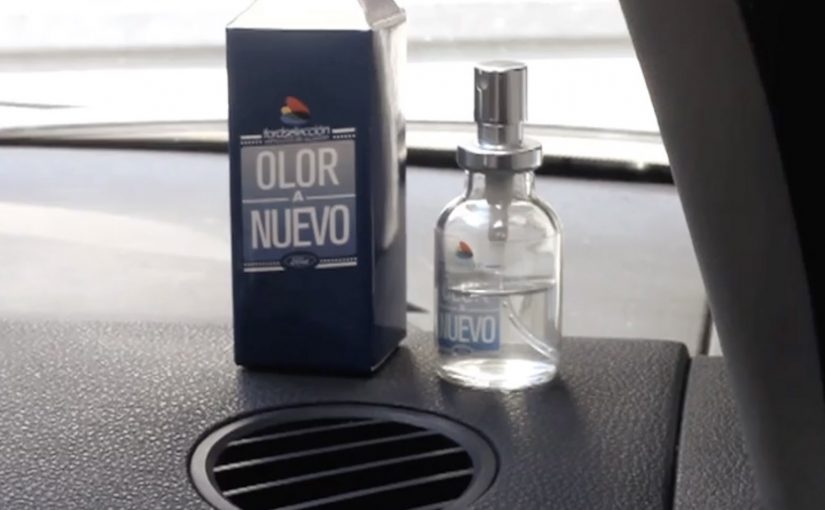
Ford Selección is the brand of used cars from Ford in Spain. Bassat Ogilvy Madrid, the agency responsible for marketing the cars, was given the task of bringing the excitement of a new car to the old ones.

So the team set out to bring the “smell of a new car” to those who chose to buy a used one. Once the smell was identified, it was taken and bottled into fragrance samplers called “Olor a Nuevo”, which means “Smell of New”. With this fragrance, a line of used cars that smelled like new ones was created and advertised through print and outdoor.

A used-car pitch that starts with the nose

The execution picks one sensory cue that people associate with “brand new” and makes it portable. New-car smell is a shorthand for untouched materials and first ownership, and the campaign turns that shorthand into a deliverable asset.

How Olor a Nuevo works as a sales tool

The mechanism is productized reassurance: turn trust into a tangible sampler people can smell before they buy. Identify the desired scent, package it as a sampler, and attach it to the Ford Selección promise so “used” feels less like compromise and more like a smart choice with one missing detail restored.

In automotive retail, sensory cues often carry trust faster than spec sheets, because they signal condition, care, and novelty before the buyer starts rational comparison.

Why the idea lands

It targets the real tradeoff people feel. Many buyers can accept a few kilometers on the odometer, but they still want the emotional moment of “this is mine and it feels fresh”. A scent sampler creates that moment early, and makes the purchase feel closer to a first unboxing than a second-hand transaction.

Extractable takeaway: When your product is “almost new”, identify the one emotional cue buyers miss most, and restore it in a way that can be sampled quickly and remembered later.

What this says about brand experience

Olor a Nuevo is not a gimmick layered on top of the cars. It is a way of translating a promise into something you can experience in seconds, which makes the message stick long after the ad is gone.

The real question is how you make a used car feel freshly claimed before the buyer starts comparing mileage and price.

What to steal from Olor a Nuevo

  • Choose one high-signal cue. One sensory proof can outperform a long list of guarantees.
  • Make the proof portable. A sampler travels. It can be shared, compared, and remembered.
  • Turn compromise into a reframed benefit. If buyers accept “used”, give them “fresh” back.
  • Keep the comms simple. Name the benefit in plain language and let the experience do the persuasion.

A few fast answers before you act

What is Olor a Nuevo?

It is a fragrance sampler created for Ford Selección that recreates the “smell of new”, so used cars can deliver part of the emotional experience of buying new.

Why is “new-car smell” a useful marketing lever?

Because it is a fast, emotional proxy for novelty and condition. It signals “fresh” before the buyer evaluates details, which can reduce hesitation.

When does sensory marketing work best?

When a product has a strong, shared sensory association that buyers already recognize, and when that association supports a real purchase anxiety such as trust, hygiene, or freshness.

What should brands avoid with this pattern?

Overcomplicating the experience. If sampling requires explanation, or if the sensory cue does not connect to the actual buying tension, it becomes a stunt instead of a sales tool.

Can this pattern work outside automotive?

Yes, when buyers miss one high-signal cue that makes a product feel fresh, trusted, or premium. The cue must connect to a real buying tension, not just add novelty.

Peugeot 408: Print ad with a real airbag

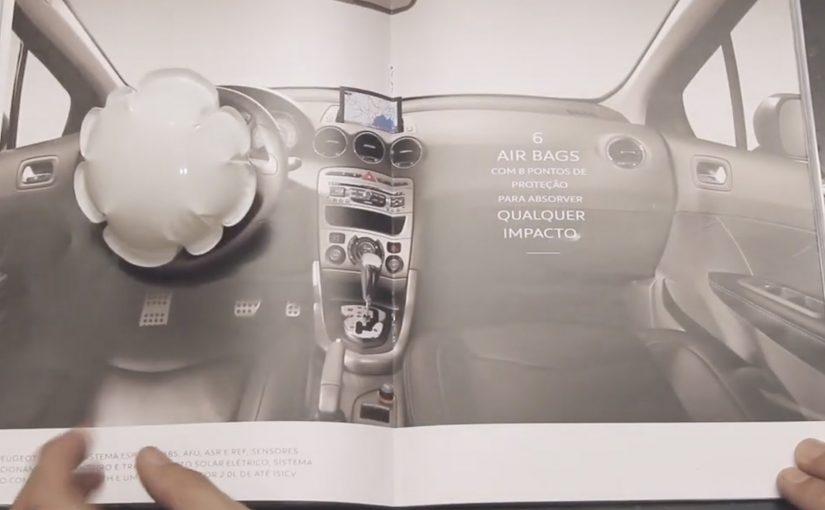
To advertise the safety benefits of the Peugeot 408, Brazilian agency Loducca put a mini airbag inside a print ad. Readers were invited to hit a marked spot on the page and see what happened. On impact, the tiny bag inflated, demonstrating in miniature what an airbag would do.

The ad appeared in Brazil’s business magazine Exame and was reportedly distributed with protective packaging so the airbag would not trigger by accident.

A magazine page you have to hit

The mechanism is brilliantly blunt. You do not watch a crash test. You perform a micro impact, a small, deliberate tap that simulates impact, with your hand, and the medium responds. That action turns a passive read into an experience, and it makes the “airbag” benefit impossible to ignore. Brands should treat safety claims as proof problems and design demonstrations the viewer can personally trigger.

In automotive safety marketing, the highest-performing proof is the kind you can physically trigger yourself.

The real question is whether your proof of safety can be triggered by the audience, not merely asserted by the brand.

Why print becomes more credible when it behaves like a product

Print normally communicates through trust in words and images. This ad adds a different kind of credibility, mechanical proof. Because it inflates on cue, the viewer’s brain files the message as something closer to engineering than persuasion. That matters because “safety” is a hard attribute to sell with rhetoric alone. People want reassurance, not adjectives.

Extractable takeaway: When a product claim is about protection, the strongest creative move is to make the audience feel a cause-and-effect demonstration, not just read about it.

The packaging is part of the idea

The special packaging is not just logistics. It signals intent. This is a controlled, designed interaction. It is also a reminder that experiential print has operational realities. Here, “experiential print” means print that behaves like a product interaction, with a designed trigger and response. If you build an ad that can go off in someone’s bag, you must engineer the distribution like you would engineer a product.

How to design triggerable safety proof

  • Make the claim triggerable. If the benefit is physical, design a physical proof moment.
  • Keep the interaction single-step. One obvious action, one immediate response, no instructions needed.
  • Let the medium do the explaining. The inflation is the headline. Copy becomes supporting detail.
  • Design the supply chain, not just the concept. Packaging, safety, and consistency are part of creative effectiveness.
  • Use spectacle sparingly. The wow moment is strongest when it directly maps to the product truth.

A few fast answers before you act

What is the Peugeot 408 “airbag in a print ad” idea?

A magazine ad with a real mini airbag insert that inflates when the reader hits a marked spot, mimicking an airbag deploying during impact.

Why does this work better than a normal safety print ad?

Because it converts a claim into a physical demonstration. The reader triggers the proof, which feels more credible than copy alone.

What makes interactive print feel premium instead of gimmicky?

When the interaction is directly tied to the product benefit and works reliably. The mechanism should be the message, not a disconnected trick.

What’s the biggest risk with mechanical inserts in magazines?

Execution risk. Misfires, non-fires, and distribution issues can overwhelm the idea. The production and packaging have to be engineered as carefully as the concept.

How can a brand replicate this approach on a smaller budget?

Design a tactile proof moment using simple materials and one clear action. The key is immediate cause-and-effect that maps cleanly to the claim.