
Prigat: User Generated Orange Juice

Prigat, a leading company in the Israeli fruit juice market, launched one of the more inventive Facebook mechanics of its era. It invited people to squeeze real orange juice by doing something absurdly simple. Smile at your webcam.

The idea was packaged as “User Generated Orange Juice (UGOJ).” A Facebook application that translated user participation into a physical outcome you could actually watch.

The mechanism: your smile triggers a real machine

A custom Facebook app developed by Publicis E-Dologic used webcam-based smile detection to trigger a real, oversized juicer. When the app detected a smile, it activated the juicer and squeezed fresh oranges. Users could watch the machine live 24/7, so the cause-and-effect was visible rather than implied.

Campaign coverage also described a personalization touch where the participant’s name appeared on the machine during use, and that the resulting juice was directed to a charity choice.

In social platform marketing, physical proof loops outperform abstract engagement prompts because they give people a reason to believe and a reason to share.

Why this lands

This works because it turns a universal emotion into a measurable input. Smiling is effortless, socially contagious, and camera-friendly. The live feed makes the outcome undeniable, and that “I did this” ownership nudges people to recruit friends so their smiles compound into more visible results.

Extractable takeaway: If you want participation at scale, connect a low-friction action to a real-world output that people can witness in the moment, then make sharing feel like extending the impact, not like promoting the brand.

What Prigat is really doing

The campaign turns Facebook from a place for liking into a place for doing. The real question is how to turn a passive social audience into a participant who can see, trust, and share the brand experience. This is stronger than a standard Facebook giveaway because the proof is built into the interaction itself. It converts attention into a visible production line, then uses the live stream as credibility and the smile photos as distribution. Prigat gets warmth by associating the brand with positive emotion and generosity, while the machine supplies a visible proof point that keeps the story believable.

What to steal from the Prigat participation loop

  • Design a simple input. The easier the action, the more likely people repeat it and recruit others.
  • Show the output live. A real-time feed reduces skepticism and increases share-worthiness.
  • Make participation legible. If the user can see their effect immediately, they trust the loop.
  • Attach a social good endpoint. A charity destination converts novelty into meaning.

A few fast answers before you act

What is “User Generated Orange Juice” (UGOJ)?

It’s a Facebook app activation where users smile at a webcam and trigger a real juicer that squeezes fresh oranges, visible via a live stream.

How does the smile activation work?

The app uses webcam-based smile detection to decide when to trigger the juicer. The user’s action becomes the on-switch.

Why include a 24/7 live view of the juicer?

It provides proof. People can watch the result of participation, which increases trust and makes the story easier to share.

What kind of results were reported?

Reported results include around 30,000 new likes, over 20,000 photos uploaded, and roughly 40,000 oranges squeezed.

What’s the key risk if you copy this concept?

Trust and privacy perception. You need clear, simple communication that the webcam is used only to detect the smile for the interaction, and that the experience is safe and transparent.
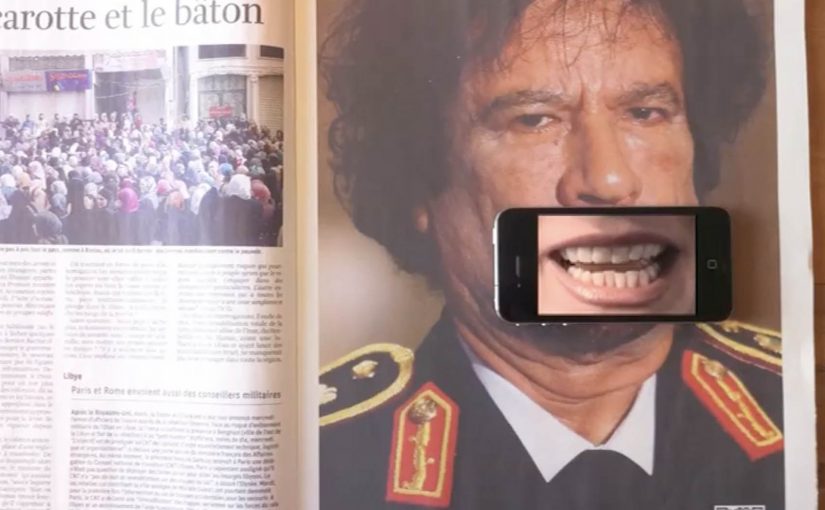
Reporters Without Borders: QR Codes That Speak

You scan a QR code in a magazine ad, then hold your iPhone over a leader’s mouth. A QR code, short for Quick Response code, is a printed shortcut that opens a mobile destination. The mouth starts talking. But it is not the leader’s voice. It is a journalist explaining what censorship looks like in that country.

Print ads are hitting above their weight lately. Recently, you could test-drive a Volkswagen right inside a print ad, thanks to a special app. Now, QR codes are used to get dictators talking in a set of print ads created by Publicis Brussels for the free-press advocacy group Reporters Without Borders (RWB).

In the ads for RWB you scan the QR code with your iPhone and then place the phone over the leader’s mouth. The mouth starts talking, but it turns out to be the voice of a journalist discussing media censorship in that particular country.

Currently there are Gaddafi, Ahmadinejad and Putin versions.

In public-interest and advocacy communication, this kind of print-to-phone interaction works because it turns a static message into a lived moment of contradiction. The “authoritarian voice” is visually present, but the truth comes from someone who is usually silenced.

How the ad “speaks”

The mechanism is a simple overlay. The printed QR code launches a mobile experience, and the phone screen becomes the animated mouth layer when you align it with the face in the ad.

QR codes act as a bridge from paper to a mobile destination. The ad uses that bridge to deliver audio and motion, without needing the page itself to be electronic.

In advocacy and public-interest communication, print-to-phone interactivity works best when it creates a moment of moral contrast, not a tech demo.

The real question is whether the interaction changes what the message means, or just adds motion.

Why this lands harder than a normal poster

The interaction forces you to participate in the message. You physically place your device over the mouth, so you are complicit in “giving a voice”. Then the reveal flips expectations and reframes the act as a statement about censorship. Because the phone screen becomes the moving mouth layer, the reveal is immediate and hard to dismiss. This is a strong pattern for interactive print: make the overlay carry meaning, not novelty.

Extractable takeaway: If the mobile layer can be removed without changing the message, the interaction is optional. Design the overlay so the meaning only exists when the viewer lines it up and activates it.

What to steal for interactive print

  • Make the overlay do meaning work. The phone is not a gimmick. It is the message delivery device.
  • Engineer a single, clear reveal. The twist needs to land in seconds.
  • Design for alignment and clarity. If the user cannot line it up easily, they quit.
  • Keep the outcome unmistakable. Audio plus a visible mouth movement makes the payoff obvious.

A few fast answers before you act

What is the core idea of these Reporters Without Borders print ads?

They use a QR code and a phone overlay to make a leader’s mouth appear to speak, then reveal a journalist’s voice explaining censorship in that country.

Why use QR codes in a print campaign like this?

QR codes create a fast bridge from paper to mobile audio and motion, which lets print deliver a message that feels alive rather than static.

What makes this more than a tech trick?

The interaction supports the meaning. You “activate” speech, then hear the voice of journalism instead of power, which reinforces the theme of suppressed information.

What are the main execution risks?

Poor alignment, slow loading, or unclear instructions. Any friction can break the moment before the reveal lands.

How can brands apply the pattern without copying the politics?

Use print as the stage and mobile as the moving layer. Make the overlay essential to the message, and build toward one clean, immediate reveal.

Depaul UK: iHobo

It is easy to ignore a homeless person as you walk past them on the street, but after having one on your phone for three days Depaul UK hopes you will see the complex and varied issues behind youth homelessness.

This free app was created pro bono by Publicis London to raise awareness of Depaul UK, a charity devoted to youth homelessness in the UK.

Three days with a person you cannot swipe away

The mechanism is designed to feel like responsibility, not content. Over three days, the app keeps returning with prompts from a single “virtual homeless person”, pulling you back into their needs and decisions at inconvenient, everyday moments. That works because repeated prompts turn passive sympathy into felt responsibility.

In UK urban life where homelessness is visible but easy to mentally filter out, sustained micro-interruptions, small prompts that arrive during ordinary routines, can create empathy better than one big, easily-dismissed message.

Why it lands

The idea works because it weaponizes time. You do not get a one-minute burst of sadness and a clean exit. You get repeated friction, enough to feel the difference between “seeing” homelessness and “living alongside” it, even in a small way.

Extractable takeaway: If you need real attention for a complex cause, build a short, bounded experience that returns to the user repeatedly, then make the “I did something” step simple and immediate.

What Depaul is really trying to change

The real question is how to make someone feel ongoing responsibility for a problem they usually pass in seconds.

This is fundraising logic disguised as experience design. Depaul is trying to reach people who do not respond to posters and leaflets, and to do it on the device they check constantly. The app turns awareness into a relationship, then uses that relationship to make donating feel like a natural next step.

What cause campaigns can take from iHobo

  • Use duration as the persuasion. Three days is long enough to form a habit, short enough to try.
  • Design for interruption, not bingeing. Timed prompts beat long videos for sustained attention.
  • Keep the user’s role clear. Caring, deciding, responding. Clarity prevents drop-off.
  • Bound the experience. A defined end reduces resistance to starting.

A few fast answers before you act

What is iHobo?

A free mobile app created for Depaul UK that asks users to look after a “virtual homeless person” for three days to build awareness of youth homelessness.

What is the core mechanism?

Time-boxed engagement. The app returns with prompts over multiple days, creating repeated contact that is harder to ignore than a single awareness message.

Why three days?

It is long enough to create attachment and repeated friction, but short enough that people will still commit to trying it.

What makes this different from a standard charity film?

It turns passive viewing into ongoing responsibility. The message arrives on your schedule, not the campaign’s.

What is the most reusable lesson for other causes?

If the issue is complex, do not rely on a single emotional peak. Build a short series of small, repeated moments that accumulate into understanding and action.