
Renault Wind Roadster: 12 Second Strip

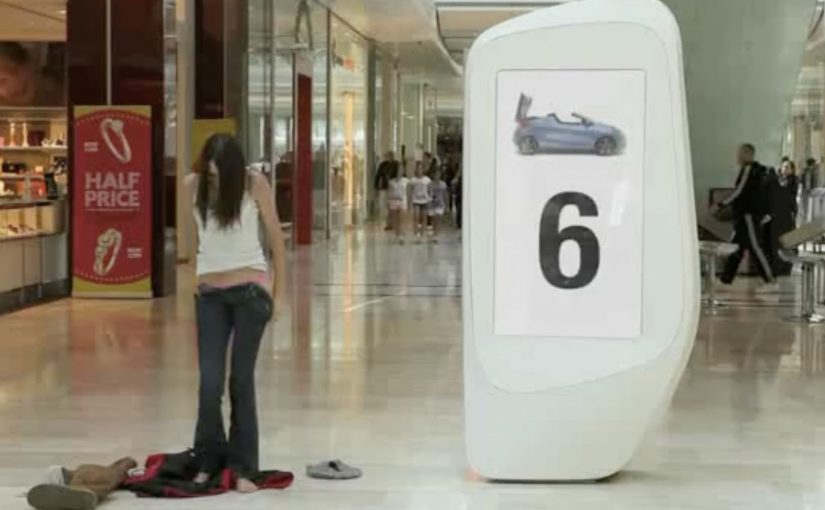
Renault UK and ad agency Publicis London set up “12 Second Strip”, a challenge that asks people to strip down to one layer of clothing in 12 seconds in the hope of winning the brand new Renault Wind Roadster.

The challenge involves people stripping down to one layer of clothing in just 12 seconds, which is the same amount of time it takes Renault’s new Wind Roadster to drop its top. To participate, people post their fun and tasteful strip videos on YouTube.

A product demo turned into a timed dare

The execution takes a single, memorable product fact. The roof moves in 12 seconds. Then it builds a challenge around that exact number, so the “proof” of the car becomes the rule of the game.

The mechanic: match the roof with your own 12 seconds

It is straightforward. Record a short clip where you race the clock to get down to one layer. Upload it. The format is repeatable, the constraint is clear, and the brand’s key claim stays embedded in every entry.

In UK automotive launches, time-based challenges work best when they translate a feature into something the audience can perform, share, and compare without needing a long explanation.

Why this lands as shareable UGC

The concept is light, competitive, and easy to understand at a glance. The “one layer” rule keeps it positioned as playful rather than explicit, while the 12-second constraint gives it a built-in hook that makes clips watchable and easy to forward.

Extractable takeaway: If you have one standout feature, convert it into a public constraint. Constraints create format. Format creates volume. Volume creates recall.

What Renault is really buying

The real question is whether a product claim can be turned into a repeatable public behavior without losing the brand point.

This is attention that carries product memory. Every participant repeats the roof story through action, and every viewer gets the same message without feeling like they are watching a conventional car ad.

What to steal for your next challenge-based campaign

  • Start with one sharp product truth. The best UGC formats begin with a single claim people can repeat.
  • Make the rule the message. If the rule changes, the brand meaning should not disappear.
  • Keep it simple to enter. Short clips, one constraint, one destination.
  • Write safety and tastefulness into the brief. Clear boundaries protect both the audience and the brand.

A few fast answers before you act

What is 12 Second Strip?

It is a Renault UK challenge that asks people to strip down to one layer of clothing in 12 seconds, mirroring the time it takes the Renault Wind Roadster’s roof to drop.

Why anchor the challenge to “12 seconds”?

Because it turns a feature into a format. The number becomes a rule that forces every entry to carry the same product story.

What makes this a strong user-generated format?

It is easy to understand, fast to produce, and inherently comparable. Viewers can instantly judge attempts and share the best ones.

How do you keep a provocative mechanic brand-safe?

Set a clear boundary inside the format. Here, the one-layer rule keeps the participation playful and recognizable without pushing it into something more explicit.

What is the main brand lesson here?

Make your most distinctive proof point performable. When the audience can reenact a claim, it travels further than a slogan.

Facebook integration at the Coca Cola Village

A teenager enters Coca Cola Village in Israel wearing a wristband that carries their Facebook credentials. Each time they swipe at an attraction, their Facebook status updates instantly with what they are doing. The village behaves like a live social feed, powered by real-world actions.

The activation. Turning an event into a live Facebook layer

Publicis (E-dologic) and Promarket develop an experiential event for Coca Cola Israel that syncs everyone who participates with their friends on Facebook in real time.

Here, “integration” means the event turns real-world actions into predictable Facebook posts and photo tags.

The real question is whether you can turn on-site participation into shareable proof without asking people to stop and post.

This pattern beats “share this” prompts because publishing becomes the default outcome of participation.

How entry works. Caps plus friends

The Coca Cola Village 2010 event runs through Facebook. Teenagers collect 10 Coca Cola caps, plus eight friends who do the same. After registering online through Facebook, they receive exclusive entry.

How the wristband works. Swipe to post, shoot to tag

At the Coca Cola Village, participants set up a special wristband designed to securely hold their Facebook login and password. In practice, it is a scannable wristband that identifies the participant at event touchpoints. Every swipe triggers an immediate status update about what they are doing at the event, keeping friends up to date as it happens. The wristband also enables automatic tagging of photos taken at the village.

In youth-focused FMCG activations, the win is to make sharing a byproduct of participation, not a separate task.

The scale effect. When participation becomes publishing

The event holds 650 teenagers a day. With seamless Facebook integration, they generate 35,000+ posts per day across three days, totaling 100,000+ posts for the event.

Why this works. Social actions move from screen to space

This is what “integration” looks like when it is not a logo on a wall. The social network becomes a behavior layer inside the event. Because the swipe is the trigger, posting becomes as easy as participating. The wristband reduces friction, the swipe makes publishing physical, and the photo tagging closes the loop by spreading proof of participation back into the feed.

Extractable takeaway: If you want social scale from an experience, bind sharing to a simple physical ritual people repeat, not to a “remember to post” moment.

Design moves worth copying

  • Credential once. Do the setup up front, then let participation drive sharing automatically.
  • Make the trigger physical. Tie posting to a repeatable on-site action (the swipe), not a manual step.
  • Close the proof loop. Auto-tagging turns attendance into visible evidence that travels beyond the venue.
  • Design for repetition. The easier the ritual is to repeat, the more output you get without extra prompting.

A few fast answers before you act

What is Facebook integration at the Coca Cola Village?

An experiential event in Israel where an RFID-style wristband connects on-site actions to real time Facebook posting and photo tagging.

How do people get access?

By collecting 10 Coca Cola caps and eight friends who do the same, then registering through Facebook for entry.

What does the wristband do?

It securely holds Facebook login details and posts instant status updates whenever participants swipe at attractions. It also enables automatic photo tagging.

What is the reported scale of social output?

650 teenagers per day, generating 35,000+ posts per day across three days for 100,000+ total posts.

What is the transferable pattern for brands?

Make social sharing an outcome of physical participation, not a separate step. Reduce friction and tie posting to clear, repeatable actions.