
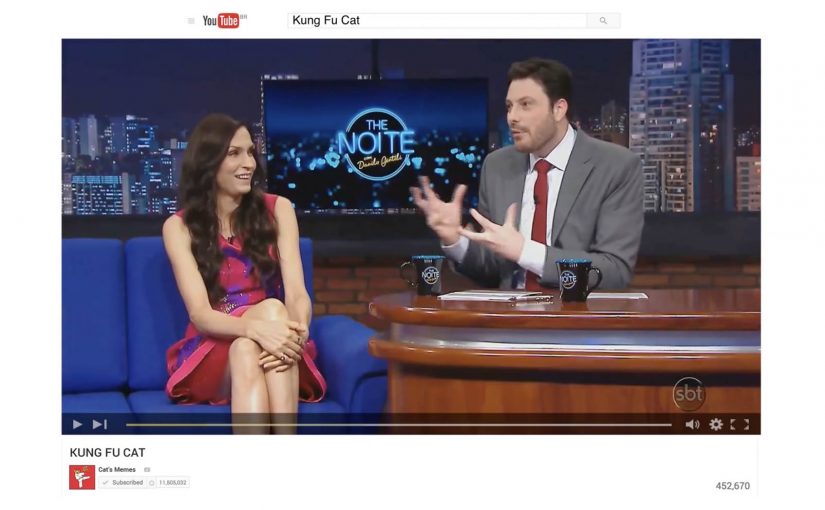
The Noite: Troll Ad Button

To promote a new season of The Noite, Publicis Brasil plays directly with a habit online video has trained into everyone. Skip the ad and move on.

Instead of treating that skip as the enemy, the campaign introduces a second choice. Viewers can click either “Skip Ad” or “Troll this ad”. The “troll” option leads to an unexpected piece of content that stays connected to the original message, and the campaign claims the result was four times more views than comparable pre-roll.

Turning a skip moment into a choice

The mechanic is not more targeting or louder creative. It is viewer control at the exact moment attention usually collapses. If you want to leave, you can. If you want to “troll”, you get rewarded with a playful detour that still carries the show.

In online video advertising, where skippable formats condition people to minimize attention, a simple interactive choice can convert avoidance into participation.

Why it lands

This works because it admits the truth of the format. People dislike being delayed. So the campaign reframes the pre-roll as a game with an opt-out, not a lecture with a countdown. The second button also creates curiosity, because it promises a different outcome than the usual “wait or skip” loop, and curiosity is one of the few reliable reasons people volunteer attention.

Extractable takeaway: If your audience’s default behavior is to escape, build a choice that makes staying feel like a self-directed action, then pay it off immediately with content that still ladders back to the brand.

What the show is really optimizing

The stated win is views, but the deeper win is sentiment. The Noite positions itself as culturally fluent in the platform’s frustrations, and that makes the promotional message feel less like interruption and more like shared humor. It is a promotion that behaves like entertainment.

The real question is not how to stop people from skipping, but how to make the pre-roll moment feel worth choosing.

The smarter move is not to fight skip behavior. It is to design a branded detour that respects it.

What to borrow from the button logic

  • Design at the drop-off point. Put your idea where attention usually dies, not after it.
  • Offer a real opt-out. Interactivity only feels fair if “leave” is genuinely available.
  • Make the alternate path rewarding fast. The payoff has to arrive immediately or the trick reads as manipulation.
  • Keep it on-message. The detour can be weird, but it should still be clearly linked to the original proposition.

A few fast answers before you act

What is the “Troll Ad Button” idea in one line?

A skippable pre-roll that adds a second option, “Troll this ad”, so viewers choose a playful alternate experience instead of simply skipping.

Why is a second button more effective than a better pre-roll film?

Because it changes the relationship with the format. It turns the moment into a decision the viewer owns, which can trigger curiosity and voluntary attention.

What metric did the campaign claim?

That it generated four times more views than similar pre-roll executions.

What is the key risk with “interactive pre-roll” mechanics?

If the alternate option is not genuinely different or feels like a trick, viewers punish the brand with distrust and faster skipping next time.

When should you use this pattern?

When your audience already expects to skip, and your brand can credibly reward curiosity with content that feels entertaining and immediate.
Drone-vertising: Wokker and Cup Noodles

Unmanned aircraft have been used to carry out military strikes, to film weddings, and are also being explored for product delivery from companies like Amazon, Netflix, Francesco’s Pizzeria and Flower Delivery Express.

Until the legalities of commercial use are cleared up by local governments, companies in Russia and Brazil go ahead with what are described as early drone-vertising campaigns. Drone-vertising is using drones as moving media, either by flying banners through high-attention locations or by staging a delivery moment that doubles as a filmed ad.

Airspace as a new media channel

The mechanism is straightforward. Put a message or a product on a drone. Fly it where the audience is already looking. Capture the moment on video so the stunt can travel beyond the people who witnessed it live. Because the drone enters an uninvited sightline, it creates surprise, which is why the filmed moment gets retold and replayed.

In dense urban districts where attention is scarce, brands keep searching for formats that create surprise without requiring new screen time.

The real question is whether the brand promise stays clear when the novelty fades, or whether the drone becomes the headline and the product becomes the footnote.

Russia

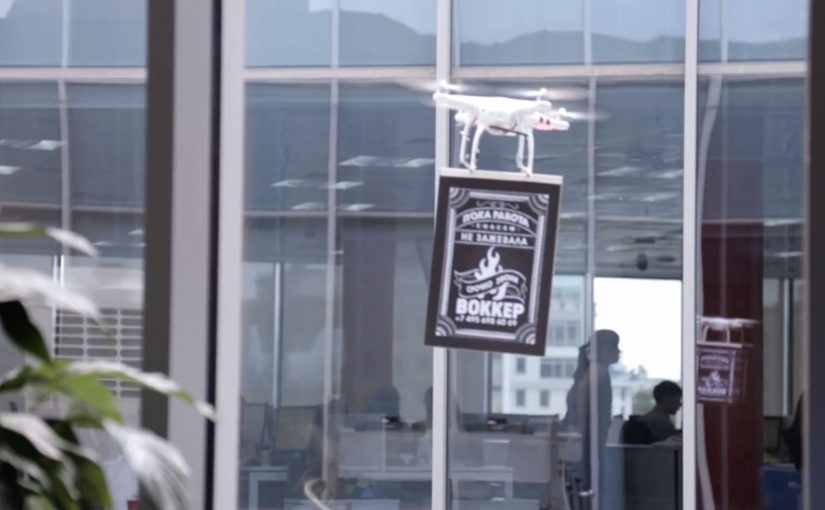
As ordinary advertising channels continue to be congested, Russian creative agency Hungry Boys uses drones to advertise noodle company Wokker.

Wokker banners are attached to drones and flown around high-rise business buildings in Moscow’s financial district, drawing the attention of office workers as the drones pass windows. The campaign is described as driving deliveries in the targeted area up by 40%.

Brazil

Cup Noodles, the instant ramen noodles snack from Nissin-Ajinomoto, is promoted in Brazil with drones dressed as cows, chickens, corn cobs and shrimps. A two-and-a-half minute film created for the brand’s online campaign uses drones to take Cup Noodles to surfers, skateboarders and highline walkers as they practise their sport.

Why drone-vertising gets noticed

This format works because it breaks the normal media contract. People do not expect ads to appear outside their window, and they do not expect “delivery” to arrive from above. The novelty is doing most of the work. The brand then benefits from the retelling, because the story is easy to summarise and the footage is inherently watchable. Drone-vertising is only worth doing when the brand meaning is unmistakable and the safety story is boring.

Extractable takeaway: If you are betting on a new attention surface, make the idea legible in one glance and one sentence. The stunt must communicate the category benefit instantly, otherwise the drone becomes the headline and the brand becomes a footnote.

Rules worth stealing before you fly ads

  • Target a context with a clear “why now”. Wokker links to lunch-time office hunger. Cup Noodles links to being hungry while out doing sport.
  • Design for cameras as well as eyeballs. You need a clean visual read at distance, plus a story that survives reposting.
  • Keep the stunt safe and bounded. The moment you look reckless, the conversation turns from clever to irresponsible.
  • Prove impact carefully. If you cite uplift, be ready to explain what changed, where, and for how long.

A few fast answers before you act

What is drone-vertising?

It is using drones as moving media. Either by flying banners through high-attention locations or by staging a delivery moment that doubles as a filmed ad.

Why does it work particularly well near offices or public hotspots?

Because the audience is concentrated and the environment is predictable. A drone appearing in a controlled corridor creates surprise without needing people to opt in.

What is the biggest brand risk?

Safety and permission. If the flight looks uncontrolled or disruptive, attention quickly becomes negative and the brand is blamed for the intrusion.

How do you keep the idea from becoming “tech for tech’s sake”?

Tie the drone to a simple product truth that the audience recognises instantly, like lunch delivery urgency or on-the-go convenience, then make that truth the focus of the footage.

What should you measure before you claim “uplift”?

Define the exact area and time window the stunt covered, choose a baseline for comparison, and separate what changed because of the flight itself versus what changed because the filmed story spread online.

Giraffas: The Goal Screen

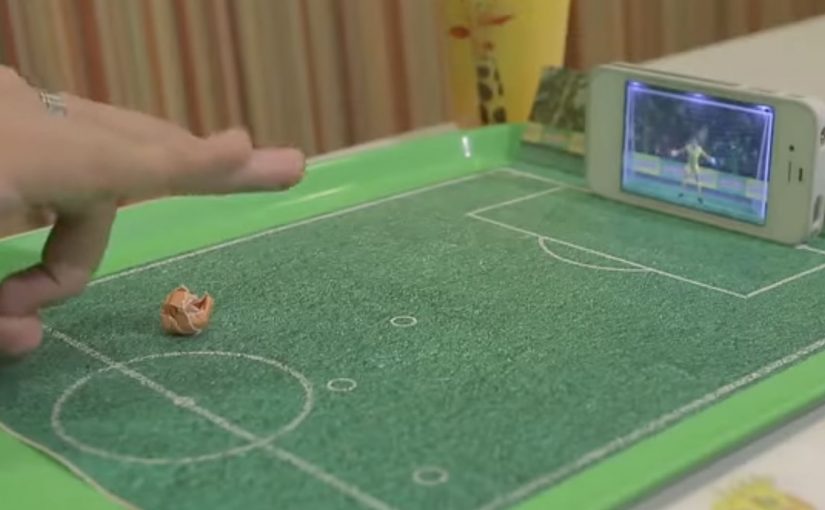
To capitalize on the lead up to the 2014 FIFA World Cup, Brazilian fast food chain Giraffas creates a mobile game that turns their tray papers into a virtual soccer field. To play, consumers rip the side of the paper tray, make a paper ball, and flick it into their mobile screens.

7 million tray papers are printed, and the game is made possible by using the smartphone camera to recognize the ball distance, the accelerometer to identify the trajectory of the kick, and the microphone to recognize the area of impact.

A game that bridges paper and screen

The mechanism is a simple physical ritual, meaning a repeatable action with objects already on the tray, that unlocks a digital experience. The tray liner provides the “pitch”. The paper ball provides the input. The phone turns sensors into a referee, translating distance, direction, and contact into gameplay.

That matters because the tray liner and paper ball remove setup friction, so the leap from noticing the idea to trying it stays almost instant.

In quick-service restaurants, the strongest interactive ideas add value during the waiting and eating moment, without requiring staff training or extra hardware at the counter.

The real question is how little effort a brand can ask of people before play feels easier than ignoring it.

Why it lands

The strongest part of the idea is not the World Cup tie-in. It is the packaging mechanic that makes play feel native to the meal. This works because it turns a disposable surface into a reason to play, and it makes participation feel immediate. It is not “download an app for later”. It is “play right now, with what you already have, while you are here”. The World Cup context supplies motivation, but the in-store simplicity supplies repeatability.

Extractable takeaway: When you want in-the-moment engagement, design a physical trigger that is already in the customer’s hands, then use the phone only as the translator. The fewer steps between curiosity and action, the more people actually try it.

What to borrow from this tray-to-screen mechanic

  • Use packaging as the interface. If your brand owns a surface (tray liners, cups, wrappers), it can become the entry point.
  • Make the first attempt effortless. Rip, roll, flick. Three verbs. No instructions wall required.
  • Exploit phone sensors, not novelty tech. Camera, accelerometer, and microphone are scalable because they are already everywhere.
  • Anchor to a cultural moment, but keep it evergreen. The event creates urgency, the mechanic creates habit.

A few fast answers before you act

What is “The Goal Screen” for Giraffas?

It is an in-store mobile game that turns Giraffas tray papers into a virtual soccer field, using a paper ball that customers flick into their phone screen.

Why does the paper tray matter to the experience?

The tray paper acts as the physical “pitch” and the trigger for play, making the game feel native to the restaurant moment.

How does the phone detect the kick?

The setup is described as using the camera for distance, the accelerometer for trajectory, and the microphone for impact area.

What is the marketing objective behind this kind of mechanic?

To make the in-store visit more entertaining and memorable, and to create a reason to interact with the brand during the meal.

What is the transferable lesson for other brands?

Turn a ubiquitous brand touchpoint into a play surface, then use the phone as a lightweight sensor hub that makes the interaction feel “magical” without added hardware.