Coca-Cola: Give a Coke, Be Santa

A vending machine that asked you to choose who you are

In global FMCG holiday marketing, the strongest ideas often turn seasonal sentiment into a simple action people can take in public. Coca-Cola’s holiday vending machine is a clean example of that move.

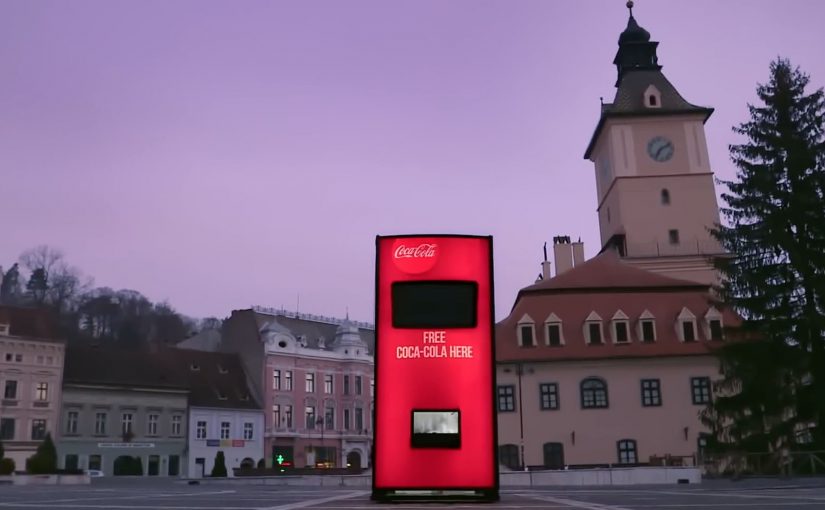
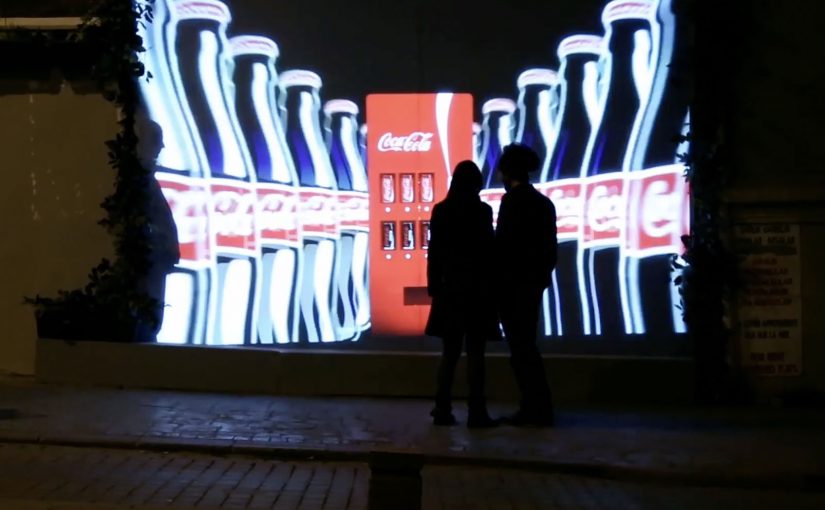
Coca-Cola wanted to bring out the Santa in everyone. So for the 2013 holiday season, they created a special vending machine that prompted users to either get a free Coke or give a free Coke.

The two-button mechanic that made sharing the story

If the user chose a free Coke, the machine quickly dispensed the drink for the user to enjoy.

However, if the user decided to share, then the machine did something a little more special. Watch the video below to find out.

Why “give” feels better than “get” in December

The psychology here is straightforward. A free product is nice, but it is forgettable. A choice that reflects identity is sticky.

By putting “give” and “get” side by side, the machine turns a small decision into a moment of self-image and social proof. In a holiday setting, people want to see themselves as generous, and they want to be seen that way by others.

The business intent behind bringing out the Santa

The intent is not simply distribution.

Coca-Cola uses the vending machine to translate a brand promise into behavior. The brand is associated with warmth and sharing because the consumer enacts it, not because the brand claims it.

What to steal from this give-or-get design

  • Turn values into a choice. Make the brand idea something people can do, not just hear.
  • Reward the “better” behavior. If sharing is the story, make sharing the more memorable path.
  • Keep the interaction instantly legible. Two clear options beat complex instructions in public spaces.
  • Design for a public moment. When others can witness the decision, the story travels faster.

A few fast answers before you act

What did Coca-Cola build for the 2013 holiday season?

A special vending machine that offered users a choice: take a free Coke or give a free Coke.

What was the core mechanism?

A simple two-option prompt. Choosing “get” dispensed a Coke immediately. Choosing “give” triggered a more special outcome.

Why does the “give” option matter so much?

Because it turns a freebie into an identity moment. People remember what they chose, and others can witness it.

What business goal did this support?

Making Coca-Cola’s holiday positioning feel real by linking the brand to a visible act of sharing, not just a message about sharing.

What is the main takeaway for brands?

If you want to own a value like generosity, design an interaction where people can demonstrate that value in the moment.
Coca-Cola: Personal Road

Coca-Cola has an ongoing global campaign that allows consumers to personalise bottles and cans…

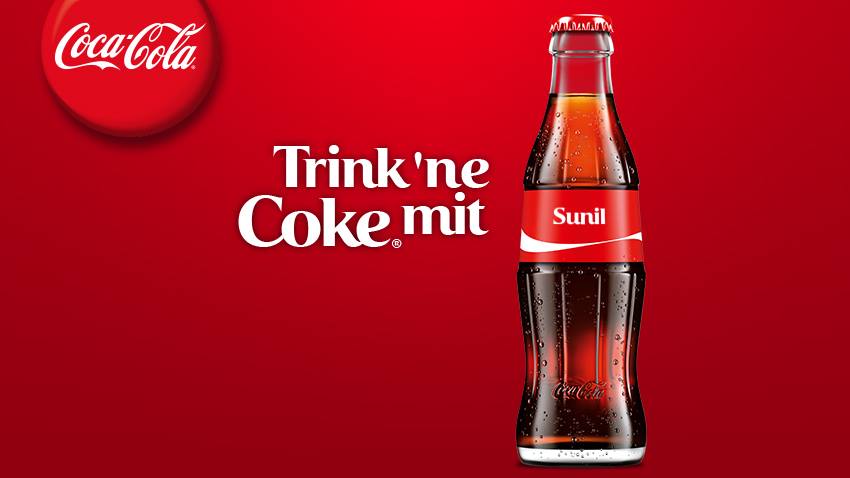
Enjoy a Coke with Sunil

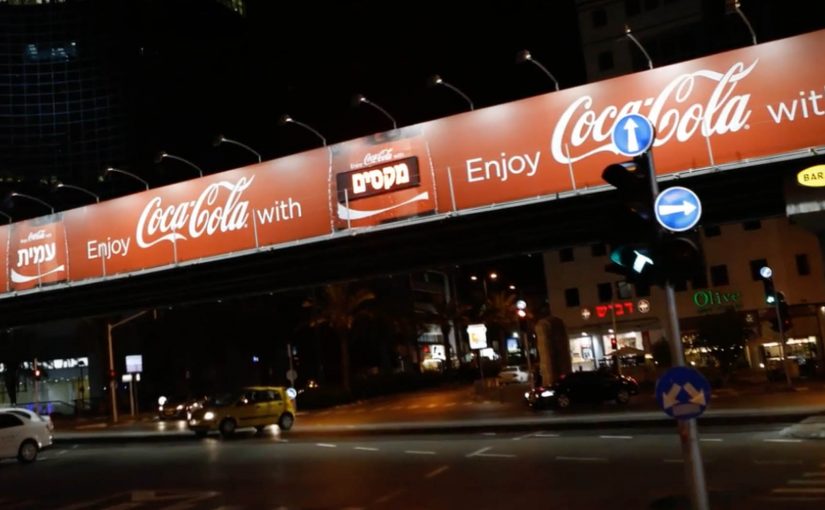
Building on the success of this campaign Coca-Cola Israel decided to take the idea further with personalised billboards.

A mobile app was developed where consumers could enter their name. Then using geo-fence technology, the Coca-Cola billboard displayed the name when it was approached. The consumer at the same moment also received a message on their smartphone notifying them that their name was up there.

Since its launch the app has reached 100,000 downloads and is currently ranked #1 in Israel’s app store.

Why this extension makes sense

  • It keeps the personalization promise. The name is not only on the package. It shows up in the world around you.
  • Location makes it feel “for me”. The moment you approach the billboard, the experience becomes uniquely yours.
  • Mobile closes the loop. The phone notification confirms the moment and turns it into something you can share.

The reusable pattern

Start with a personalization mechanic people already understand. Then add a single “surprise and confirm” moment in the real world, powered by location and a simple mobile action.


A few fast answers before you act

What is Coca-Cola “Personal Road”?

It is a Coca-Cola Israel extension of the personalised-name campaign that uses a mobile app and geofencing so a billboard displays your name as you approach, and your phone notifies you.

How does the billboard know when to show a name?

The app uses geo-fence technology to detect proximity, then triggers the personalised billboard moment when the user approaches.

Why pair the billboard moment with a smartphone message?

The message confirms what just happened and makes it easy for the consumer to capture and share the experience.

What is the key takeaway for location-based campaigns?

Make the rule simple and the payoff instant: one input from the consumer, one visible personalised output, and one mobile confirmation that seals the memory.

Share a Coke

Despite healthy brand tracking data, 50% of the teens and young adults in Australia hadn’t enjoyed ‘Coke’ in the previous month alone. To increase product consumption amongst the masses, Coca-Cola jump started some real conversations with people they had lost touch with.

After 125 years of putting the same name on every bottle of ‘Coke’, they decided to do the unthinkable. They printed 150 of the most popular Australian first names on their bottles and then invited all Australians to ‘Share a Coke’ with one another.

Facebook image showing Coca-Cola promoting the Share a Coke campaign.

The result…

Packaging becomes the conversation

What stands out here is the simplicity. A bottle stops being just a product and becomes a prompt. A name makes it personal. Personal makes it talkable. Talkable makes it shareable.

In a world where brands are fighting for attention across channels, this is a reminder that the pack itself can be the media, if it gives people a reason to participate.

Why it works (and why it is more than a label change)

  • It lowers the barrier to engagement. You don’t need a new behaviour. You just need to spot your name, or someone else’s.
  • It turns purchase into a social act. The “share” is built into the product, not bolted on as a message.
  • It scales personal relevance. The idea is big, but the execution is local. It lives in the names people recognise.
  • It links offline and online naturally. When something feels personal in-store, people are more likely to talk about it beyond the store.

What to take from this for integrated campaigns

  1. Start with a human trigger. A real reason for someone to say: “This is for me”, or “This is for you”.
  2. Make the product do the work. If the core idea is physically present, the campaign holds together across channels.
  3. Design for sharing as a behaviour. Not as a slogan. The easiest shares are the ones that feel natural and immediate.
  4. Keep it legible in one glance. The best integrated ideas can be understood instantly, without explanation.

A few fast answers before you act

What is the “Share a Coke” idea?

It is a packaging-led campaign where Coca-Cola printed popular first names on bottles, then invited people to “Share a Coke” with someone else.

What problem was Coca-Cola trying to solve in Australia?

Despite healthy brand tracking data, 50% of teens and young adults in Australia hadn’t enjoyed ‘Coke’ in the previous month, so the brand aimed to reignite consumption and relevance through conversation.

Why is printing names on bottles strategically interesting?

It makes the product feel personally relevant at the moment of choice. That personal relevance can trigger attention, talk, and sharing without needing complex mechanics.

Is this a “digital campaign” or a “packaging campaign”?

It is both, but it starts with the pack. The packaging is the trigger that can naturally extend into social sharing and broader integrated storytelling.

What is the transferable lesson for other brands?

If you can embed participation into the product experience itself, you reduce friction and increase the odds that people will carry your message across channels for you.