
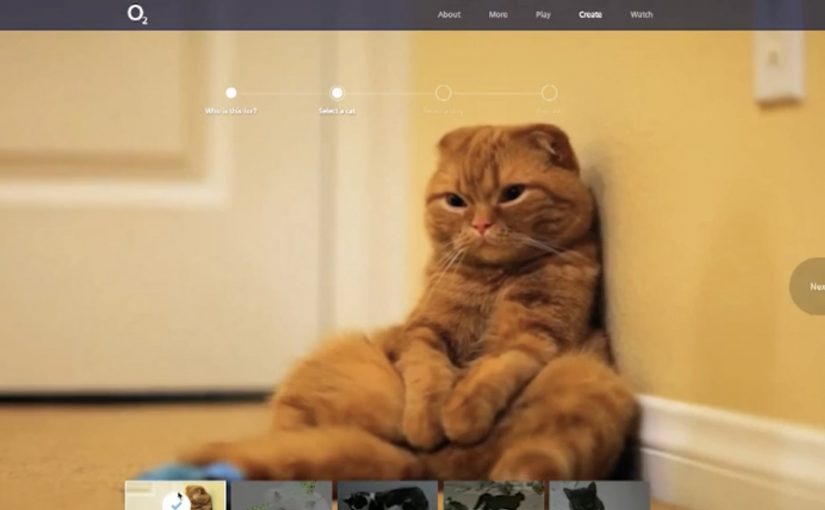
O2: Be More Dog

A cat decides it has had enough of being indifferent. It chases, leaps, splashes, and generally behaves like a dog. O2 UK uses that simple flip to ask people to do the same with technology. Less “meh”. More curious.

With VCCP and the Moving Picture Company, the campaign extends beyond the TV spot into a participation layer. That participation layer means the idea does not stop at the film but gives people something to do and share. On visiting www.bemoredog.com, people are greeted by a cat that acts more like a dog, then pulled into interactive play through a dual-screen HTML5 Frisbee game and a set of customisable cat videos designed for sharing.

How the integration is designed

The mechanism is a clean handoff. TV creates the character and the phrase. Mobile turns into the controller for a dual-screen game. Social carries the customisable video layer so people can pull friends into the same joke and the same attitude shift.

In UK consumer telecoms, where functional claims blur quickly, a memorable behavioural metaphor can do more positioning work than another round of feature talk.

Why it lands

It works because it uses a familiar truth. The cat-to-dog flip works because it turns an abstract behaviour change into a visual joke people understand in seconds. Cats look cool and detached. Dogs look curious and all-in. That contrast is instantly readable, and it translates directly into what O2 wants from people. Try the new thing. Explore. Stop acting like technology is background noise.

Extractable takeaway: If you want people to reframe a category, give them a single, sticky metaphor and one simple interaction that lets them experience the new attitude, not just hear about it.

What O2 is really trying to shift

This is brand positioning dressed as entertainment. The real question is how to make curiosity about new technology feel socially easy and emotionally attractive, not technically demanding. O2 is steering perception toward optimism and exploration, and using connected play to make “embracing the new” feel easy, not technical. In context, the timing also supports a broader push into newer network experiences, including 4G-era behaviour change.

What brand teams can steal from Be More Dog

  • Use one character as the bridge. The cat carries TV, site, game and shareables without needing extra explanation.
  • Make mobile do a job. Second-screen control is more convincing than a generic “download our app” prompt.
  • Build sharing into the format. Customisable videos give people a reason to tag or send, not just watch.
  • Keep the interaction lightweight. Quick play beats complicated onboarding when the goal is broad participation.

A few fast answers before you act

What is “Be More Dog”?

It is an O2 UK brand campaign that uses a cat acting like a dog as a metaphor for being more curious and enthusiastic about new technology, supported by second-screen and shareable digital experiences.

What is the core digital mechanic?

A dual-screen HTML5 Frisbee game that uses a phone as the controller, plus customisable cat videos designed for social sharing.

Why does the cat versus dog metaphor work so well?

It compresses a complex ask into a simple behavioural contrast people instantly understand, then turns that contrast into a repeatable line and a repeatable action.

What makes this an integrated campaign rather than “TV plus a website”?

The channels do different jobs that depend on each other. TV creates meaning. Mobile enables interaction. Social distributes personalised variants that pull others back into the idea.

What is the biggest way this pattern fails?

If the digital layer feels bolted on. The interaction has to express the same promise as the film, otherwise it becomes a novelty that does not move perception.
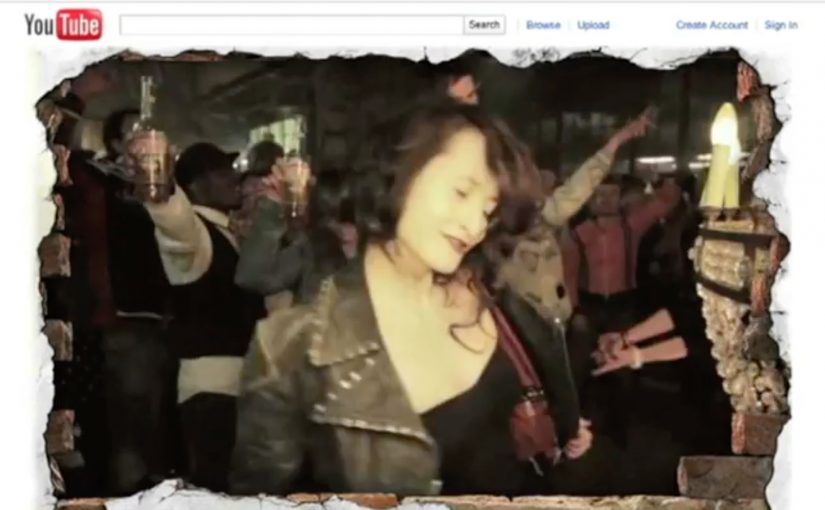

Desperados: YouTube Takeover

A takeover that pulls social identity into the video

In digital video marketing, the most ambitious takeovers do not just run before content. They try to become the experience people came for. Here, a “takeover” is an interactive branded viewing layer, not just a pre-roll slot. Desperados’ execution is a clean example of that intent.

Here is a pretty cool and ambitious YouTube takeover. It is one of the first ones I have seen that also integrates the Facebook Connect functionality as part of the experience.

How Desperados built the takeover experience

The YouTube campaign was created by Dufresne Corrigan Scarlett and MediaMonks for beer brand Desperados.

The takeover let you interact with the story as it unfolded and also let you bring your Facebook friends into the party by pulling in photos on the fly.

In European FMCG video marketing, social identity layers only earn their keep when they turn an ad unit into a shared moment.

Why bringing friends into the story changes attention

Standard video asks for passive watching. This approach creates viewer control and personal stakes because pulling in familiar faces turns a generic narrative into social self-recognition. The real question is whether your experience can borrow the viewer’s social world without making the login step feel like the main event.

Extractable takeaway: If you can make the story reflect the viewer’s real relationships, attention stops being rented and starts being owned, which makes staying and sharing feel functional rather than promotional.

The business intent behind the social layer

The intent is to move beyond reach and toward participation.

By using Facebook Connect and on-the-fly photos, the campaign tried to turn viewers into co-owners of the experience. That increases time spent, lifts recall, and creates a natural reason to invite others, because the party becomes better when your people are in it. Brands should add this kind of social layer only when it materially changes what the viewer sees and does next, otherwise the friction is wasted.

Steal the pattern for social-identity takeovers

  • Make interaction serve the story. Viewer control works when it changes what happens next, not when it is a gimmick.
  • Personalization is strongest when it is social. Pulling in friends can create instant relevance and emotion.
  • Design the invite loop into the experience. If friends improve the outcome, sharing becomes functional, not promotional.
  • Choose the platform feature that matches the idea. When identity is the hook, social login becomes a creative tool.

To experience it yourself visit: www.youtube.com/desperados.


A few fast answers before you act

What was the Desperados YouTube takeover?

An interactive YouTube campaign that integrated Facebook Connect so viewers could bring friends’ photos into the unfolding story.

What was the core mechanism?

Viewer control within the takeover experience, paired with a social login layer that pulled in photos dynamically during playback.

Why does Facebook Connect matter in this context?

It makes the experience personal and social. When the content includes your friends, it feels more relevant and more worth sharing.

What business goal did this support?

Increasing time spent and participation by turning a brand film into an experience that feels co-created and socially expandable.

What is the main takeaway for brands?

If you want people to stay and share, give them control and a way to bring their world into the story.

Facebook integration at the Coca Cola Village

A teenager enters Coca Cola Village in Israel wearing a wristband that carries their Facebook credentials. Each time they swipe at an attraction, their Facebook status updates instantly with what they are doing. The village behaves like a live social feed, powered by real-world actions.

The activation. Turning an event into a live Facebook layer

Publicis (E-dologic) and Promarket develop an experiential event for Coca Cola Israel that syncs everyone who participates with their friends on Facebook in real time.

Here, “integration” means the event turns real-world actions into predictable Facebook posts and photo tags.

The real question is whether you can turn on-site participation into shareable proof without asking people to stop and post.

This pattern beats “share this” prompts because publishing becomes the default outcome of participation.

How entry works. Caps plus friends

The Coca Cola Village 2010 event runs through Facebook. Teenagers collect 10 Coca Cola caps, plus eight friends who do the same. After registering online through Facebook, they receive exclusive entry.

How the wristband works. Swipe to post, shoot to tag

At the Coca Cola Village, participants set up a special wristband designed to securely hold their Facebook login and password. In practice, it is a scannable wristband that identifies the participant at event touchpoints. Every swipe triggers an immediate status update about what they are doing at the event, keeping friends up to date as it happens. The wristband also enables automatic tagging of photos taken at the village.

In youth-focused FMCG activations, the win is to make sharing a byproduct of participation, not a separate task.

The scale effect. When participation becomes publishing

The event holds 650 teenagers a day. With seamless Facebook integration, they generate 35,000+ posts per day across three days, totaling 100,000+ posts for the event.

Why this works. Social actions move from screen to space

This is what “integration” looks like when it is not a logo on a wall. The social network becomes a behavior layer inside the event. Because the swipe is the trigger, posting becomes as easy as participating. The wristband reduces friction, the swipe makes publishing physical, and the photo tagging closes the loop by spreading proof of participation back into the feed.

Extractable takeaway: If you want social scale from an experience, bind sharing to a simple physical ritual people repeat, not to a “remember to post” moment.

Design moves worth copying

  • Credential once. Do the setup up front, then let participation drive sharing automatically.
  • Make the trigger physical. Tie posting to a repeatable on-site action (the swipe), not a manual step.
  • Close the proof loop. Auto-tagging turns attendance into visible evidence that travels beyond the venue.
  • Design for repetition. The easier the ritual is to repeat, the more output you get without extra prompting.

A few fast answers before you act

What is Facebook integration at the Coca Cola Village?

An experiential event in Israel where an RFID-style wristband connects on-site actions to real time Facebook posting and photo tagging.

How do people get access?

By collecting 10 Coca Cola caps and eight friends who do the same, then registering through Facebook for entry.

What does the wristband do?

It securely holds Facebook login details and posts instant status updates whenever participants swipe at attractions. It also enables automatic photo tagging.

What is the reported scale of social output?

650 teenagers per day, generating 35,000+ posts per day across three days for 100,000+ total posts.

What is the transferable pattern for brands?

Make social sharing an outcome of physical participation, not a separate step. Reduce friction and tie posting to clear, repeatable actions.