
Skip to content
SunMatrix Ramble

SunMatrix Ramble

What Matters in Marketing and Digital Innovation

  • ABOUT
  • CONCEPT INDEX
  • CONTACT

Categories

Tag: social sharing

Adam Tensta: One Copy Song

Adam Tensta: One Copy Song

Adam Tensta, a hip hop artist from Sweden, remembers when you had to wait for a song to release, then stand in line to get the new single fresh off the presses. So for his new single “Pass It On”, he and R/GA New York bring some of that exclusivity back with a Facebook app that allows only one person to listen to the track at a time, before it is passed to someone else.

To spread the song by word of mouth, the experience plays on people’s need to get first in line. Registered users are prompted to watch, listen or tweet in order to pass people in the line.

Exclusivity as a distribution mechanic

The twist is not the content. It is the rule. The song behaves like a single physical copy. You do not stream it whenever you want. You wait. You get a turn. You listen. Then it moves on.

How the one-copy system works

Fans sign up inside a Facebook app and enter a digital queue. When it is your turn, you get a limited listening window, and the track is effectively “yours” only for that moment. Once your session ends, the song is passed to the next person in line. Actions like tweeting or engaging with related content are used as line-jumps, so people can compete to reach the front faster.

In digital entertainment launches, artificial scarcity can be a legitimate strategy when it is built into the experience, not bolted on as a marketing claim.

By artificial scarcity here, the campaign means using access rules to create limited availability around a digital file that could otherwise be available to everyone at once.

Why it lands

It recreates anticipation in a world where music is normally instant. Because the queue makes access visible and sequential, the wait itself becomes proof of exclusivity and gives people a reason to talk about their turn. Waiting invests you. Being “the only listener” adds status. Passing the song on turns consumption into a social obligation. Those three forces, anticipation, status, and obligation, are what convert a normal release into a story people retell.

Extractable takeaway: If your product is endlessly available, you can still create demand by constraining access in a way that feels native to the idea. Make scarcity the mechanic, and word of mouth becomes the path to access.

What the campaign is really optimizing for

This is less about mass reach on day one and more about concentrated attention. The app trades convenience for conversation. Every “I finally got my turn” moment becomes a prompt to invite someone else, which is a cleaner referral trigger than asking people to share a link.

The real question is how to turn a digital release into a social event people feel compelled to pass along.

What to borrow from scarcity-led launches

  • Turn the benefit into a rule. Here, “exclusive” is not copy. It is enforced by the system.
  • Use a queue to visualize demand. A visible line makes interest feel real and urgent.
  • Make sharing instrumental. Sharing should change your outcome, not just promote the brand.
  • Keep the hand-off clear. “Your turn, then next” is simple enough to explain in one sentence.
  • Design for bragging rights. People share when it signals status or insider access.

A few fast answers before you act

What is One Copy Song?

A Facebook app release where only one person can listen to Adam Tensta’s “Pass It On” at a time, before the song is passed to the next person in a queue.

Why does the queue matter?

It creates anticipation and visible scarcity. Both increase perceived value and make progress through the experience feel like an achievement.

How does word of mouth get built into the mechanic?

People are encouraged to share and engage to move up the line, so talking about it is not optional. It is part of getting access.

What is the biggest risk with scarcity-led launches?

If the constraint feels unfair or frustrating without payoff, people drop off. The experience has to reward waiting with a clear “exclusive moment”.

How can a brand apply this without locking content to one person?

Borrow the structure: limited access windows, visible progression, and share actions that change your outcome, without making the restriction so extreme that it blocks adoption.
Posted on May 2, 2013March 6, 2026Categories Marketing Strategies, Power of Online, Social MediaTags Adam Tensta, digital launch, exclusivity, Facebook App, Facebook application, facebook campaign, hip hop artist, music marketing, new single, new york, One Copy Song, Pass It On, queue mechanic, R/GA, R/GA New York, social sharing, sweden, USA
Ushuaïa: Update Facebook with Fingerprints

Ushuaïa: Update Facebook with Fingerprints

Last year in August I had written about how Ushuaïa Beach Hotel in Ibiza had become the world’s first hotel to use RFID-enabled wristbands to engage with its guests. Then in June 2012 they rolled out a biometric payment system that pushed the boundaries of cardless payments.

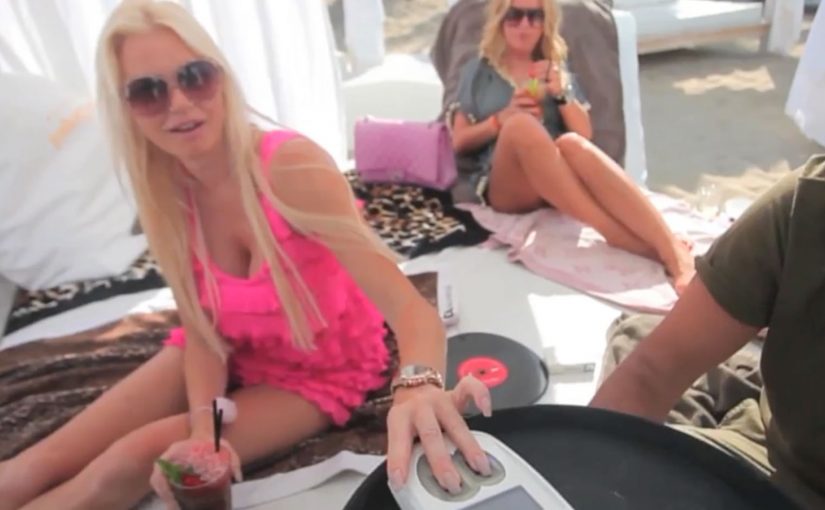
Guests who wished to use the new PayTouch system, a fingerprint-based payment setup linked to a registered credit card, were required to register their credit card details along with their biometric data of their right index and middle fingers with the hotel. After that, payments at all facilities at the destination were done by simply pressing the guest’s fingers against a fingerprint recognition device.

Now for 2013 the hotel is gearing up to replace its 2011 RFID-enabled wristbands with the above touch technology. Special touch screens are going to be installed around the hotel that provide guests access to their Facebook profiles by simply placing their fingers on a biometric sensor. However the updates on Facebook will be limited to a selection of automated actions like taking a photo, updating their current location and liking the hotel’s ongoing event.

In hospitality environments where guests move quickly and often, biometrics are attractive because they compress payment, access, and sharing into one repeatable gesture.

Ushuaïa Beach Hotel is truly setting an example for others in the hospitality industry by using technology to improve customer experience and spreading the word about their hotel.

Why this move is interesting

The value is not the sensor. It is the way a single biometric gesture can authenticate you repeatedly across payment and social touchpoints. Because the same biometric gesture can authenticate you repeatedly, paying and sharing become faster than switching cards, apps, and logins. The real question is whether guests experience this as convenience or as creepiness.

Extractable takeaway: If you connect identity to customer actions, keep the action set small, high-frequency, and reversible.

  • It removes friction in two high-frequency moments. Paying and sharing become quick, repeatable actions.
  • It turns identity into a service layer. Your fingerprint becomes the “key” across facilities and social touchpoints.
  • It keeps social posting controlled. Limiting updates to predefined actions reduces risk while still enabling sharing.

Guardrails to steal for biometric social

Biometric sharing should be strictly opt-in, narrowly scoped, and easy to switch off.

  • Make consent unmistakable. Explain what is collected, what it enables, and what happens when someone opts out.
  • Keep actions bounded. Predefined posts are safer than free-form posting when identity and social are connected.
  • Provide a simple off switch. Guests should be able to stop using the system instantly without losing access to the experience.

A few fast answers before you act

What is PayTouch at Ushuaïa Beach Hotel?

It is a biometric payment system where guests register a credit card and fingerprints, then pay on-site by pressing fingers against a recognition device.

How was the hotel planning to use fingerprints for Facebook in 2013?

By installing touch screens that let guests access their Facebook profiles via a biometric sensor and post only predefined actions such as photos, location updates, and likes.

Why replace RFID wristbands with fingerprint touch?

Fingerprint touch reduces the need to carry or manage a wearable token, and it can unify access and payments across the destination.

What is the main risk with this type of experience?

Trust and consent. The system needs transparent opt-in, clear limits on what gets posted, and an obvious way to disable participation.

What should a similar system include from day one?

Clear opt-in, tight limits on allowed actions, simple account disablement, and a straightforward way to stop using biometric identification without friction.

Posted on November 16, 2012February 27, 2026Categories Emerging Technology, Emerging Trends, Marketing Strategies, Social MediaTags biometric data, biometric payment system, biometric sensor, biometrics, cardless payments, customer experience, facebook, Facebook updates, fingerprint reader, fingerprint recognition devices, Fingerprint Sensor, Hospitality, hospitality industry, Ibiza, PayTouch, RFID, RFID technology, RFID-enabled wristbands, social sharing, Ushuaïa Beach Hotel, YouTube
EpicMix: Social snowboarding at Vail Resorts

EpicMix: Social snowboarding at Vail Resorts

In 2010 I had covered how Nokia was collaborating with Burton Snowboards, to create a new type of connected snowboarding experience.

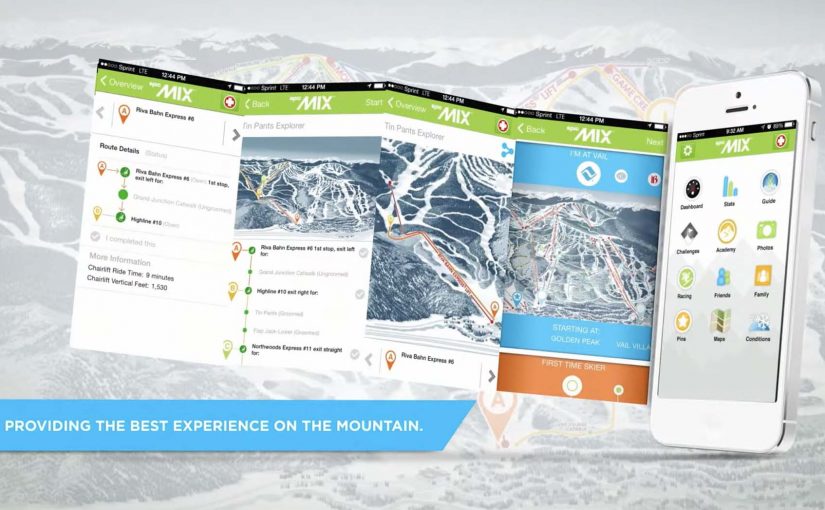
Since then, Vail Resorts in the USA has created an RFID (radio-frequency identification) based platform that can be accessed from any device. Their app is called EpicMix and, together with the slopes’ RFID lift ticket system, it captures users’ skiing and boarding activity and automatically uploads it to an EpicMix dashboard.

This season (2011/12) they have redesigned the app, created more badges (in the spirit of Foursquare), and integrated the resort photographers’ photos so they appear seamlessly in the user’s EpicMix account.

RFID lift tickets as the invisible engine

The clever part is that the tracking does not ask you to “do” much on the hill. Your lift access becomes the passive signal. The system can log where you have been and how your day is stacking up, then present it back as a clean timeline and a set of stats in your account. Because lift scans happen anyway, the experience stays effortless, which makes adoption and repeat use much more likely.

In US destination ski resorts, RFID-linked tracking and social sharing turn a day on the mountain into a measurable, shareable story.

The real question is whether passive tracking and automatic memories can turn a single resort day into a story people want to relive and share.

Badges and photos that keep the story moving

Badges give the platform an easy repeat loop: one more run, one more milestone, one more pin to unlock. The photo integration adds something even more powerful. It gives you proof you were there, in moments you do not usually capture yourself, and it drops those images into the same place you already check your day.

Why this changes the experience of a resort day

This is not only a ski tracker. It is a social layer that makes the day easier to remember, easier to compare, and easier to share. It also nudges behavior in a subtle way: people chase an extra badge, or detour to a spot where they know the photographers are active, because the system makes those micro-goals feel rewarding. Done well, it is one of the strongest retention loops a resort can build.

Extractable takeaway: If a “real life” platform can use a mandatory touchpoint as a passive signal and then return a satisfying story fast, it earns repeat engagement without asking users to work for it.

Design moves from EpicMix for connected resort days

  • Use an existing touchpoint as the sensor. Lift access already happens. The system just listens.
  • Return value quickly. Stats and milestones should feel immediate, not like a weekly report.
  • Make memories part of the product. Photos are not decoration. They are retention.
  • Design sharing as a byproduct. If the dashboard is satisfying, sharing becomes optional, not forced.

A few fast answers before you act

What is EpicMix?

EpicMix is an RFID-enabled tracking and sharing platform from Vail Resorts that captures ski and snowboard activity via lift tickets and presents it in a personal dashboard across devices.

How does the RFID lift ticket system help track a ski day?

RFID in lift tickets and passes can register lift usage as you ride, which lets the platform build a record of your day without requiring manual check-ins.

What is new in the 2011/12 season update?

The 2011/12 version is positioned as a redesign that expands badges and brings resort photographers’ images directly into a user’s EpicMix account.

Why do badges matter in a resort app?

Badges create small goals that make people check the app again, compare with friends, and feel progress beyond “I skied today”.

What makes photographer integration such a strong feature?

It adds high-quality memories with minimal effort. The experience feels richer when photos appear automatically in the same place you track your day.

Posted on January 4, 2012March 2, 2026Categories Emerging Trends, Marketing Strategies, Mobile, Power of Online, Social MediaTags badges, connected experiences, EpicMix, EpicMix iPhone App, EpicMix Photo, EpicMix RFID, EpicMix RFID System, gamification, Mobile Apps, resort photography, RFID, RFID lift ticket system, skiing, snowboarding, Snowboarding Apps, social sharing, Social Snow App, Social Snowboarding Apps, USA, Vail Resort, Vail Resorts, Vail Resorts EpicMix, Vail Resorts RFID, Vale iPhone App

Posts pagination

Previous page Page 1 Page 2 Page 3 Page 4 Page 5 Next page
SunMatrix Ramble: Independent perspectives on marketing and digital innovation since 2009