
Skip to content
Ramble Logo

SunMatrix Ramble

What Matters in Marketing and Digital Innovation

  • ABOUT
  • CONCEPT INDEX
  • CONTACT

Categories

Tag: social sharing

Renault: Facebook Likes in Real Life

Renault: Facebook Likes in Real Life

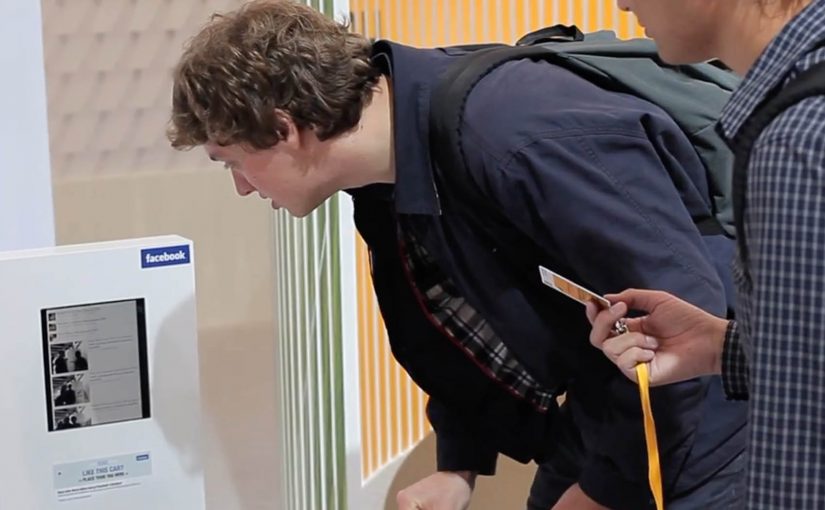
For the Amsterdam Motorshow, Renault introduced the possibility of “liking” real objects offline and immediately sharing them online via the Facebook wall. They created this innovative and real-time social sharing experience with the help of a RFID Facebook card.

Specially made Facebook pillars were placed in front of the Renault cars. All the visitors had to do was hold their pass in front of these pillars and an automatic connection would be made to their Facebook profile, with the car being “shared” on their wall. This way their offline car experience was instantly shared with their online friends.

Renault got the mechanics right, but last year Coca-Cola used the same technology in a more engaging manner at their Coca Cola Village event in Israel.

Why this felt new at the time

The breakthrough is not the “like” itself. It is the bridge. A physical moment becomes social output, meaning a post on the visitor’s Facebook wall, in seconds, without asking the visitor to take out a phone, search, type, or upload. Because the share action is reduced to a single tap, more people complete it before attention moves on.

Extractable takeaway: If you want physical experiences to generate social reach, remove every extra step between the moment and the share.

  • One gesture. Tap the card, and the content posts.
  • Identity linked once. The RFID card connects the visitor to their profile without repeated logins.
  • Social proof at scale. Each tap becomes a public signal to friends, extending the showroom beyond the venue.

In event marketing and showroom environments, the scalable advantage is not the technology itself but how quickly it turns attention into a visible social signal.

The real question is how to turn a live brand encounter into an online share before the visitor’s attention shifts.

What to copy for live-share activations

If you want real-time sharing from physical spaces, reduce the share action to a single motion and make the output predictable.

  • Cut the action to one move. The participant should only need to tap, not search, type, or upload.
  • Make the output clear. The visitor should know exactly what will appear on their wall before acting.
  • Keep the share native to the moment. The social post should feel like a continuation of the offline interaction, not a separate task.

A few fast answers before you act

What did Renault do at the Amsterdam Motorshow?

Renault created an RFID-based activation that let visitors “like” cars offline by tapping a Facebook RFID card at branded pillars, which then posted the car to their Facebook wall.

Why use RFID instead of asking people to share on their phones?

RFID reduces friction. It removes typing, app switching, and upload steps, which increases participation and makes sharing feel effortless in the moment.

What is the main benefit of connecting offline experiences to social in real time?

It turns a physical event into an online distribution channel, where each participant becomes a broadcaster to their own network.

What makes this more scalable than asking staff to help visitors post manually?

The action is standardized and immediate. Each visitor can generate the same type of share without depending on staff, which makes the activation easier to repeat at scale.

What should you be careful about with automated social posting?

Make the action intentional and the output transparent. People need to understand what will be posted before they tap.

Posted on April 26, 2011March 6, 2026Categories Emerging Technology, Emerging Trends, Live Communication, Social MediaTags #LiveForNow, Amsterdam, Amsterdam Motorshow, AutoRAI Motorshow, Experiential Marketing, facebook, Facebook Integration, Facebook Like, Facebook Share, Offline to Online, Real Time Marketing, Renault, RFID, RFID Facebook card, social sharing, The Netherlands, YouTube
Burgeranch: Combina, hack the quiz

Burgeranch: Combina, hack the quiz

Burgeranch is an Israeli fast food chain that launched a new burger deal called “combina,” which basically means outsmarting the system with the deal and getting a whole lot more food for less money.

McCann Erickson Israel then built an unusual engagement campaign that followed the same combina logic. The official campaign drove users to an online quiz that was impossible to answer correctly. Meanwhile, clues were seeded on how to “hack” the quiz by changing certain details in the URL. Once word spread, the campaign took off, and what looked like a risky strategy became a success story.

A prank with a purpose

The smart part is that the campaign does not just talk about combina. It makes you do it. The brand promise is “more for less if you are clever.” The campaign mechanic is “win by being clever.”

The mechanism: impossible quiz, then a discoverable loophole

The experience starts with frustration. You cannot win honestly. Then it shifts into discovery. If you notice the URL, and you experiment, and you share what you found, you can beat the system. That arc turns a standard promotional quiz into a social object people want to trade tips about. Because the only way to win is to spot the loophole, the mechanic pushes people to compare notes and spread the workaround.

In consumer internet cultures where people love to “beat the system,” campaigns can scale faster through shared discovery than through paid media alone.

The real question is whether you can make “beating the system” feel like a playful brand game, not a trust violation.

Why it lands: you are not just a participant, you are “in on it”

Most promotions put the brand above the user. This one flatters the user. It frames the audience as clever enough to spot the workaround, and that changes the emotional tone from “contest” to “inside joke.”

Extractable takeaway: If your proposition is about smart value, you can make the audience feel smart by designing a loophole that is easy to learn, satisfying to exploit, and irresistible to share.

The business intent behind the “hack”

The intent is to create talkability that matches the product story. A deal that feels like outsmarting the system needs a launch that feels like outsmarting the system. Done well, the tactic does two jobs at once. It drives attention and it pre-frames the offer as a savvy choice rather than a cheap one. This approach is worth copying only if the “hack” is clearly intentional, harmless, and bounded.

What to copy from the Combina quiz hack

  • Align mechanic to meaning. The interaction should embody the product promise, not sit beside it.
  • Engineer a shareable discovery. People share tips, not slogans.
  • Keep the “hack” simple. One obvious tweak beats a complex exploit. The point is participation, not technical skill.
  • Control the risk envelope. Make sure the loophole cannot spill into real security issues or uncontrolled costs.
  • Reward the behaviour you want. The payoff should reinforce “smart value,” not just random freebies.

A few fast answers before you act

What is the Burgeranch “Combina” hack campaign?

It is a launch campaign built around an impossible online quiz, where users are nudged to discover that they can “win” by changing parts of the URL. The discovery spreads by word of mouth and mirrors the idea of outsmarting the system.

Why make the quiz impossible in the first place?

Because frustration creates a reason to look for a workaround. The moment a user suspects there is a trick, the campaign shifts from answering questions to solving a puzzle, which is more social and more shareable.

What makes this different from typical gamified promotions?

The game is not the questions. The game is the loophole. That design turns the audience into collaborators who trade knowledge, rather than isolated contestants.

What are the main risks of “hack-themed” marketing?

Confusion, trust issues, and accidental security optics. If people think you are encouraging real hacking, or if the mechanic resembles a vulnerability, the campaign can backfire quickly.

How do you adapt this pattern safely today?

Design an intentional, harmless “cheat code” that is clearly part of the experience, set strict limits on rewards, and make the discovery feel playful rather than illicit.

Posted on February 1, 2011February 27, 2026Categories Marketing Strategies, Power of Online, Social MediaTags burger deal, Burgeranch, Burgeranch Combina, Burgeranch Combina HACK Campaign, BurgerRanch, combina, Digital strategy, engagement campaign, fast food, gamification, Hack campaign, interactive marketing, Israel, McCann Erickson, Mccann Erickson Israel, McCann Tel Aviv, online quiz, Quiz marketing, Rumor marketing, social sharing, The HACK Campaign, URL hacking
Volkswagen: PunchDub the game

Volkswagen: PunchDub the game

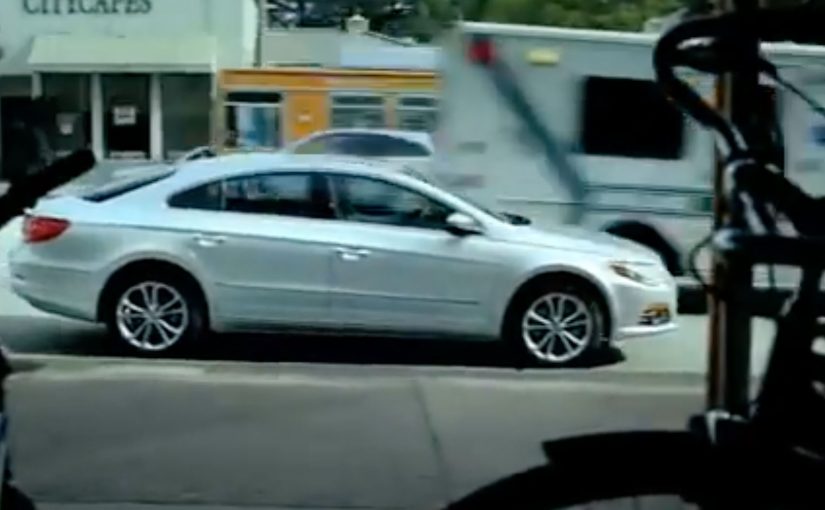
You spot a VW, call it out, and punch your friend. That old road-trip ritual gets a fresh twist when Volkswagen reframes it as “PunchDub” and expands the target from one iconic model to the full lineup. PunchDub is the name for this car-spotting punch game applied to any Volkswagen model you see.

The mechanic is simple. The moment you see a VW, the “game” triggers. With 13 different VW models in play, every sighting becomes a reason to react again, and the brand quietly teaches you that Volkswagen is more than one car.

In automotive marketing, reworking a familiar cultural habit into interactivity is a fast way to refresh how people think about a full product family.

The real question is whether your brand can turn passive noticing into an automatic, repeatable reaction loop.

It is playful. It is slightly ridiculous. And it is effective brand education disguised as a joke, because you remember what you repeatedly do in real life.

Why the “13 models” twist matters

The original game logic is narrow. It is usually about spotting a Beetle. By broadening the trigger to 13 vehicles, Volkswagen turns a niche in-joke into a scalable framework that can support an entire lineup. That is the point. You stop thinking “VW equals one car” and start thinking “VW equals a range.”

Extractable takeaway: If you have a product family, design the trigger so variety is the reason the loop keeps restarting.

What the campaign is really optimizing for

This is less about immediate conversion and more about mental availability. The brand wants to show up in the everyday, in-car moments where games happen naturally. When that happens, the campaign earns repeated exposures without asking for repeated media.

Steal the habit-hijack loop

  • Hijack a habit. If people already do something, reframe it instead of inventing a new behaviour.
  • Turn variety into a feature. The “13 models” detail makes the brand’s range the reason the game improves.
  • Keep the trigger obvious. Spot. Call. React. The loop has to be instant, or it will not spread.
  • Make the brand the punchline. A joke people repeat is often a message they remember.

A few fast answers before you act

What is PunchDub?

PunchDub is Volkswagen’s twist on the “Punch Buggy” style car-spotting game, expanding the target from one VW model to a broader set of Volkswagen vehicles.

Why does expanding to multiple models change the impact?

It converts a single-model association into lineup awareness. The “game” repeatedly reinforces that Volkswagen has many models, not just one iconic car.

What makes this kind of idea spread?

A clear trigger and a fast reaction loop. People can play it without instructions, so it travels by imitation.

Is this about product features?

Not directly. It is about brand memory. The goal is to make the lineup feel present in everyday moments, so the brand becomes easier to recall later.

What is the main risk with habit-based campaigns?

If the mechanic feels forced or complicated, it dies. The best versions feel like a natural extension of something people already do.

Posted on February 17, 2010February 27, 2026Categories AdsTags Ad, automotive advertising, Brand Campaign, Das Auto, Deutsch LA, Dub, facebook, New Punch, product lineup, Punch Buggy, PunchDub, Punching, Slug Bug, Slugbug, social sharing, Stevie Wonder, Super Bowl, Tracy Morgan, volkswagen, Volkswagen Commercial, VW

Posts pagination

Previous page Page 1 … Page 4 Page 5
SunMatrix Ramble: Independent perspectives on marketing and digital innovation since 2009