
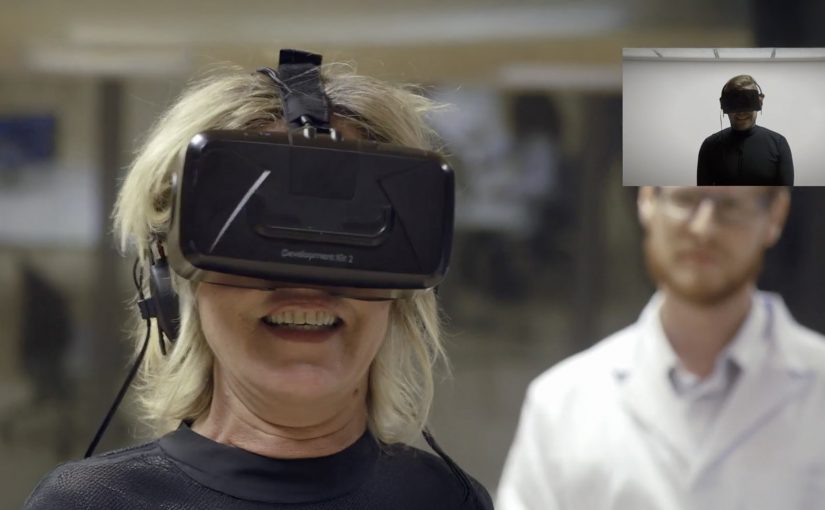
NIVEA Creme: Second Skin Project

A mother puts on a headset and a skin-like suit. Her son does the same, thousands of kilometres away. The promise is simple. If they cannot be together for Christmas, technology will let them feel a hug anyway.

That is the set-up in NIVEA Creme’s “Second Skin Project” with Leo Burnett Madrid. The film introduces Laura in Madrid and her son Pablo, who is away volunteering in Paraguay. They are invited to test a “Second Skin” garment that is presented as a high-tech fabric designed to simulate human skin and transmit the sensation of touch at distance, paired with virtual reality headsets.

The story then pivots. What looks like a tech demo is used to make a point about touch, not technology. The most persuasive moment is not the suit. It is the human reunion that follows, designed to underline NIVEA Creme’s belief that nothing beats skin-to-skin contact.

The “Second Skin” mechanism that pulls you in

The film borrows credibility from advanced-sounding materials and VR. That framing creates anticipation, because the viewer wants to know whether the experiment can actually work. The suit and headset are the narrative engine that earns attention for long enough to land the real message.

In global consumer brands where heritage products compete with endless alternatives, emotional proof often carries more weight than functional claims.

The real question is whether the tech is the story, or whether it is just a credible pretext for the brand to own the value of touch.

The twist that protects the brand meaning

There is a risk with tech-led emotion. The technology can become the hero and the brand becomes a sponsor. This script avoids that by using the tech as a decoy. The reveal shifts the spotlight back to the product truth. A hug is still the best “gift” and NIVEA Creme wants to be associated with that intimacy.

Extractable takeaway: When you borrow a shiny mechanism to earn attention, make the emotional payoff explicitly restate what the brand believes, or the gadget takes the credit.

How to use “purpose + tech” without losing the human truth

  • Use technology as the hook, not the conclusion. Let it earn attention, then pay it off with a human truth.
  • Make the brand stance explicit. Here the stance is clear. Technology can be amazing, but touch matters more.
  • Cast real stakes. Distance, holidays, and family history make the outcome feel earned.
  • Keep the product role emotional, not technical. NIVEA Creme is not “the innovation”. It is the comfort cue that frames the story.

A few fast answers before you act

What is the NIVEA Creme Second Skin Project?

It is a Christmas-season film and experiment setup where a mother and son test a VR-led “Second Skin” suit that is presented as transmitting the feeling of touch at distance, then the story reveals the value of real human contact.

Why does the campaign use VR and a “second skin” suit?

Because it creates a believable question the audience wants answered. Can technology replicate a hug? That curiosity holds attention long enough for the campaign’s real point to land.

What is the core message NIVEA Creme is trying to own?

That skin-to-skin contact matters. The work uses technology to highlight that, even in a world of advanced tools, nothing replaces human touch.

What makes this more than a generic emotional video?

The narrative structure. It starts as a tech experiment, then pivots into a human reunion. That contrast makes the conclusion feel stronger than a straight sentimental story.

What is the biggest risk with “tech-as-story” campaigns?

Audience misattribution. People remember the gadget and forget the brand meaning. The fix is to ensure the emotional payoff clearly belongs to the brand stance, not the device.

Lexus Hoverboard: Engineering a Brand Moment

Lexus builds a hoverboard. On purpose.

Lexus did not build a hoverboard to sell it. They built it to show what the brand stands for when you strip away the brochure.

The real question is whether you can prove engineering credibility in public without turning it into an ad.

The Lexus Hoverboard is presented as a rideable board that levitates above the ground using magnetic levitation. The campaign frames it as engineered, tested, and demonstrated rather than simulated.

This is brand storytelling executed through engineering, not advertising copy.

How the hoverboard is described to work

The hoverboard uses magnetic levitation technology. Magnetic levitation means the board is held up by magnetic forces rather than wheels or air pressure.

Superconductors inside the board are described as being cooled with liquid nitrogen. When placed above a specially designed magnetic track, the board “locks” into position and floats.

The result is controlled levitation. Not free roaming, but stable, directional hovering that makes riding possible. The constraint becomes part of the proof, because it makes the mechanism legible to viewers.

In premium automotive and consumer technology categories, the fastest path to trust is often a visible demonstration of real capability rather than another layer of messaging.

Why it feels like engineering, not hype

Lexus positions itself around precision, control, and advanced engineering. The hoverboard compresses those values into a single, highly visual artifact. You do not need to read a brochure to understand it. You see it.

Extractable takeaway: If you want people to believe a capability, build a demonstration where the constraints are obvious and the work is hard to fake.

By putting professional skateboarders on a levitating board in a purpose-built environment, Lexus turns technical credibility into a cultural moment.

What Lexus is really doing here

The hoverboard is not positioned as a prototype for future mobility. It is a brand signal.

By “brand signal,” I mean a deliberate proof point that tells the market what you are capable of, even when no one can buy the thing you built.

Lexus frames the execution as complex technology made real and presented with control rather than chaos. In categories where trust in engineering is everything, that framing is the product.

Demonstrations beat declarations when your differentiation is engineering, because they create belief before the copywriting starts.

What this says about modern brand building

Brands increasingly compete on what they can demonstrate, not what they can claim. When technology is real, visible, and difficult to fake, it carries more weight than messaging.

The Lexus Hoverboard works as a brand moment because it is unnecessary. It exists only to make a point.

What to steal for your next credibility play

  • Choose a proof, not a promise. Build one artifact that makes the capability undeniable.
  • Make the constraints visible. If people can see what makes it hard, it reads as real.
  • Turn the demo into a scene. Put the proof in a context people recognize and want to share.
  • Separate “signal” from “SKU.” Treat this as brand equity work, not product pipeline.
  • Design for replay. Aim for a story people can retell in one sentence.

A few fast answers before you act

Is the Lexus Hoverboard real or CGI?

In the campaign, it is presented as a real levitating board demonstrated in-camera, not a visual effects sequence.

How does the hoverboard create levitation?

It is described as using superconductors cooled with liquid nitrogen over a magnetic track, producing magnetic levitation.

Why does it only work in specific locations?

Because the magnetic infrastructure is part of the system. Without the track, the “hover” mechanism has nothing to levitate against.

What is Lexus actually selling with this stunt?

Confidence in engineering. The point is to compress precision, control, and advanced capability into one unforgettable proof moment.

What makes this kind of demo believable to audiences?

Visible constraints plus visible performance. When the audience can see what makes it hard to fake, the claim carries more weight.

When should a brand copy this pattern?

When your differentiation is technical credibility and your category runs on trust. Build a proof artifact that makes the capability obvious in seconds.

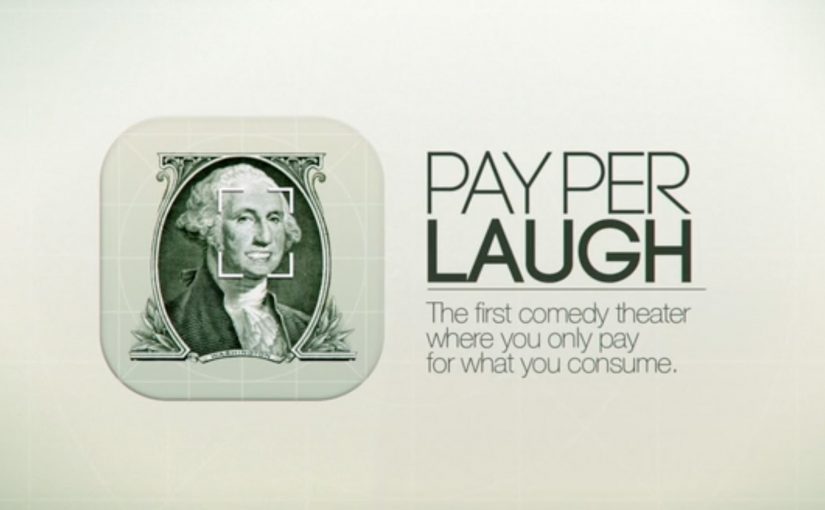
Teatreneu: Pay Per Laugh

In mid-2013, Spain’s theatre scene is described as taking a hit when taxes on theatrical shows reportedly rose from 8% to 21%, with audiences thinning out as a result. Teatreneu, an independent comedy theatre in Barcelona, responds with a pricing idea that sounds like a joke until you sit down.

Entrance is free. You only pay when you laugh. Every laugh costs €0.30, capped at €24 for 80 laughs. If the show is not funny, you pay nothing. If it is, you pay for what you consumed.

The mechanism: pricing tied to visible emotion

The model is made possible by fitting each theatre seat with a system that detects smiles during the show and increments the charge. The experience is framed as transparent and immediate. Laugh, the counter moves. Stay straight-faced, the bill stays still.

In European live entertainment, pricing experiments that align payment to perceived value can reset attention fast, because they turn a ticket into a story people want to debate.

Why this lands

This works because it reframes the risk. Instead of “pay up front and hope it’s good,” the audience gets an “only pay if it works” promise. Because the charge only rises when people visibly enjoy the show, the pricing mechanic feels fairer before the first joke lands. The smile-detection counter also adds tension and theatre inside the theatre, because everyone knows their reaction has a price. The result is a show that sells itself through the mechanic as much as through the jokes. The real question is whether performance-linked pricing can turn hesitation into trial without making the experience feel punitive. The stronger idea here is not the sensor but the risk reversal.

Extractable takeaway: If your category suffers from perceived value risk, attach payment to an observable outcome, then cap the downside so people feel safe trying it once.

What the numbers are trying to prove

Reported results claim that the average ticket yield increased by around €6 compared to the prior model, and that attendance rose by about 35% as the concept became widely talked about. Whether or not each figure holds precisely, the intent is clear. Make pricing the headline, and use that attention to refill seats.

What to steal from performance-based pricing

  • Make the deal easy to repeat. “Free entry, pay per laugh” is instantly explainable.
  • Instrument the experience. The detection system makes the promise measurable, not rhetorical.
  • Protect the customer with a cap. A maximum price keeps the mechanic playful rather than punitive.
  • Let controversy do distribution. A pricing model people argue about spreads faster than a standard poster campaign.

A few fast answers before you act

What is “Pay Per Laugh”?

It’s a comedy show pricing model where entry is free and spectators are charged €0.30 per laugh, capped at €24, using smile detection to meter reactions.

How is laughter detected?

The theatre fits seats with a system that detects smiles during the show and counts them toward the final charge.

Why set the cap at €24?

It limits downside and keeps the mechanic in the range of a normal ticket, so the idea feels like a playful wager, not an open-ended penalty.

What problem is this solving?

It addresses audience drop-off and price sensitivity by shifting risk away from the customer and turning ticket pricing into a reason to attend.

What’s the biggest risk with this approach?

Trust and fairness perception. If people doubt the accuracy of detection or feel pressured to suppress laughter, the experience can backfire.