
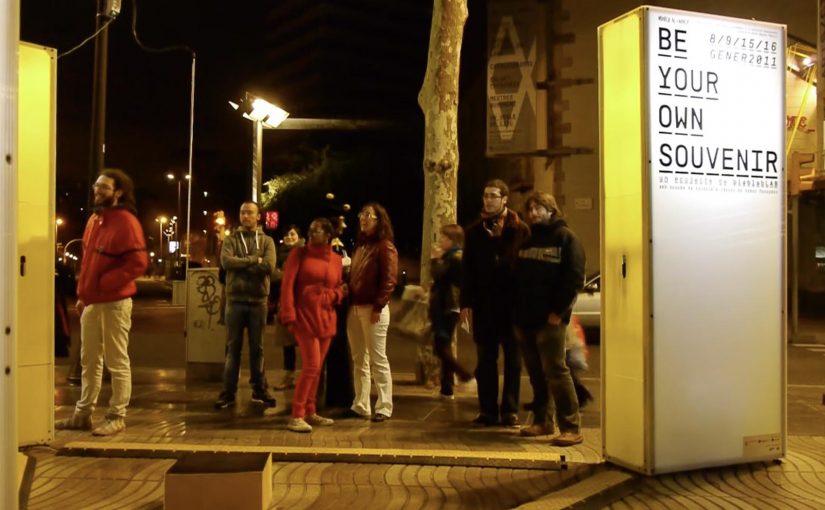
Be Your Own Souvenir: 3D-printed human statue

The crew from blablablab.org creates a unique digital installation in La Rambla, Barcelona, a place made famous by street artists posing as “human sculptures” and the constant flow of tourists who stop to watch them stand still.

This installation reverses the roles and lets the tourist become the producer as well as the consumer. The system invites visitors to perform as a human statue, with a free personal souvenir as the reward: a small figure of themselves, printed three-dimensionally from a volumetric reconstruction generated using three structured-light scanners (Kinect).

On La Rambla, where people already queue for a photo moment, converting spectators into performers is a reliable way to earn attention without forcing a pitch.

A street ritual, rewritten

La Rambla already has a clear “script”. You stop, you watch, you take a picture, you move on. This project keeps the same script, but switches the hero. Instead of photographing someone else’s performance, you become the performance, and you leave with a physical artifact that proves you did it.

The real question is how you get strangers to choose public participation without feeling like they are being pitched.

How the scanning becomes the experience

The tech is not framed as “3D scanning”. It is framed as a playful stage. You step into position, hold still like the living statues nearby, and the system quietly captures you. The output is a miniature you can take home, which makes the digital process feel tangible and earned.

In European tourist corridors with heavy foot traffic, public-space interactivity succeeds when the action is instantly legible and the payoff is immediate.

Why the reward loop works

A souvenir is usually generic. Here it is personal, location-specific, and instantly story-worthy. The value is not the plastic. The value is the transformation: tourist to performer, data to object, moment to keepsake. The reward loop here is simple: pose, get captured, receive a miniature you can take home. This kind of public-space interactivity works best when the reward is earned through participation, not handed out as a promo.

Extractable takeaway: Turn spectators into performers with a one-step action and an earned artifact, and you can win attention without forcing a pitch.

What to steal for public-space interactivity

  • Borrow a behavior people already understand. The “human statue” pose needs no explanation in this location.
  • Make participation the content. The audience is literally the subject.
  • Deliver a physical takeaway. A real object extends the memory past the street corner.
  • Keep the instruction simple. “Stand here and pose” beats any multi-step onboarding.

A few fast answers before you act

What is “Be Your Own Souvenir”?

It is a public installation on La Rambla that invites tourists to pose as human statues, captures them with structured-light scanning, and produces a small 3D-printed figure as a personal souvenir.

How does the system capture the person?

It uses volumetric reconstruction generated from three structured-light scanners (Kinect), producing a digital model that can be sent to a 3D printer.

Why does the “human statue” framing matter?

Because it matches the culture of the street. People already understand the pose-and-watch ritual, so the interaction feels native rather than imported.

What makes this more than a tech demo?

The outcome is personal and physical. The tech disappears behind an experience and a takeaway that visitors actually want.

What is the main lesson for experiential design?

Anchor the interaction in a familiar behavior, then reward participation with an artifact that makes the moment portable.
Spanair: Unexpected Luggage

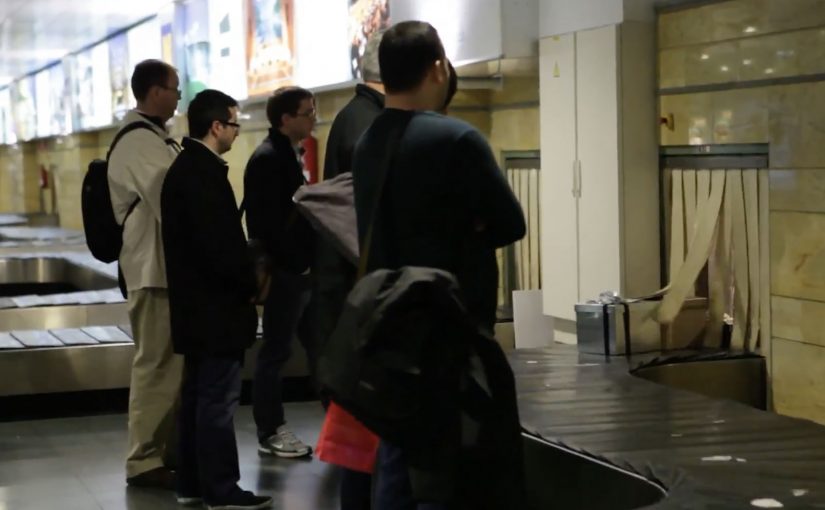
On December 24th the flight from Barcelona to Las Palmas arrived close to midnight. 190 people were flying while everyone else celebrated Christmas Eve. Spanair decided to do something special for those 190 passengers.

Instead of a routine wait at baggage claim, the luggage carousel delivered an unexpected sight. Wrapped gifts came down the belt before the suitcases did, turning a tired, end-of-day moment into a shared surprise.

How the baggage-claim surprise is engineered

The mechanic is as physical as it gets. Move the brand moment to the one place every passenger must stand still. Then use the carousel as the reveal device, with gifts replacing the expected flow of bags long enough for the crowd to realize something has changed.

In European airline marketing, the most memorable “service stories” are often built from small interventions in unavoidable touchpoints, where emotion is already high and attention is captive.

Why it lands

It respects the situation. Christmas Eve travel is already loaded with absence, fatigue, and sacrifice. The surprise works because it does not ask passengers to do anything new. It simply changes what the moment means, and it does so in front of everyone, so the reaction becomes collective rather than private.

Extractable takeaway: If you want a brand moment to feel generous rather than promotional, place it inside an unavoidable friction point, and make the reveal about relief and recognition, not about brand messaging.

What Spanair is really buying

This is “customer experience” as media. The spend is focused on a small number of people, but the output is a story that travels because it is easy to retell and easy to believe. A luggage belt of gifts is visual proof, not a claim.

The real question is how to turn a routine service touchpoint into proof that people will remember and retell.

What to steal for your own service brand

  • Use captive moments. Baggage claim, check-in lines, boarding queues, and waiting rooms are attention-rich environments.
  • Let the environment do the talking. When the space changes, you do not need much copy.
  • Design for group emotion. Collective reactions create social permission to film, share, and talk.
  • Make the proof unmistakable. If the story can be doubted, it will not travel far.

A few fast answers before you act

What is the core idea of Unexpected Luggage?

Surprise passengers at baggage claim by swapping the expected luggage moment for a gift reveal, turning a routine wait into a shared holiday experience.

Why does baggage claim work so well as a stage?

Everyone must be there, everyone is watching the same thing, and the carousel is already a natural reveal device. That makes the surprise instantly legible.

What makes this feel authentic instead of gimmicky?

The gesture fits the context. It acknowledges what it means to travel on Christmas Eve and gives something back without requiring participation or performance from passengers.

What is the biggest risk when copying this approach?

If operations are not tight, the surprise turns into delay and frustration. The moment must feel like relief, not disruption.

Does this only work for airlines?

No. The same pattern can work in any service setting with a captive, shared wait, as long as the intervention fits the moment and does not create extra friction.

Pilot Pen: Handwritten Emails

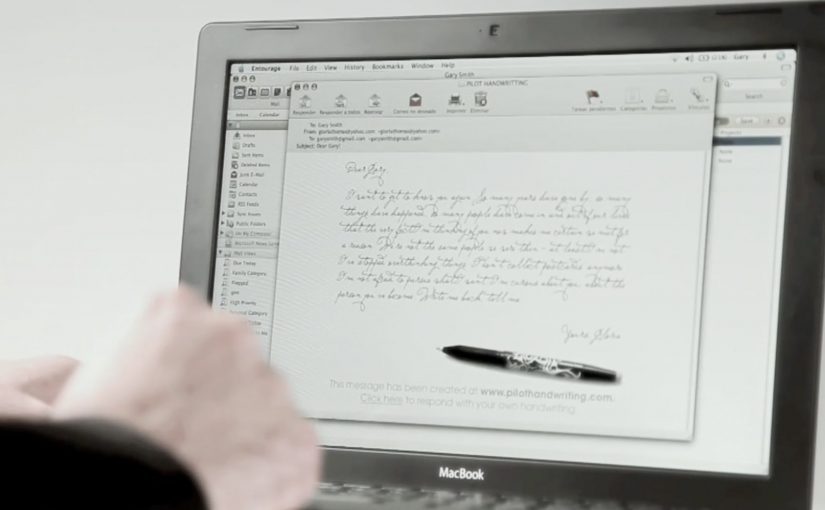
Pilot Pens Spain has made emails more personal by letting you handwrite your emails on the computer.

A pen brand that turns “your writing” into a usable tool

The mechanic is simple. You create a digital font from your own handwriting, then use that font to write emails that look like you wrote them by hand.

All you need to do is go to www.pilothandwriting.com and turn your handwriting into a digital font. After that you can start sending handwritten emails to your friends.

In everyday one-to-one communication, the feeling of personal effort often matters more than perfect typography.

Why it lands: it restores “human signal” without slowing you down

Email is fast but visually uniform. Handwriting is personal but slow. This concept bridges the gap by keeping the speed of email while reintroducing the quirks and warmth that make a message feel meant for one person. By “human signal,” this means the visible personal quirks that make a message feel authored by a specific person rather than produced by a system. It works because the digital font preserves those quirks while removing the time cost of writing by hand.

Extractable takeaway: If your brand owns a physical ritual, translate the ritual into a digital utility that keeps the emotional benefit. People do not want “more features”. They want the feeling the ritual used to create.

The business intent: make the brand present at the moment of meaning

The real question is whether a pen brand can make its core ritual useful inside digital behavior instead of just advertising around it.

This is a strong brand utility move because it turns product truth into something people can actually use. Pilot is useful when you have something worth saying, and the campaign makes the brand present at the exact moment that sentiment is expressed.

The work is commonly credited to Grey Barcelona for Pilot Pen in Spain.

How to apply this brand utility pattern

  • Turn a brand asset into a tool: if you own a distinctive behavior (writing, drawing, annotating), make it usable in digital life.
  • Keep the first win fast: the user should get a “wow, that’s me” moment within minutes.
  • Design for sharing by default: the output should be easy to send, post, or reuse without extra steps.
  • Respect authenticity: slight imperfections are a feature here. Over-smoothing kills the point.
  • Measure the right signal: repeats and reuse matter more than one-time visits.

A few fast answers before you act

What is Pilot Handwriting?

It is a web experience that converts your handwriting into a digital font, so you can write emails that look handwritten.

Why does “handwritten email” feel more personal?

Because handwriting carries individual variation. That visual uniqueness signals effort and intention in a way standard typed text does not.

Is this a gimmick or a useful tool?

It can be a real utility if it reduces friction and produces an output people reuse. The best test is whether users come back and keep writing with it.

What makes a brand utility campaign work?

A clear problem, a fast first payoff, and an output that naturally travels to other people, turning use into distribution.

What’s the biggest risk in copying this idea?

Onboarding friction. If setup is slow or error-prone, the personal magic disappears before the user gets a satisfying result.