Nike SPARQ: Immersive Digital Training

Nike SPARQ: Immersive Digital Training

When training becomes the differentiator. Nike SPARQ goes digital

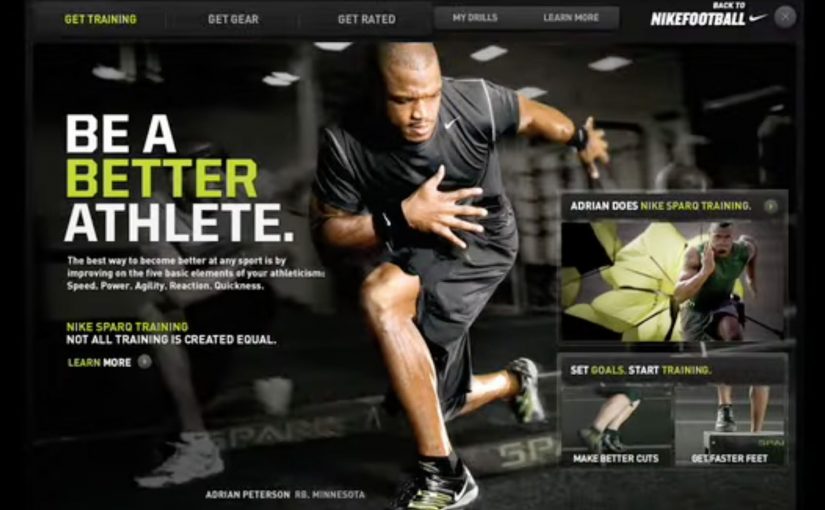
Not too long ago, talent determined greatness. Today, talent is a given, but training is what separates the exceptional from the merely promising. So to help athletes everywhere reach their true potential through better training, Nike along with ad agency R/GA New York created an immersive digital experience for the SPARQ program (Speed, Power, Agility, Reaction, and Quickness).

Athletes could now follow the same training regimens as professional athletes through detailed, customized video demonstrations delivered via iPods or handheld video players that made it accessible anywhere. The SPARQ website also let athletes set goals, track progress, find Nike SPARQ Trainers across the country, get an official SPARQ rating, and purchase gear.

The smart move: make elite training portable and personal

The experience does two things at once. It brings pro-level drills to anyone with a device, and it makes training feel individualized through customization and video guidance. That combination shifts SPARQ from “program” to “daily habit.”

In sports-performance brands and youth training programs, the winners make instruction portable enough to survive real life.

Why this feels bigger than content

The real question is whether your digital experience builds a habit-forming training loop, or just publishes drills. Because it is not just inspiration. It is infrastructure. Video demonstrations give you the “how,” goal setting and tracking give you the “keep going,” the rating gives you a yardstick, and trainers plus gear connect the digital loop to the real world. Here, the digital loop is the cycle of instruction, goals, tracking, and feedback that pulls you into the next session. Treat training as infrastructure, not content, if you want durable engagement.

Extractable takeaway: Pair instruction with goals, tracking, and feedback loops so progress is visible and practice becomes a habit.

The business intent hiding in plain sight

Build a performance ecosystem that increases commitment over time. The more you train, track, and compare, the more SPARQ becomes the platform you return to. And the more natural gear purchase becomes inside that flow.

Steal the habit loop, not just the videos

  • Ship a loop, not content. Guidance, goals, tracking, and a measurable score.
  • Design for anywhere use. Portability turns intention into repetition.
  • Connect digital motivation to real-world touchpoints. Trainers, ratings, and commerce.

A few fast answers before you act

What does SPARQ stand for?

Speed, Power, Agility, Reaction, and Quickness.

What did Nike and R/GA New York build?

An immersive digital experience for SPARQ that delivered customized training video demonstrations and a supporting website for goals, tracking, trainers, ratings, and gear.

How did athletes access the training content?

Through detailed video demonstrations delivered via iPods or handheld video players, making the training accessible anywhere.

Why did this feel bigger than training videos?

Because it combined instruction with goal setting, tracking, a rating, and connections to trainers and gear, creating a repeatable training loop.

What made the SPARQ website useful beyond videos?

It let athletes set goals, track progress, find SPARQ trainers, get an official SPARQ rating, and purchase gear.

What is the simplest principle to copy from SPARQ?

Pair guidance with goals and feedback so people can see progress and have a reason to return.
Coca-Cola: Cheer-O-Meter

Coca-Cola: Cheer-O-Meter

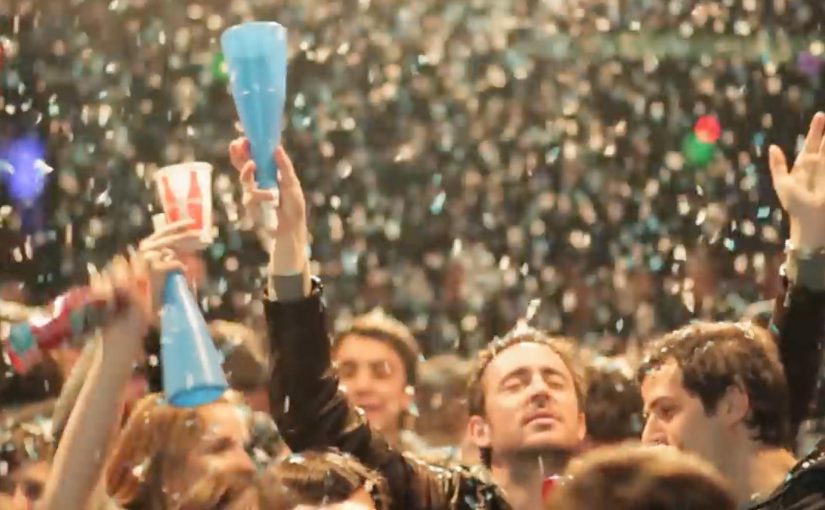
To promote the excitement around Copa America 2011, OgilvyAction worked with Coca-Cola to set up a giant screen in downtown Buenos Aires for fans to watch their favorite teams and provide unconditional cheer to the Argentinean National Team. But there was a catch. Sound sensors were installed to keep the screen on and if the fans stopped cheering, the screen would go blank.

The real question is whether you can make the crowd’s participation the switch that powers the experience.

Why this activation hits

The mechanic is brutally simple. Your cheering is not just encouraged. It is required. Here, an activation is a live brand experience that changes what the crowd can see based on what they do. Because the screen can die, the crowd self-organizes to keep the volume up, which makes “support” feel like a shared responsibility. In sports sponsorship and live-event marketing, conditional access is one of the fastest ways to turn spectators into participants.

Extractable takeaway: If you want participation, make it the required input for a real reward, and show the consequence instantly.

  • Clear rule. Cheer to keep the screen alive.
  • Immediate feedback loop. The crowd sees the consequence in real time.
  • Social amplification built in. People around you become part of the control system.

What marketers can reuse from the idea

This is a strong example of “participation as the power source”. Instead of adding a gimmick on top of the match, the match itself becomes the reward for participation. It also turns a brand message into a behavior, which tends to travel further than a tagline.

  • Make participation the power source. Tie the experience to an audience action instead of adding a side-gimmick.
  • Keep the reward “core”. Use the thing people already want as the payoff, not a separate prize.
  • Show consequences instantly. A visible feedback loop lets the crowd adjust behavior without instructions.

If participation does not change anything in the moment, it will read as decoration, not interactivity.


A few fast answers before you act

What is the Coca-Cola “Cheer-O-Meter”?

It is a live fan-screen activation in Buenos Aires for Copa America 2011 where sound sensors kept the match on screen only while fans kept cheering.

How did the sound-sensor mechanic work?

The cheering volume acted as the trigger. If it dropped too low, the screen went blank, pushing the crowd to keep the energy up.

Why is this effective as a brand experience?

Because it converts brand participation into a simple, memorable rule with instant consequences, and it makes the crowd feel responsible for the outcome.

What is the transferable pattern?

Create one clear rule, attach it to a real reward, then deliver immediate feedback so the audience understands their impact in the moment.

ASICS: Race Ryan Hall at Columbus Circle

ASICS: Race Ryan Hall at Columbus Circle

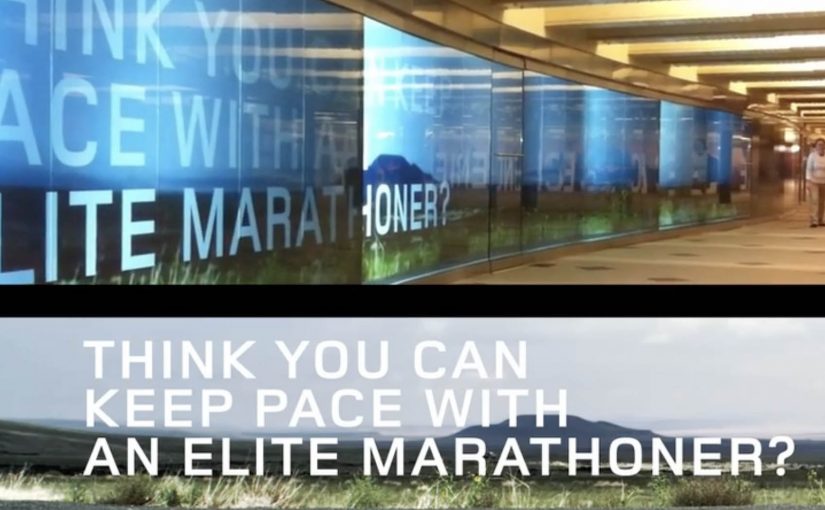
ASICS wants to level up physical interaction with their brand. So around this year’s ING New York City Marathon, they built a 60-foot video wall in the Columbus Circle subway station and challenged passersby to race U.S. marathon runner Ryan Hall.

The wall plays life-sized footage of Hall running at marathon pace, turning a commute corridor into a short, sweaty benchmark. You do not “watch” the message. You try to keep up with it.

Why a race works better than a slogan

In high-traffic urban transit environments, the fastest way to make a performance claim believable is to let people feel it with their own body, not just read it. Most sports sponsorship visibility lives on banners and logos. This flips the value. It gives the audience a direct comparison: your pace versus elite pace. Because the wall sets an elite pace as a moving yardstick, that comparison makes the brand message tangible in seconds, and it creates a story people can retell immediately.

Extractable takeaway: If you need credibility fast, turn the claim into a simple physical test that anyone can try without setup.

The craft move: frictionless participation

No sign-up. No app download. No instruction manual. The interaction is instinctive. See runner. Run next to runner. That simplicity matters because subway audiences have short attention windows and low patience for setup.

What ASICS is really doing with this build

On the surface it is a fun stunt. Underneath it is a credibility transfer, meaning the elite standard makes the sponsor’s performance story feel earned when people experience the comparison firsthand. The real question is whether your brand promise holds up when people can compare themselves to an elite benchmark in public. This is a stronger sponsorship play than more logo visibility because it produces felt proof, not just awareness. By letting everyday runners test themselves against a real benchmark, ASICS positions itself closer to serious performance culture, not just event sponsorship.

Big-event activation moves to copy

  • Turn a claim into a test. If the audience can try it, they will believe it.
  • Make participation obvious. The interaction should be understood without reading instructions.
  • Place it where behavior already fits. A corridor invites motion. Use spaces that support the action.
  • Design for one-sentence retell. “I raced Ryan Hall in the subway” is the whole message.

A few fast answers before you act

What is the core mechanic of this activation?

A long-form video wall shows Ryan Hall running at marathon pace, inviting passersby to physically race alongside the footage.

Why does transit placement matter here?

Transit corridors create natural “run lanes” and constant foot traffic, so the activation gets high exposure and the behavior feels socially plausible.

What makes this more effective than a normal video billboard?

It turns viewers into participants. The message is experienced as effort and pace, not as information.

What is the biggest execution risk?

If the wall is hard to notice, the corridor is too crowded to move, or the interaction cues are unclear, people default back to walking and the idea collapses.

How would you measure success?

Dwell time, participation rate, repeat attempts, social sharing volume, and any lift in event-area brand consideration versus baseline sponsorship exposure.