
TyC Sports: Argentinos

As the 2010 World Cup kicks off, this TyC Sports film by Young & Rubicam Buenos Aires is built to do one thing fast: stir up Argentine fans everywhere with a burst of identity, memory, and belief.

A World Cup rally film is a piece of sports storytelling designed to compress national pride into a repeatable emotional cue. It is less about information and more about turning viewers into a synchronized audience.

A simple mechanism: recognition, then escalation

The structure is familiar and effective. Start with the small details only insiders recognize. Then scale up into a collective “we”. The film keeps pulling the viewer from personal belonging into shared momentum, so the emotion arrives before the rational brain asks what is being sold.

In global sports media and broadcaster marketing, pre-tournament films like this work best when they feel like culture, not advertising.

Why it lands for Argentine fans worldwide

The spot trades on lived cues. The way people speak about football. The intensity. The inevitability of hope. You do not need to explain Argentina’s relationship with the game. You only need to trigger it, and let the audience do the rest. That is also why the film travels. Fans abroad are exactly the audience most hungry for a cultural tether during a tournament, so the message plays as connection as much as hype.

Extractable takeaway: If you can trigger a specific shared-identity cue, the audience will supply the meaning and momentum without you having to over-explain it.

The business intent behind the emotion

For TyC Sports, the goal is not to educate. It is to concentrate attention and loyalty at the moment the tournament starts, when viewing habits and media choices are being formed. The film frames the channel as the emotional home for the campaign, not just the place that carries matches.

The real question is whether you can earn the role of emotional home at kickoff, not just distribute the content.

Steal the rally structure for your next fan-led campaign

  • Build from insider truth. Specificity creates belonging faster than generic patriotism.
  • Make it chantable. The best sports films reduce to a line or feeling people can repeat.
  • Escalate from personal to collective. Start in the individual, end in the crowd.
  • Keep the brand role clean. If you are a broadcaster, act like a rally point, not a sponsor.

A few fast answers before you act

What is this film doing in one sentence?

It rallies Argentine fans worldwide by turning cultural recognition into shared tournament momentum for TyC Sports.

Why do pre-tournament films outperform match promos?

They create emotional commitment before viewing decisions harden. They make people choose a “home” for the tournament.

What makes sports patriotism feel authentic instead of generic?

Specific cultural cues and language that insiders recognize. The more precise the truth, the less it feels like advertising.

Who is the most valuable audience for this type of spot?

Fans who are not physically in the country. They are most likely to share, and most likely to use the film as a cultural tether.

What is the biggest creative risk with rally films?

Drifting into clichés. If the cues are too broad, it becomes interchangeable with any other team’s hype video.

Pepsi: Oh Africa Football Superstars

Football stars set to Akon’s “Oh Africa”

A Pepsi ad featuring Akon’s “Oh Africa” and football stars like Henry, Messi, Drogba, Arshavin, Lampard and Kaká.

How the spot is built: soundtrack plus star density

The mechanism is pure scale. A single anthem-like track sets the emotional tempo, then a rapid parade of elite players does the rest. That star density, meaning how quickly recognisable names appear on screen, plus the track acting as an audio spine, the one piece of music carrying the whole film, makes it feel bigger than a product message because the film is structured like a football event, not a traditional brand pitch.

In global FMCG sponsorship marketing, music and star power are used as compression tools to deliver tournament-level energy in seconds.

Why it lands: it turns a commercial into a moment

This works because the viewer already understands the code. Big match atmosphere, heroic framing, quick edits, and a track that signals “anthem”. Because the anthem-like track sets a shared emotional frame and the rapid star parade signals “event”, the brand does not have to over-explain anything and the audience fills in the meaning.

Extractable takeaway: When you borrow the codes of a real event, one clear audio spine plus fast recognisability can make a sponsorship film feel like culture first and branding second.

What Pepsi is really buying with “Oh Africa”

This is about cultural association, not product features. The “Oh Africa” release is also positioned as more than entertainment, with proceeds linked to helping underprivileged African youth via Akon’s Konfidence Foundation. That adds purpose framing to what could otherwise be a straight celebrity-sponsorship film.

The real question is whether you are sponsoring the sport, or sponsoring the feeling of being part of the sport.

Steal this structure for sponsorship-led spots

  • Use one strong audio spine. A recognisable track can carry mood faster than copy.
  • Front-load recognisable faces. Star density buys attention when the viewer is scrolling or channel-hopping.
  • Make the brand platform legible. If there is a “bigger than the ad” idea, thread it through the film rather than adding it at the end.
  • Keep the message simple. Sponsorship films win when they feel like culture first, brand second.

A few fast answers before you act

What is this Pepsi ad in one sentence?

A football-superstar Pepsi spot set to Akon’s “Oh Africa”, designed to feel like a World Cup-scale cultural moment rather than a standard commercial.

Which stars are featured?

The legacy post calls out Henry, Messi, Drogba, Arshavin, Lampard and Kaká as featured players.

What is the core mechanism that makes it work?

Star density plus a strong audio spine. Recognisable faces arrive fast, and the track carries mood without needing heavy explanation.

What sponsorship job is the film trying to do?

Transfer event energy to the brand by making the work feel like culture first and branding second, so the sponsorship reads as “belonging”.

What is the most transferable takeaway?

If you are building a sponsorship-led spot, keep the message simple, front-load recognisability, and use one cohesive audio-visual spine to carry the moment.

Hyundai A-League: Gift Wrapping Swindle

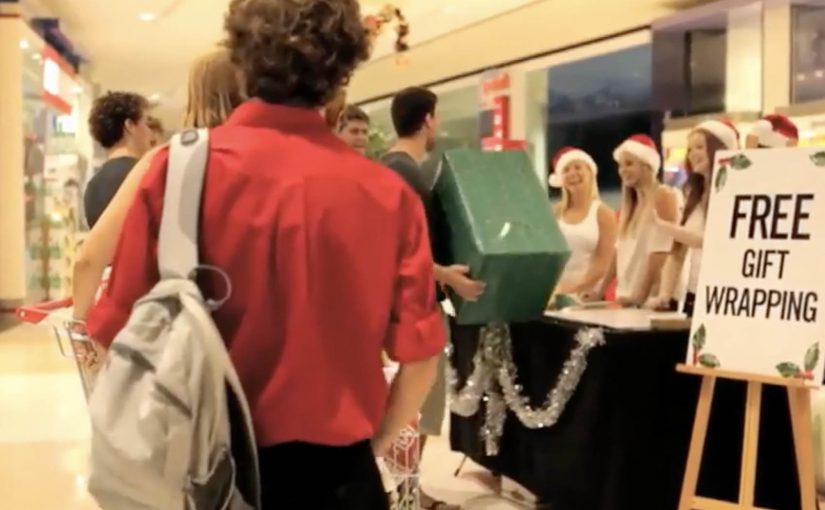
Getting people into a stadium rarely starts with sport. It starts with habit. Lowe in Sydney uses the pre-Christmas rush to put a match invitation into a moment people already care about, without needing another ticket ad.

A Christmas “service” that flips into promotion

The activation doesn’t fight for attention in a new media slot. It borrows an existing ritual, getting gifts ready, when people are already in a generous, social mindset and open to small surprises.

The smart part is the order of operations. It feels like help first, marketing second, which lowers resistance and makes the message easier to carry into conversation afterwards.

The reveal is the media

Once people opt in, the experience pivots. What looks like a straightforward offer becomes a playful con, and that pivot is the part people remember and retell.

That retelling is the distribution engine. It converts passive reach into a personal anecdote, and personal anecdotes are what move a friend group from “I saw something” to “we should go.”

In crowded sports and entertainment markets, attendance is often won at the everyday decision points where people choose what they will do with their next free evening.

The real question is whether you can turn an attendance ask into a story people want to retell, not just a message they notice.

Why the idea lands so well

The “swindle” framing does two jobs at once. Here, “swindle” simply means a playful bait-and-switch, the wrapping offer flips into a match invite. It creates tension and emotion in the moment, and it makes the participant feel involved, not targeted. The reaction is the content, and the retelling is the distribution.

Extractable takeaway: If you can attach your message to a real-world ritual that people already care about, you don’t need to “earn attention” from scratch. You simply redirect it, then give people a story they can repeat without you.

This is also listed in Effie Awards Australia reporting as a winner in the “Most Original Thinking” category, which fits the design: a small behavioural hack, not a big media buy.

What the league is really buying

The hidden win is not just awareness. It’s habit disruption. You take a non-football moment and reframe it as football-adjacent, then you push the idea of attending into a context where people are already planning social time around the holidays.

A ritual-first activation like this beats incremental ticket messaging because it recruits people’s social planning habits, not just their attention.

That’s how you move from “I saw an ad” to “we should go”. The campaign manufactures a nudge that feels organic because it is embedded inside a familiar activity.

Ritual-based attendance nudges to copy

  • Pick a ritual with built-in foot traffic: shopping, commuting, queues, checkouts, waiting rooms.
  • Make the reveal the message: the twist should be the reason people talk, not an extra layer you explain after.
  • Design for retelling: if the story can be repeated in one sentence, it will travel further than the experience itself.
  • Keep the CTA implicit: the best outcome is that people decide to act while they are still talking about what happened.

A few fast answers before you act

What is “The Great Christmas Gift Wrapping Swindle”?

It’s a holiday-season activation that turns gift wrapping into a surprise promotional stunt, engineered to spark conversation and drive attendance.

Why is gift wrapping a smart channel for sports marketing?

Because it’s a ritual people willingly engage with. The message travels physically with the gift, and the moment is social by default.

What makes this more effective than a standard ticket ad?

The participant becomes the messenger. A prank-style reveal produces a story, and stories outperform slogans when it comes to getting people to act.

What’s the main risk with prank mechanics?

If the reveal feels mean-spirited or wastes people’s time, you get backlash without benefit. The tone has to stay playful, and the participant has to feel “in on it” quickly.

How do you adapt the pattern outside sports?

Attach your offer to a real-world ritual in your category. Then design one clear twist that transforms the ritual into a story people want to repeat.