
It’s been two weeks since the Super Bowl, but the most important data from advertising’s biggest night lands now, after the noise has died and the industry has moved on to arguing about something else. Ipsos recall data shows that long-running campaigns outperform bespoke event ads by embarrassing margins.
The only Super Bowl signal that survives Monday
Every year, the game becomes a weeklong festival of hot takes, rankings, and creative commentary. The game itself produces a clear winner, but in the industry we speak too generally about Super Bowl advertising as if it’s all the same. It isn’t.
That’s the problem. We talk about “Super Bowl advertising” as a category, when the night produces winners and losers in advertising too.
How Ipsos turns hype into a memory test
Ipsos tracked spontaneous brand recall among Super Bowl viewers, the simplest and most demanding test in advertising. Viewers were asked which brands they remembered seeing advertised during the game, with no prompts. Ipsos measured it the next morning, and again a week later.
Spontaneous recall is unaided naming. If people cannot name you without a list in front of them, you were entertainment, not advertising.
In global FMCG and retail portfolios, tentpole moments are recurring, so the only scalable advantage is a set of distinctive brand cues that work across every channel.
The real question is whether your Super Bowl spot is building durable brand memory or renting a one-night reaction.
The winners did not act like it was a one-night event
Budweiser
Budweiser dominated the night on recall. Its “American Icons” spot, a foal and a newly hatched bald eagle growing up together over the years to Lynyrd Skynyrd’s “Free Bird”, achieved spontaneous recall of nearly twenty million viewers the morning after the game.
A week later, that number had climbed to twenty three million. Perhaps a signature of a campaign that made it into actual memory rather than mere social feeds.
Pepsi
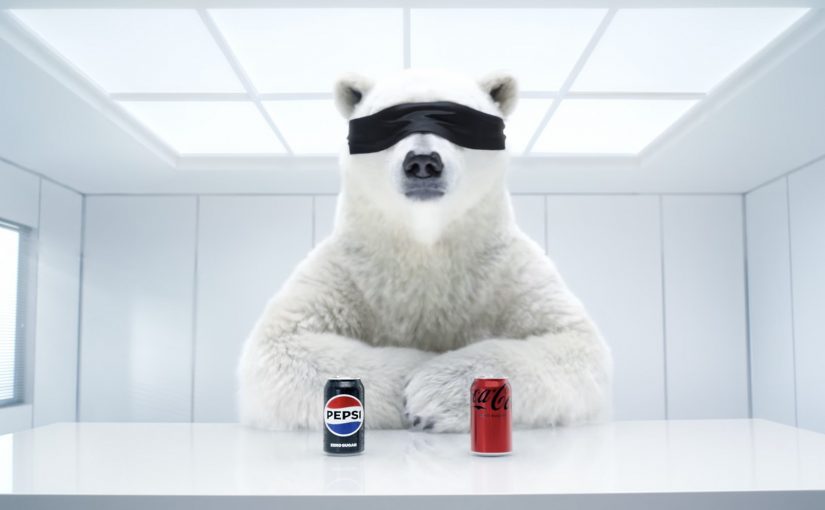
Pepsi came second, 12 million viewers still able to recall the brand the next day. Their polar bear blind taste test, Coca-Cola’s own mascot choosing Pepsi over Coke, landed because it was built on decades of competitive positioning and the oldest tactic from the cola wars: the challenge.
Dunkin
Dunkin finished third at 11 million. Ben Affleck’s star spangled sitcom parody is exactly what good advertising should be: emotionally engaging, distinctively coded, impossible to misattribute.
These three brands make a compelling case that Super Bowl advertising can work. Spend well, follow your strategy, and put your name into millions of minds and leave it there for a week. Factor in a hundred million viewers, the additional coverage, social amplification, and the required $8 million investment looks seriously worth it, particularly in the fragmented, chaotic media landscape we now inhabit.
The expensive part is not the media. It is the forgettability
The uncomfortable half of the Ipsos results is how many brands barely cleared the minimum bar. More than half the brands in the Ipsos data gained less than a percentage point of recall the morning after their ad ran. Each spent what most companies deploy as an entire year’s marketing budget. Each one has very little to show for it.
Ring
Ring managed 26th place with less than one million viewers recalling the brand the next day, roughly a twentieth of Budweiser’s number. Recall picked up later, likely driven by the outcry around the AI narrative in the spot.
Michelob Ultra
Michelob Ultra came 44th out of 45 brands after running a glossy, star studded spot featuring Kurt Russell, Chloe Kim, and T.J. Oshie. It cost a packet to produce, north of $8 million to air, and was instantly forgotten by almost every viewer of the big game. While recall improved a week later, that was most likely “ghost recall” from other spend rather than the Super Bowl moment itself. By “ghost recall,” I mean recall created by other media exposures that gets wrongly attributed to the Super Bowl airing.
It’s perhaps unfair to single out two brands when almost two thirds of those advertising during the Super Bowl failed so miserably to reach even the lowest bar in the persuasion hierarchy.
Why “familiar” beats “fresh” in 30 seconds
So what separates the winners from the losers? It’s mostly a story of consistency. Ring and Michelob Ultra made special Super Bowl ads. Budweiser and Pepsi didn’t. They extended long running brand codes into the Super Bowl opportunity. It’s not a small distinction.
Extractable takeaway: If your Super Bowl idea does not extend an existing set of brand cues, assume you are buying applause, not memory.
This was the 48th time the Budweiser Clydesdales appeared during the game. Clydesdales are large draft horses, and Budweiser has used them for decades as a signature brand cue in its advertising. Forty-eight years of the same visual assets and the same emotional territory. Think of it the other way: decades of ignoring hot agencies and ambitious new CMOs wanting to “put their stamp on things.” Either way, the sight of those horses trotting across a field now makes 20 million people think of one beer and one beer only.
“Distinctive assets” are repeatable cues, characters, music, visual codes, and phrases that people reliably link to a specific brand. When those cues repeat, viewers identify the brand faster and more accurately, which increases the chance the story is stored as brand memory rather than background entertainment.
Business intent. Buy memory, not applause
Most marketers know patience wins. But very few act on it, because patience is not rewarded in quarterly business cycles and it certainly won’t win many industry awards.
Our industry is structurally biased toward newness. Marketers want to make new ads, and agencies, who get paid to create new work and nothing to run the old, aren’t incentivized to argue with them.
Some brands use the biggest advertising night of the year to launch something bespoke, something special, something that will live nowhere after the post game debate ends.
Budweiser used it to add one more chapter to something it started building long before today’s marketing teams rotated in. The Clydesdales are not a campaign. They are compound creativity, and compound creativity is what memory looks like.
Steal this from the recall winners
- Keep the Super Bowl brief brutally narrow. Your first job is correct attribution, then entertainment.
- Write an “asset continuity brief” before the creative brief. List the 3 to 5 cues you will not change.
- If you make a one-off Super Bowl ad, brand it hard. New characters plus subtle branding is the fastest route to being forgotten.
- Measure decay, not just peak. Next day recall is the entry ticket. Day 7 tells you whether you made memory.
- Build for reuse. If the idea cannot live beyond one night, it is a very expensive dead end.
A few fast answers before you act
What is “spontaneous brand recall”?
Spontaneous brand recall is an unaided memory test. People are asked which brands they remember seeing advertised, without being shown options.
Why do long running campaigns usually win on recall?
Because repeated cues let viewers identify the brand quickly and correctly, which makes it more likely the story and brand get stored together in memory.
Does this mean you should never make a special Super Bowl ad?
No. Make the story special. Keep the brand cues consistent.
What is the fastest pre flight test before you approve the spot?
Ask neutral people: “Who is this for?” If they cannot name the brand quickly, the work is at risk.
What should you track besides recall?
Correct brand attribution, brand lift, search lift, and any downstream sales proxy you trust. Recall is the first gate, not the finish line.

