
T-Mobile ‘Tell Me Why’: The Live-Retail Play

A boy-band button in Times Square. And a very deliberate question

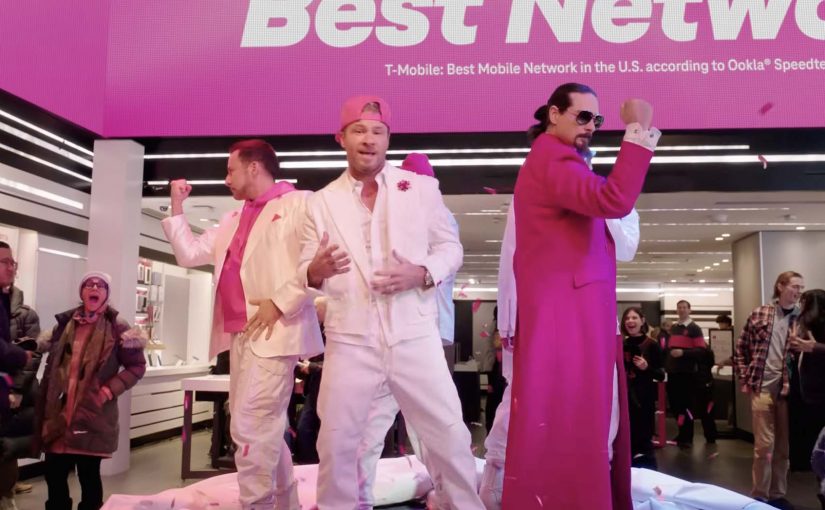
T-Mobile’s Super Bowl LX spot opens inside its Times Square Signature Store, surrounded by real customers, with a plain prompt on-screen: “Why is it better over here?” Then someone hits a big red button, the Backstreet Boys appear, and the “answer” arrives as a reimagined performance of I Want It That Way, with cameos from Druski, mgk (Machine Gun Kelly: Colson Baker) and Pierson Fodé. The commercial is credited to Panay Films and was slated to run as a :60 in the second quarter of the February 8, 2026 Big Game broadcast.

What matters is not the celebrity stack. It is the structural move: a telecom brand turning a comparison claim into a moment people can watch happening to other people.

How “Tell me why” turns a service claim into a stageable event

The core mechanic is simple on purpose. A single question frames the ad like a customer challenge, not a brand monologue. A physical trigger, the button, converts messaging into cause and effect. A live performance inside a real retail space supplies social proof because the audience is already there and reacting in-frame.

You can call this retail-as-stage. By retail-as-stage, I mean a physical store that functions as content set, event venue, and credibility engine at the same time.

When you turn a service comparison into a witnessed moment in a real store, with real reactions, belief shifts from “do I trust this claim?” to “I just saw why it’s true.”

The real question is how you make an invisible network promise feel provable in the moment, not just plausible in a chart.

The fastest path to belief is to turn an invisible network promise into a shared, watchable moment.

In telecom marketing, most value is felt after purchase, so “proof” has to be engineered before the contract is signed.

Why the nostalgia remix works, and why it is not just “a pop-culture hook”

Yes, it is familiar. But the stronger psychological play is fluency. A chorus people can finish in their head reduces processing effort, then that freed-up attention gets spent on the new lyric payload. The button adds perceived transparency. When a brand invites “why,” then stages an immediate “answer,” it signals it can withstand scrutiny.

Extractable takeaway: If your offering is hard to evaluate because it is invisible, abstract, or overloaded with fine print, stop trying to explain it better. Engineer a moment where the audience can watch someone else receive the answer in real time, because observed reactions become the credibility layer your claims cannot earn on their own.

Rewritten lyrics are inherently risky because they can feel like a jingle wearing a costume. This spot reduces that risk by grounding the musical in a real place, with real customers, and a visible trigger that creates a story arc worth retelling.

What T-Mobile is really trying to shift in 60 seconds

Look past the network line and you see a category-level repositioning attempt.

  • From coverage to a value stack. The ad frames the carrier choice as network plus bundled value plus experience, not just bars and price.
  • From switching pain to switching ease. The broader message is “make it easy to reconsider,” while the spot’s job is to create emotional permission to do so.
  • From brand assertion to customer interrogation. Opening with “why” signals the brand is answering scrutiny, which is a more credible posture in a high-skepticism category.

The Europe echo: making a network promise watchable

It should feel familiar. This “make connection visible” move has shown up before, by turning a network promise into a shared public moment you can actually witness.

Back in 2011, Deutsche Telekom executed a multi-city Christmas activation where Mariah Carey appeared as a hologram simultaneously across five European countries, with audiences linked across cities to experience the same performance at once.

The shared mechanic across both campaigns is consistent.

  • Make the promise tangible by creating a collective moment that can only exist because connection exists.
  • Use a universally recognizable song layer to synchronize emotion across audiences.
  • Build a reveal structure so the audience has a story arc worth retelling.

For the full Germany case, see Deutsche Telekom’s hologram Christmas surprise.

Steal the retail-as-stage pattern for “invisible products”

  • Start with a question the customer would actually ask. Not a tagline. A test.
  • Build one physical trigger. Buttons, switches, taps, scans. One action that says “watch this.”
  • Make the audience part of the evidence. Real reactions often land harder than any graphic.
  • Use music as memory infrastructure, not decoration. A familiar melody can carry new meaning fast.
  • Design for retellability. If it is easy to summarize, it is easier to spread.

A few fast answers before you act

What is the big idea behind “Tell Me Why” in one line?

It turns a telecom comparison claim into a witnessed moment in a real retail setting, using a familiar chorus and real-customer reactions to make “why” feel observed rather than asserted.

What is the core mechanic that makes it work?

A single customer-style question plus a physical trigger, the button, that immediately produces the “answer” as a performance, with the crowd reaction acting as the credibility layer.

Why does the Backstreet Boys remix outperform a normal benefits list?

Because audiences already encode the melody automatically. The rewritten chorus becomes a fast memory container for new information, and the live-style staging reduces skepticism.

What is the strategic intent beyond awareness?

To shift evaluation from “coverage and price” toward “network plus value plus experience,” and to lower switching resistance by making reconsideration feel emotionally safe.

What is the transferable lesson from the Deutsche Telekom hologram example?

If your product promise is invisible, create a synchronized public moment that can only exist because your promise exists, then let the shared reaction do the persuasion work.
O2: Be More Dog

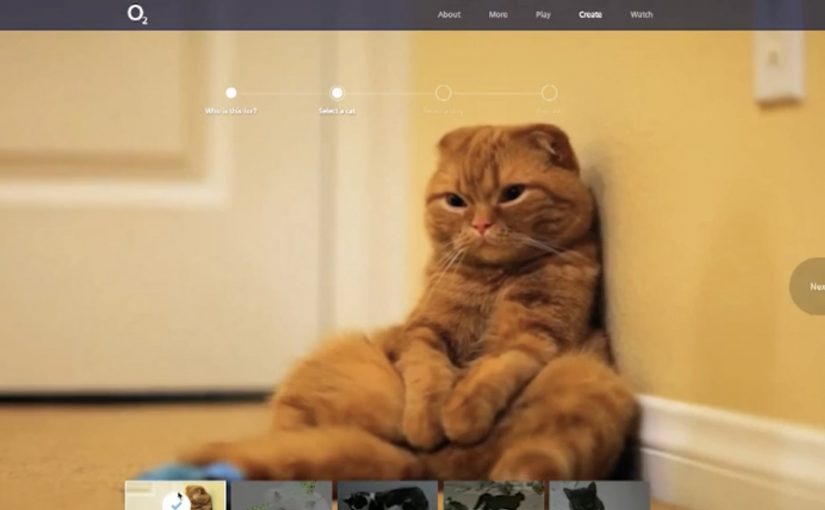
A cat decides it has had enough of being indifferent. It chases, leaps, splashes, and generally behaves like a dog. O2 UK uses that simple flip to ask people to do the same with technology. Less “meh”. More curious.

With VCCP and the Moving Picture Company, the campaign extends beyond the TV spot into a participation layer. That participation layer means the idea does not stop at the film but gives people something to do and share. On visiting www.bemoredog.com, people are greeted by a cat that acts more like a dog, then pulled into interactive play through a dual-screen HTML5 Frisbee game and a set of customisable cat videos designed for sharing.

How the integration is designed

The mechanism is a clean handoff. TV creates the character and the phrase. Mobile turns into the controller for a dual-screen game. Social carries the customisable video layer so people can pull friends into the same joke and the same attitude shift.

In UK consumer telecoms, where functional claims blur quickly, a memorable behavioural metaphor can do more positioning work than another round of feature talk.

Why it lands

It works because it uses a familiar truth. The cat-to-dog flip works because it turns an abstract behaviour change into a visual joke people understand in seconds. Cats look cool and detached. Dogs look curious and all-in. That contrast is instantly readable, and it translates directly into what O2 wants from people. Try the new thing. Explore. Stop acting like technology is background noise.

Extractable takeaway: If you want people to reframe a category, give them a single, sticky metaphor and one simple interaction that lets them experience the new attitude, not just hear about it.

What O2 is really trying to shift

This is brand positioning dressed as entertainment. The real question is how to make curiosity about new technology feel socially easy and emotionally attractive, not technically demanding. O2 is steering perception toward optimism and exploration, and using connected play to make “embracing the new” feel easy, not technical. In context, the timing also supports a broader push into newer network experiences, including 4G-era behaviour change.

What brand teams can steal from Be More Dog

  • Use one character as the bridge. The cat carries TV, site, game and shareables without needing extra explanation.
  • Make mobile do a job. Second-screen control is more convincing than a generic “download our app” prompt.
  • Build sharing into the format. Customisable videos give people a reason to tag or send, not just watch.
  • Keep the interaction lightweight. Quick play beats complicated onboarding when the goal is broad participation.

A few fast answers before you act

What is “Be More Dog”?

It is an O2 UK brand campaign that uses a cat acting like a dog as a metaphor for being more curious and enthusiastic about new technology, supported by second-screen and shareable digital experiences.

What is the core digital mechanic?

A dual-screen HTML5 Frisbee game that uses a phone as the controller, plus customisable cat videos designed for social sharing.

Why does the cat versus dog metaphor work so well?

It compresses a complex ask into a simple behavioural contrast people instantly understand, then turns that contrast into a repeatable line and a repeatable action.

What makes this an integrated campaign rather than “TV plus a website”?

The channels do different jobs that depend on each other. TV creates meaning. Mobile enables interaction. Social distributes personalised variants that pull others back into the idea.

What is the biggest way this pattern fails?

If the digital layer feels bolted on. The interaction has to express the same promise as the film, otherwise it becomes a novelty that does not move perception.

Vodafone: Power to You

A telco ad built around a painfully human moment

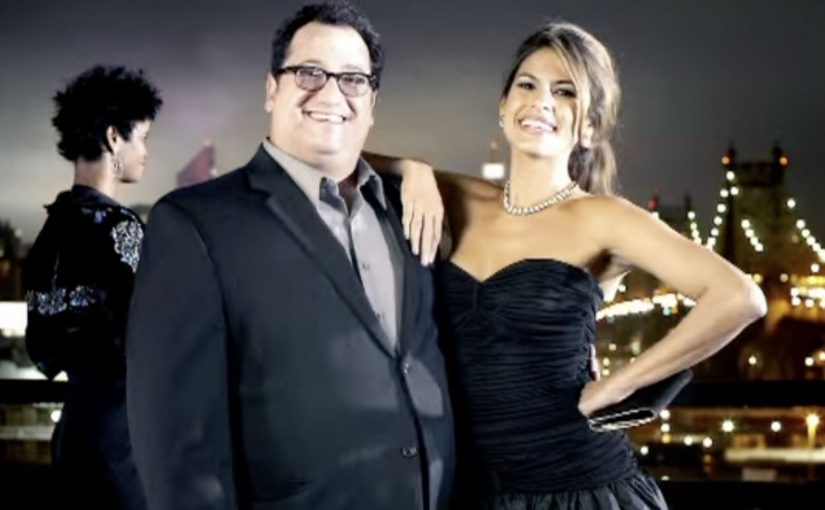
This spot does not try to impress you with technology. It starts with a situation that feels familiar, that split-second where you finally get what you want and then do not quite know what to do with it.

The mechanic: make the service invisible, make the feeling unforgettable

The mechanism is classic restraint. The product sits in the background as the enabler, while the story puts all the weight on a single emotional beat and a clean punchline.

That works because people remember the awkward human payoff more easily than they remember another service claim.

In global telco advertising, the fastest way to make connectivity feel valuable is to tie it to a moment people recognize from real life.

Why this lands

Because it refuses to oversell. The humor comes from recognition, not exaggeration, and the brand benefit lands as a by-product of the scene rather than a claim you are asked to believe.

Extractable takeaway: When you sell an invisible utility, stop explaining the utility. Show the human outcome in one tight scene, and let the audience supply the meaning.

What Vodafone is really doing here

The real question is how a utility brand makes an invisible service feel personally valuable without falling into feature talk.

It is not a feature demo. It is permission. The brand frames itself as the thing that gives you the ability to act, even if you still have to handle the awkwardness of being human once the connection is made.

That is the right strategic choice for a telco brand.

What to borrow from Vodafone’s restraint

  • Pick one emotion and commit. A single relatable moment beats a list of capabilities.
  • Keep the product in the background. Let the story deliver the proof indirectly.
  • Write for instant recognition. If people can say “that is me”, you have the ad.
  • End on a clean beat. One punchline. One memory.

A few fast answers before you act

What is this “Power to You” spot trying to achieve?

It makes Vodafone’s promise feel human by anchoring the brand to a recognizable emotional moment rather than to technical claims.

Why does the low-feature approach work for a telecom brand?

Because the service is largely invisible when it works. The best proof is often the outcome it enables, not the infrastructure behind it.

What is the core creative pattern here?

Understatement plus recognition. Build the story around a real-life feeling, then let the brand show up as the quiet enabler.

Why use humor instead of product proof?

Because recognition lowers resistance. When people see themselves in the scene, the brand benefit feels inferred rather than imposed.

What is the transferable principle?

If your product is a utility, sell the human moment it unlocks. The clearer the moment, the less you need to explain.