
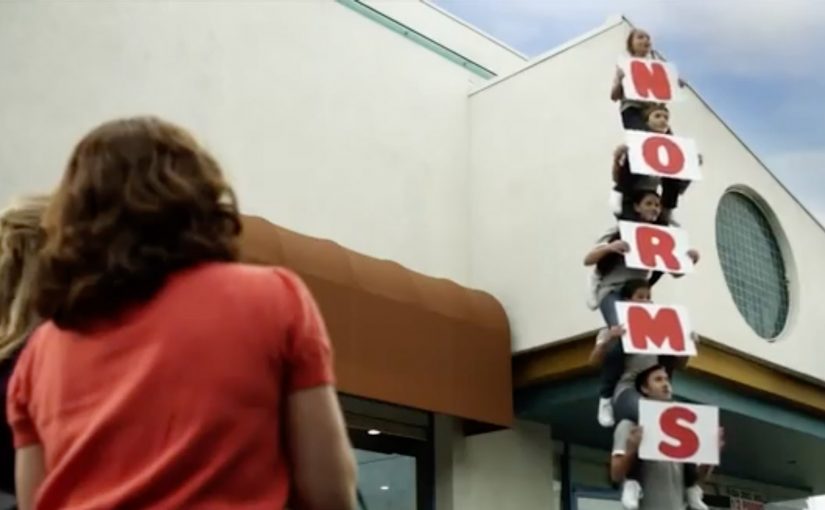
Norms Restaurants: Social Media Above-the-Line

Norms Restaurants: Social Media Above-the-Line

A TV spot that treats social as the main stage

Here is a new TV spot promoting the NORMS Restaurants Facebook page. It does something different. The commercial is grounded in social media rather than simply being an add-on.

How it works: the channel is the creative, not the CTA

The mechanism is straightforward. Instead of telling you to “go to Facebook”, the spot behaves like social. It borrows the language, pacing, and cultural cues of the feed, then uses TV as the amplifier. By “social-native”, I mean it is structured like something you would actually scroll past in a feed. This works because viewers recognize that grammar instantly, so the follow action feels like continuing the same experience.

In US regional restaurant brands, social channels can function as a 24/7 extension of the dining room: service, deals, personality, and community in real time.

The real question is whether your mass media can behave like the channel you want people to adopt, rather than merely pointing at it.

Why it lands: the message and the operating model match

Just as social media never sleeps, NORMS Restaurants also never closes. They are open 24 hours a day. That alignment matters. The spot is not trying to look modern. It is connecting a true operational differentiator to a behaviour that is always on.

Extractable takeaway: When an “always-on” message is backed by something operationally true, the creative reads as utility instead of theatre.

The intent: make “follow us” feel like utility

The point is not only awareness. It is habit formation. If the brand is always open, then the social presence can be positioned as always available too, with updates that feel useful, timely, and worth checking. This is what it looks like to put social “above the line”, treating it as the primary experience and not a supporting channel. Here, “above the line” means the social presence is the main stage, while TV is used mainly to accelerate adoption. If you want social to matter, design mass media as an on-ramp to a repeatable social habit, not as a separate campaign.

Early results the brand shared at the time

This family owned business shared the following success within 10 days of the TV commercials:

  • Gained 1,000 fans on Facebook
  • Gained 150 followers on Twitter

Moves to put social above the line

  • Make the channel the idea. If you lead with social, the creative has to feel native to how social behaves.
  • Anchor the message in something operationally true. “Always on” lands when the business actually is.
  • Give people a reason to follow, not just a reason to notice. Utility beats slogans for repeat behaviour.
  • Measure fast, then iterate. If the goal is followers and engagement, build feedback loops early.

A few fast answers before you act

What is different about this NORMS TV spot?

It is built around social media as the core creative idea, not as a last-second add-on call-to-action.

What is the main mechanism that makes it work?

TV is used as the reach layer, while the creative language is intentionally social-native, so the handoff to Facebook and Twitter feels natural.

Why does the “social never sleeps” line fit NORMS?

Because NORMS is positioned as open 24 hours a day, so the always-on idea matches the operating model instead of feeling like marketing theatre.

What is the business goal behind grounding a TV spot in social?

To turn awareness into ongoing follow behaviour, so the brand gains a direct channel for repeat visits, offers, and relationship building.

What is the most transferable takeaway?

If you want social to sit above the line, treat it as the product experience, then use mass media only to accelerate adoption.

Bud Light: Clothing Drive

Bud Light: Clothing Drive

A simple gag, executed cleanly

A Bud Light ad credited to DDB USA plays as a pure setup-and-payoff joke. It does not over-explain itself. It just commits to the visual premise and lets timing do the work.

How the “clothing drive” trick works

The spot relies on controlled misdirection. Here, controlled misdirection means giving viewers just enough information to make the wrong prediction before the reveal corrects it. It establishes a familiar situation, encourages the viewer to predict what happens next, then flips that expectation with one sharp visual turn. The humor lands because the logic is coherent after the fact, even if you did not see it coming.

In mass-reach FMCG advertising, tight visual gags are a dependable way to earn attention without asking for extra cognitive effort.

The real question is whether the viewer gets the joke in a single beat and remembers the brand at the same time. For broad-reach comedy, restraint is the right call: one clean reversal beats extra explanation.

Why it lands

The joke is readable on mute, which makes it travel. The premise is also self-contained, so viewers can share it without needing context or explanation. When a brand already owns “easy-going fun,” this kind of execution reinforces that identity without resorting to slogans.

Extractable takeaway: If you want broad shareability, build a gag that is visually legible, hinges on one clear reversal, and resolves fast enough that people will replay it immediately.

Steal the visual-gag discipline

  • Make the setup ordinary. Normal scenes make the twist feel bigger.
  • Let the camera be the narrator. Clean framing and timing beat extra dialogue.
  • Optimize for mute viewing. If the joke works without audio, it works in feeds.
  • End on the cleanest frame. The final beat should be the one people remember and reshare.

A few fast answers before you act

What is Bud Light’s “Clothing Drive” ad?

It is a short comedic spot built around a “clothing drive” visual premise, using misdirection and a quick reveal to land the punchline.

What is the core creative mechanic?

Expectation management. A familiar setup invites a predictable outcome, then one visual reversal delivers the joke.

Why does mute readability matter here?

It makes the ad work in feeds, social clips, and distracted viewing environments where audio may be off but the visual payoff still has to land instantly.

Why are visual gags effective for beer brands?

They match the social, low-friction viewing context. Bars, parties, and feeds reward jokes that land quickly without explanation.

What’s the most transferable lesson for marketers?

Design the payoff so it is instantly understandable, even with no sound, and keep the entire arc short enough to trigger an immediate replay.

Apple: 12 Days of Christmas

Apple: 12 Days of Christmas

Is it just me or is Christmas this year turning out to be very Apple.

Here is Apple making Christmas news again. This time with their new TV ad.

The ad reworks the standard Christmas carol of the same name to feature twelve iPhone applications related in some way to the holiday season.

  • 12 cookies cooking: The Betty Crocker Mobile Cookbook (Free)
  • 11 cards a’ sending: Postman ($2.99)
  • 10 gifts for giving: My Christmas Gift List ($0.99)
  • 9 songs for singing: TabToolkit ($9.99)
  • 8 bells for ringing: Holiday Bells ($0.99)
  • 7 slopes a’ skiing: Snow Reports ($1.99)
  • 6 games for playing: Christmas Fever ($0.99)
  • 5 gold rings: Anna Sheffield Jewelry (Free)
  • 4 hot lattes: myStarbucks (Free)
  • 3 flights home: Flight Search (Free)
  • 2 feet of snow: Weather Pro ($3.99)
  • And an app that can light up the tree: Schlage LiNK (Free but hardware required)

What the spot is really doing

The mechanism is a catalog disguised as a carol. Each lyric is a micro use case, and each use case quietly argues that “apps” are the reason the device feels personal in December, not just powerful on paper.

In consumer technology categories where feature lists blur quickly, showing everyday use cases beats claiming capability.

The real question is how to make an ecosystem feel instantly useful without falling back on a feature list.

Why it lands

It is lightweight, instantly recognisable, and structured for memory. You already know the song, so the ad can spend its time on the parade of utility and novelty instead of on explanation.

Extractable takeaway: If you want to sell a platform, turn your ecosystem into a familiar format people can hum, then make each beat a concrete “I can use that” moment.

What platform marketers can borrow

  • Use a cultural template. Borrow structure from something the audience already carries.
  • Keep each benefit bite-sized. One line per use case is enough when the rhythm does the glue work.
  • Let variety do the persuasion. A spread of small moments can outperform one big claim.

A few fast answers before you act

What is this Apple “12 Days of Christmas” ad?

A holiday TV spot that rewrites the classic carol to showcase twelve iPhone apps tied to seasonal moments.

What is the core mechanism?

A familiar song structure becomes a rapid-fire list of app use cases, turning the App Store into the product story.

Why does the format work so well for apps?

Because apps are easiest to understand as situations, not specs. The carol format delivers situations at speed while staying coherent.

What is Apple really selling here?

The ad sells the iPhone as an entry point to a seasonal ecosystem of useful apps, not just as a piece of hardware.

What should I copy if I am marketing a platform?

Package the ecosystem as a set of quick, concrete jobs-to-be-done, then anchor them in a structure the audience already recognises.