
Coca-Cola Interactive Mini Bottles

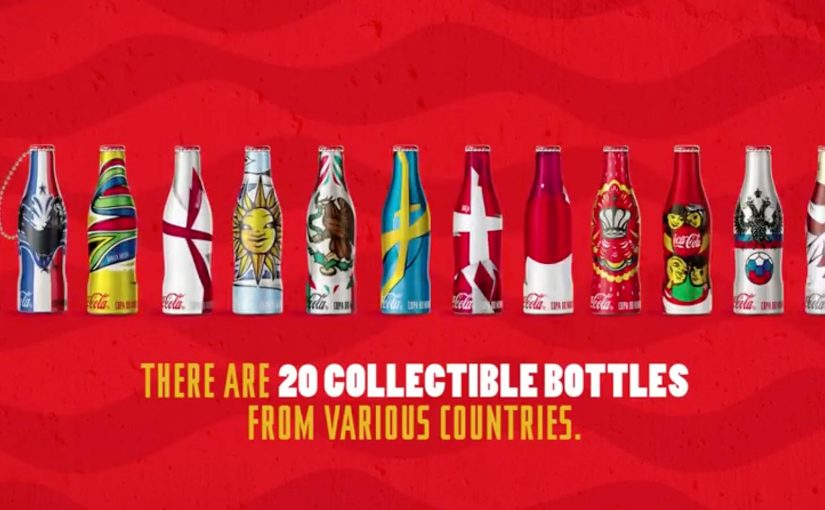
Coca-Cola has launched 20 special edition mini bottles to get fans around the world excited about the upcoming 2014 FIFA World Cup, which will take place in Brazil from June 12th to July 13th.

The bottles come wrapped in flags of countries that have hosted the World Cup previously. Argentina, Chile, Uruguay, Mexico, USA, England, Germany, Spain, France, Italy, Sweden, Switzerland, South Africa, Japan and South Korea. As well as the three upcoming host countries Brazil, Russia and Qatar. Plus two special Coca-Cola editions.

Coca-Cola fans can also create and send special messages and avatars to other bottle owners through Facebook and iPhone or Android apps. In addition, special markers on the bottles activate augmented reality animations when held up to a smartphone camera.

What makes these bottles more than packaging

This is a simple shift with big implications. The bottle is not only a container. It becomes a trigger. A collectible. And a social connector. This is smart brand design because it turns packaging into media without asking people to leave the product in their hand.

The real question is how to make a small physical object behave like media, participation, and social signal at the same time.

The flags do the first job. They make the bottles instantly recognizable and tradable. People have a reason to hunt for specific countries and compare what they found. The digital layer does the second job. By digital layer, this means the messages, avatars, and AR animations unlocked through the bottle. It turns ownership into participation, because the bottle now links to messages, avatars, and AR animations.

Why augmented reality fits this moment

AR works best when the behavior is natural. Here the behavior is already there. You hold the bottle in your hand. You point your phone at it. You get something back instantly. That is what makes the marker idea effective, because it adds a reward to an existing behavior instead of asking people to learn a new one.

Extractable takeaway: When the product already sits in someone’s hand, the strongest digital layer is the one that rewards curiosity in the moment rather than redirecting attention somewhere else.

In global brand portfolios, this matters because packaging that doubles as an activation point can scale engagement and give people a stronger reason to choose the brand at shelf without adding a separate physical touchpoint.

What to borrow from collectible packaging activations

  • Make the physical object the interface. The bottle is the entry point, not a poster, banner, or separate microsite.
  • Give fans something to collect and trade. Flags are a built-in collecting mechanic.
  • Add a social layer that only owners can unlock. Messaging and avatars make participation feel earned, not generic.
  • Use mobile as the bridge. iOS and Android apps turn “I saw it” into “I can activate it” immediately.

A few fast answers before you act

What are Coca-Cola Interactive Mini Bottles?

They are 20 special edition mini bottles designed to build excitement for the 2014 FIFA World Cup, using country-flag designs plus a digital interaction layer.

What is interactive about them?

Owners can send messages and avatars to other bottle owners via Facebook and iOS or Android apps. The bottles also include markers that trigger augmented reality animations through a smartphone camera.

Why use country flags on the bottles?

It creates instant collectability. People can look for specific countries, compare what they found, and feel part of a shared event build-up.

What is the role of augmented reality here?

AR turns the label into an activation point. Point your phone at the bottle, and the design becomes an animation experience rather than static packaging.

What is the main marketing idea worth copying?

Make the product itself the gateway to the experience. When the physical object triggers the digital layer, participation becomes effortless and more memorable.
Berocca: Mechanical Desk

A survey by TNS Gallup in Argentina reported that 5 out of every 10 Argentinians suffer from stress, and that many expressed a need for a 5 to 10 minute break during the working day. Berocca, vitamin tablets manufactured by Bayer, turns that tension into a public challenge.

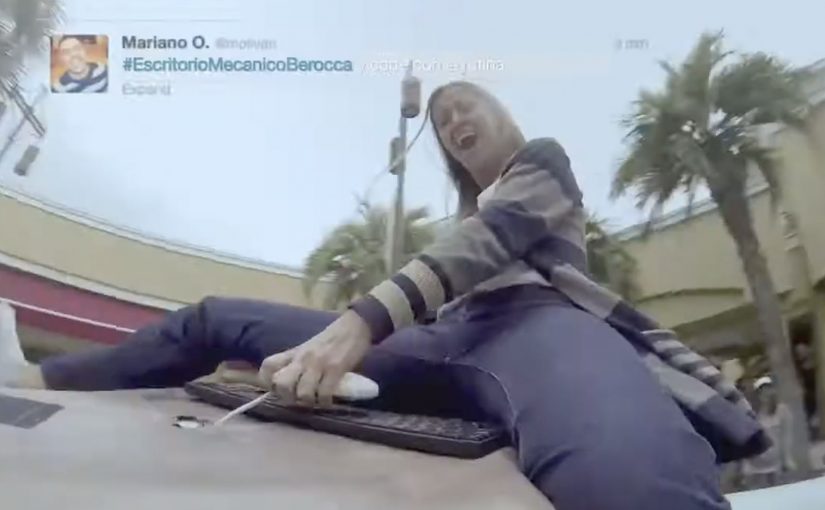
They set up a “Mechanical Desk” and dare passersby to send a tweet within 24 seconds of sitting on it. It sounds easy. Until you try.

A desk designed to sabotage your “quick break”

The mechanic is a simple constraint. Sit down. Compose. Hit send. Do it in 24 seconds. The desk itself makes the act of tweeting unexpectedly difficult, forcing your attention away from autopilot and into the moment.

In workplace energy and wellbeing marketing, turning “I need a break” into a short, physical interruption can make the message feel earned rather than preached.

Why this lands

This works because it dramatizes a truth people already recognise. When you are stressed, even a small task can feel harder than it should. The Mechanical Desk turns that feeling into a playful, watchable experience, and the tweet timer creates instant stakes without needing a long explanation.

Extractable takeaway: If your product promises focus or renewal, create a micro-challenge that makes everyday friction visible, then let your brand sit as the “reset” people reach for after the disruption.

What the brand is really doing

Berocca is positioning itself as the ally of the mid-day reboot, the short moment when people want to reset their energy and focus during the workday. Not a medical claim. A cultural cue. The activation turns “stress break” into something public and shareable, with Twitter functioning as both proof of participation and a distribution layer.

The real question is how to make an invisible feeling like workday stress visible enough for people to notice, attempt, and share.

The stronger move here is to stage the problem in public, not explain it in copy.

What to steal from this stress-break activation

  • Use a tight constraint. A clear time limit makes the idea instantly legible.
  • Make it observable. If bystanders can see the struggle, the experience becomes content.
  • Keep the action familiar. Tweeting is normal. The environment is what changes.
  • Let the brand be the release. Build the story so the brand naturally maps to “reset.”

A few fast answers before you act

What is the Berocca Mechanical Desk?

It is a public activation where people sit at a specially designed desk and attempt to send a tweet within 24 seconds.

Why a 24-second tweet challenge?

A short timer creates urgency and makes a “quick break” feel like a game, which increases participation and watchability.

What is the campaign trying to communicate?

That stress is common during the workday, and that small breaks matter. The stunt turns that need into a tangible moment people can experience and share.

What role does Twitter play?

Twitter is both the challenge output and the distribution mechanic. The act of tweeting becomes proof, and the post can travel beyond the physical installation.

What’s the main risk with this kind of activation?

If the challenge is too frustrating or unclear, people drop out. The difficulty has to feel playful, not punishing.

Starbucks: Tweet a Coffee

In March 2012, Amex card members could sync their credit cards with their Twitter account, then re-tweet offers to load them onto their card. Fast forward to 2013 and Starbucks USA is allowing customers to “Tweet a Coffee”.

In the current beta version, the first 100,000 US-based customers can tweet $5 Starbucks Card eGifts to Twitter friends and followers. All it takes is linking your Starbucks and Twitter accounts, then tweeting @tweetacoffee to @TheirNameHere.

A checkout moment that looks like a message

The mechanism is account linking plus a structured tweet. The tweet becomes the purchase trigger, and the recipient receives a redemption flow that feels like a social interaction rather than an ecommerce checkout. Because the purchase trigger lives inside a normal message action, it reduces steps, which is why the gifting moment feels unusually low-friction.

In US consumer retail and payments ecosystems, this kind of channel integration turns gifting into a low-friction habit that rides on existing identity and loyalty rails (the linked accounts and stored-value programs customers already use).

The real question is whether your payment flow can hide the transaction inside a native social action without losing control of redemption and risk.

Why it lands

It compresses generosity into a familiar behavior. You do not have to open an app, browse, or remember an email address. You just use the interface you already use to talk to people. The “$5” constraint also matters. It is small enough to be spontaneous, but concrete enough to feel real. This is the better starting pattern for social payments because it keeps the action familiar while keeping the value transfer explicit.

Extractable takeaway: If you want social commerce to scale, make the transaction look like native social behavior, then constrain the first use case to one simple, giftable unit with an obvious price point.

Patterns to borrow for social payment experiments

  • Start with gifting, not buying. Gifting has a built-in emotional reason to happen, which reduces the need for persuasion.
  • Make the trigger public, keep the redemption controlled. The tweet creates visibility. The redemption link manages fraud, fulfillment, and policy.
  • Use a single, repeatable format. One command pattern makes it easy to learn and easy to copy.
  • Design for “small yes” transactions. Low-value, high-frequency gifts teach the habit without asking for big trust on day one.

A few fast answers before you act

What is “Tweet a Coffee” in one line?

It lets eligible Starbucks US customers send a $5 Starbucks Card eGift to someone on Twitter using a structured tweet after linking accounts.

Why is gifting the right first use case for social payments?

Because it has a clear social motive and a clear recipient. That reduces friction compared to asking people to buy something for themselves in a new way.

What makes this different from a promo code tweet?

The tweet is not just marketing. It triggers a real value transfer, and the recipient experiences it as a personal gift rather than an offer broadcast.

What is the minimum pattern to copy without relying on Twitter?

Use an identity-linked account, a simple public trigger that looks native to the channel, and a controlled redemption step that protects fulfillment and policy.

What is the biggest risk when brands copy this idea?

Trust breakdown. If account linking feels heavy, or if redemption feels spammy or unreliable, users will abandon the flow and may blame the brand rather than the platform.