
Chevy: Hacking the Super Bowl

Chevy: Hacking the Super Bowl

Super Bowl Sunday is the biggest TV advertising day in the US. With 50+ advertisers competing for attention, “standing out” is usually code for shouting louder.

Chevrolet takes a different route. With “Chevy Game Time”, it turns the ad break into a live second-screen game. Viewers watch the commercial on TV, then immediately replay it with purpose on their phones.

A second screen that reacts to the broadcast

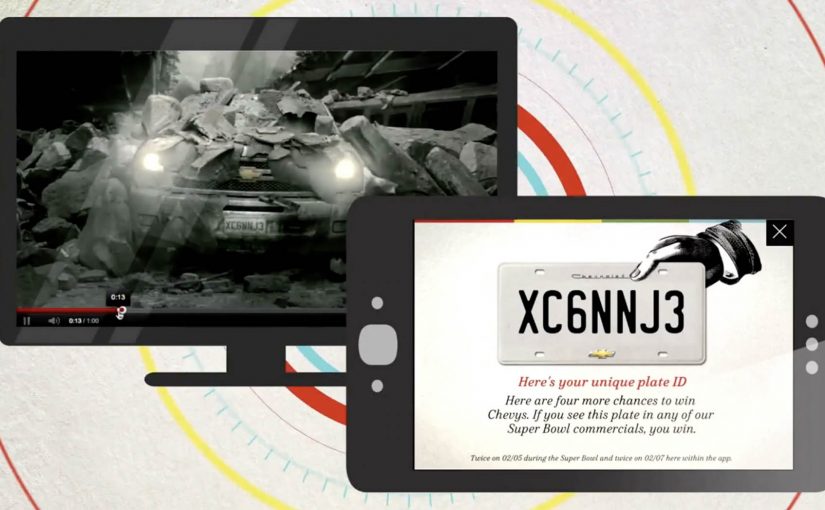
A “second-screen” experience is a mobile layer that runs alongside a live broadcast and responds to what’s on TV in near real time. Chevy Game Time prompts viewers the moment a Chevy spot airs, asking trivia about what they just saw and rewarding fast, correct answers with points and prizes.

It also adds a high-stakes twist. Every user receives a personal license plate. If you spot your plate inside a Chevy commercial, the car is yours.

The mechanic: turning commercials into a repeatable loop

The loop is simple and effective:

  • Trigger: a Chevy ad hits the broadcast.
  • Action: the app pushes a trivia question about that specific ad.
  • Social effect: Super Bowl parties start “rewatching” the spot together, first on TV, then on the phone, and often again online.
  • Jackpot moment: the personal license plate appears. Somebody wins a car.

That structure doesn’t fight the reality of distracted viewing. It harnesses it.

That works because the trigger arrives while memory is still hot and the reward gives the rewatch a reason.

In mass-audience tentpole broadcasts, second-screen interactivity is often the fastest way to turn passive ad viewing into measurable participation.

Why it lands: it makes attention feel like play

Most second-screen ideas fail because they ask for extra effort with unclear payoff. Chevy Game Time flips that. The reward is obvious, the timing is immediate, and the questions make the room collectively care about the ad’s details.

Extractable takeaway: If you want people to pay attention to a message they did not ask for, make the attention itself the game. Use a tight loop (trigger, action, reward) that starts exactly when the message appears, not five minutes later.

The license-plate mechanic is the accelerant. It converts “maybe I’ll play” into “I’d better look up”, because missing your own plate feels like leaving money on the table.

The business intent: convert reach into proof

Instead of treating TV as pure reach, this approach turns a broadcast into an engagement funnel. Case studies around Chevy Game Time describe scale in the hundreds of thousands of participants, plus high real-time concurrency during the game, and meaningful App Store chart performance during the event window.

It also earns industry credibility. The work is credited to Chevrolet with Goodby, Silverstein & Partners and Detroit Labs, and it is associated with major recognition in mobile and multiscreen categories.

The real question is whether a brand can turn one expensive burst of reach into repeated, measurable acts of attention.

And the strategic win is clean. While other brands fight for a single impression, Chevy creates repeated, measurable touchpoints tied directly to its own creative.

What to steal for your next “everyone’s watching” moment

  • Design for rewatching: build a mechanic that naturally makes people replay the ad or replay the key message.
  • Sync to the broadcast: the question must arrive when the spot runs, not when the user remembers later.
  • Make the reward legible: users should understand the payoff in one sentence.
  • Give the group a reason to coordinate: party dynamics multiply attention when the action is communal.
  • Measure beyond downloads: track concurrent players, response rate per trigger, and “ad recall proxies” like question accuracy.

A few fast answers before you act

What is second-screen marketing?

Second-screen marketing is a companion mobile experience designed to run alongside a live broadcast, prompting actions that connect what’s on TV to what’s on a phone, usually in real time.

What made Chevy Game Time different from a normal companion app?

It tied interaction to the exact moment a specific commercial aired, then rewarded attention to that commercial through trivia and a personal “license plate” prize mechanic.

Why does the personal license plate idea matter?

Because it creates urgency and personal stakes. Viewers feel they could miss “their” moment, so they watch more closely and often rewatch immediately to confirm what they saw.

What should you measure in a live second-screen activation?

Track concurrent active users during triggers, response rate per trigger, time-to-answer, repeat participation across multiple ad breaks, and the uplift in brand recall or message comprehension tied to the trivia content.

Can this approach work outside the Super Bowl?

Yes, if you have a predictable live moment (finale, product launch stream, sports match) and you can synchronize prompts to it. The key is timing precision and a reward loop that feels worth the effort.
Augmented toys and games from Toy Fair 2013

Augmented toys and games from Toy Fair 2013

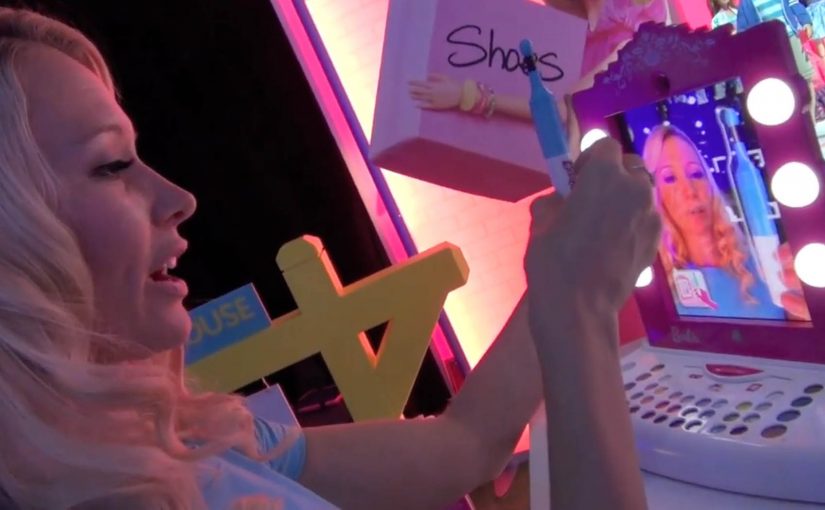
A Barbie vanity frame turns an iPad into a make-up mirror, then “virtual lipstick” stays aligned to a moving face in real time. That single mechanic explains why Toy Fair in New York suddenly feels like a preview of hybrid play, where the screen becomes a window and the physical object remains the star.

Most of the standout demos share the same blueprint. A physical toy, book, or playset provides the anchor. The iPad app provides the content layer. The camera feed stitches the two together so kids can touch, move, build, and explore while the digital layer reacts.

In consumer product innovation, the most scalable mixed reality experiences treat the device as a lens onto the room, not the destination.

Augmented reality (AR) toys are physical products that use a phone or tablet camera to overlay digital characters, effects, or instructions onto the real-world toy. The toy stays central. The app adds feedback, rules, and story without replacing hands-on play.

The real question is whether the digital layer makes the toy better on its own terms, or just adds novelty that fades.

Why these “phygital” toys land

Parents get a familiar promise. Less passive viewing and more active play. Kids get something that feels like magic because it responds to the real world, not just taps on glass. Here, “phygital” means physical-first play where the app adds feedback and story without replacing hands-on interaction.

Extractable takeaway: Design for low-friction onboarding and immediate payoff. Put the device in the frame, scan the page, point at the ball, then something delightful happens fast.

The Toy Fair shortlist

Barbie Digital Makeover Mirror

Lets kids try out make up while avoiding all the mess. The iPad camera tracks a face in real time so the “makeover” sticks as the head moves.

Mattel Disney Princess Ultimate Dream Castle

Billed as a first mass-market doll house to support augmented reality, with app-triggered activities layered onto the physical rooms.

Popar 3D Books

A line of children’s books that use AR to make pages “come alive” with virtual 3D objects and animations that appear to pop off the paper.

Sphero Ball and Sharky the Beaver

Billed as the first app ever to let you take a virtual 3D character for a walk around your house. The physical ball becomes the anchor for an on-screen creature you “walk” around the room.

Imaginext Apptivity Fortress

Combines playset and app play in one, with the iPad physically inserted into the fortress so the device becomes part of the toy and the adventures unfold around it.

NeuroSky

Brain waves control furry ears.

Lego Mindstorms EV3

User-created robots that can be controlled by various sensors and smartphones.

Cubelets

Magnetic blocks that snap together to make an endless variety of robots with no programming and no wires. The “logic” is in how you combine the cubes.

Sifteo Cubes

A magical interactive game system built on the timeless play patterns of LEGO, building blocks, and domino tiles, but with screens and sensors inside each cube.

Design rules for hybrid play products

  • Make the physical object the controller. When hands are busy, attention stays in the room.
  • Design for instant delight. The first 10 seconds should prove the concept without instructions.
  • Use the camera as a sensor. Anchors, markers, and recognizable shapes are a simple bridge between atoms and pixels.
  • Plan for replay. New levels, new stories, and collectible content keep the “magic” from wearing off after day one.

A few fast answers before you act

What is an AR toy in simple terms?

An AR toy is a physical toy, book, or playset that becomes more interactive when viewed through a phone or tablet. The camera feed shows the real object, and the app overlays digital characters, effects, or instructions on top.

Do these experiences replace “screen time”?

Not really. They redirect it. The screen becomes a lens onto physical play, so the child is moving, building, and exploring while the digital layer reacts.

What is the most repeatable pattern across the examples?

A physical anchor plus an app-based content layer. The physical piece gives tactile play and structure. The app provides animation, rules, progression, and feedback.

What should a brand learn from this wave of toy innovation?

Interactivity scales when the physical product is useful on its own, and the digital layer adds meaning rather than acting as a required destination. The best experiences feel like an upgrade, not a dependency.

What is a common failure mode for “phygital” concepts?

Too much setup and too little payoff. If the experience needs long instructions, special lighting, or frequent recalibration, the magic breaks fast and replay drops.

adidas Y-3 Interactive Live Stream

adidas Y-3 Interactive Live Stream

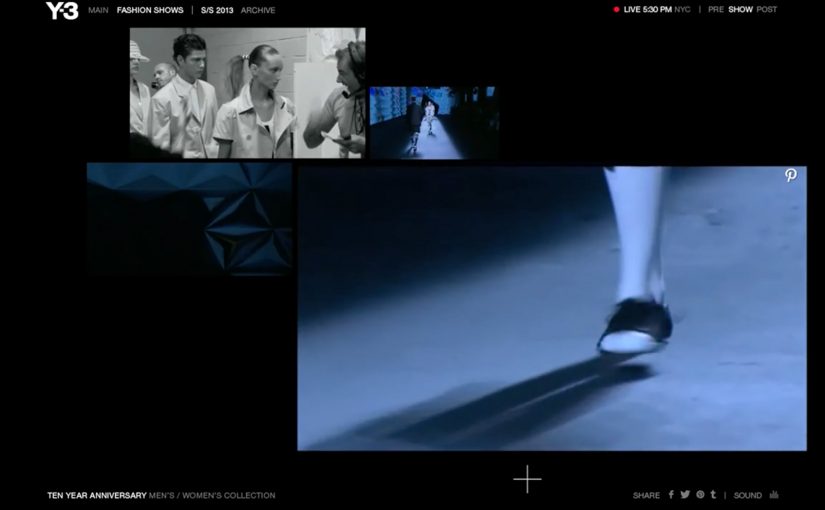
At New York Fashion Week in September 2012, adidas Y-3 revealed its Spring/Summer 2013 collection with an “Interactive Live Stream Experience” built by Acne Production. The online audience got four different runway views, could magnify one view without losing perspective of the show as a whole, and could pin each look to Pinterest.

Since 2010, I have noticed a steady increase in innovations at fashion shows around the world. This execution pushed that trend forward by treating the live stream itself as a designed product, not a passive camera feed.

The context. Y-3 at New York Fashion Week

The show marked the 10th anniversary of adidas’ partnership with Yohji Yamamoto. Athletes, celebrities, and fashion mavens gathered at St John’s Center, which was transformed by Dev Harlan’s 3D projections.

The experience. Four views, one zoomed, full context retained

Acne set up the live stream with four concurrent runway angles. The key interaction was control. Here, control means choosing which runway angle to enlarge while the rest of the show stays visible. Because viewers could focus on one angle without losing the full stage picture, the stream felt curated and intentional rather than fragmented.

Why Pinterest mattered in the flow

Pinning each look turned viewing into collecting. It captured intent at the moment of attention and let the audience take the show with them. One click turned a runway moment into a saved, shareable reference.

Extractable takeaway: When a live format lets people save individual moments without leaving the experience, attention becomes portable and the event keeps working after it ends.

In fashion and brand storytelling, the scalable advantage is not just reach, but designing a live moment so viewers can navigate it, keep pieces of it, and revisit it later.

The business intent is to turn fleeting runway attention into saved looks and shareable references without pulling viewers out of the live moment.

This is a stronger digital show model than a single passive camera feed because it turns viewing, collecting, and sharing into one connected experience.

The real question is how to turn a live stream from a one-time broadcast into a format that creates ongoing attention and reuse.

What fashion brands can lift from this

  • Give viewers control, not just a feed: Multiple camera angles plus a “magnify” interaction keeps a live stream feeling explorable, not passive.
  • Preserve context while zooming in: Let people focus on one view without losing the whole runway. That is the difference between browsing and watching.
  • Make curation the sharing mechanic: “Pin each look to Pinterest” turns the show into a personal collection that naturally travels beyond the event.
  • Use production craft as a multiplier: 3D projections and a transformed venue become part of the story, not just decoration, and they travel well in recaps.
  • Design for the afterlife of the live moment: The live experience creates assets and saved looks that keep circulating after the show ends.

A few fast answers before you act

What was the adidas Y-3 Interactive Live Stream?

It was a multi-angle live stream for the Y-3 Spring/Summer 2013 runway that let viewers zoom one camera view while still keeping the full-show context, and pin looks to Pinterest.

What was the core interaction pattern?

Multi-view streaming with user-controlled emphasis. Viewers chose what to focus on without breaking the narrative of the show.

Why did “keep context” matter in live streaming?

If zoom removed context, viewers felt lost. Keeping the full show visible preserved rhythm and made the experience feel like one coherent event.

Why add Pinterest at the point of viewing?

It turned attention into a saved action immediately. Instead of asking viewers to remember a look later, the stream let them collect it while interest was highest.

What is the practical lesson for digital show formats?

Design the stream like a product. Give the audience simple controls that match how they watch, and offer a frictionless way to save and share what they like.