
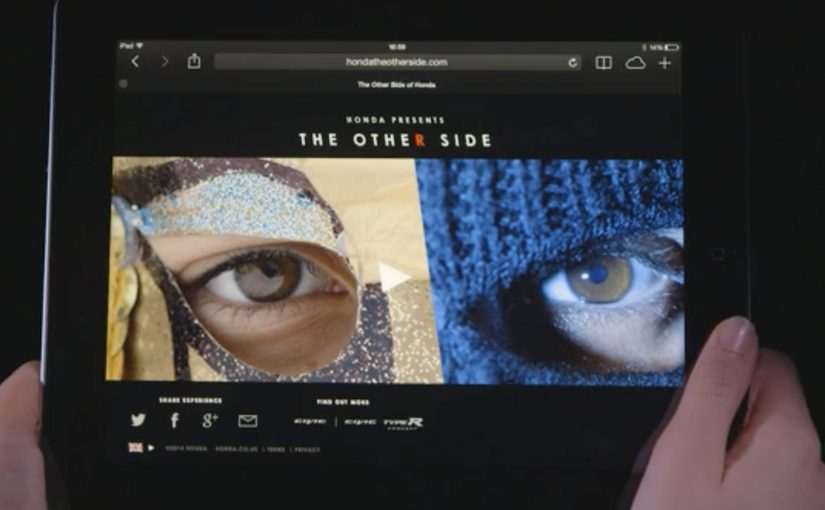
Honda – The Other Side

Car brands are always trying to show that their cars have different sides to their personalities, sporty vs reliable, safe vs cool, etc. What makes Honda’s latest effort unique is its YouTube video. By simply holding down the “R” key on the keyboard, the viewer can instantly switch between two different videos.

To execute this innovation, Wieden & Kennedy London had to create two storylines, one of an easygoing Dad doing the school run and the second as an undercover cop posing as a getaway driver. Both of which were then expertly mirrored with contrasting style and tone. The interactive experience was then put together by Stinkdigital at Honda’s YouTube Channel.

Why the mechanic matters more than the novelty

The “hold R to switch” idea is a simple interaction, but it changes how you watch. You are not just viewing a story. You are actively comparing two versions of the same moment, in real time.

  • One scene, two meanings. The mirrored structure makes contrast instantly legible.
  • Viewer control. You control the cut, which increases attention and repeat viewing.
  • Storytelling as product proof. Different “sides” of a car become a narrative device, not a claim.

Execution discipline: mirrored scenes, opposite tone

This only worked because the two storylines were designed to align. Timing, framing, and beats had to match so the switch felt seamless, not like two unrelated edits.

The payoff is that contrast becomes the hero. Calm family routine vs high-pressure escape. The same underlying vehicle context. Two different emotional reads.

What to take from this if you build interactive brand content

  1. Make the interaction explain itself. If the mechanic needs instructions, you lose momentum.
  2. Design for replay. The best interactive films reward going back and re-watching with intent.
  3. Let structure carry the message. When the format proves the point, you do not need heavy-handed copy.
  4. Keep the tech invisible. Viewers remember the feeling of control and contrast, not the implementation details.

A few fast answers before you act

What is Honda “The Other Side”?

It is an interactive film experience where viewers can switch between two parallel storylines by holding down the “R” key.

What are the two storylines?

One follows an easygoing Dad doing the school run. The other follows an undercover cop posing as a getaway driver, with both narratives mirrored scene-by-scene.

Why is the “hold R to switch” mechanic effective?

It gives the viewer control and makes the contrast immediate. That active comparison increases attention, engagement, and replays.

Who created the work?

Wieden & Kennedy London created the two mirrored storylines, and Stinkdigital put the interactive experience together on Honda’s YouTube Channel.

What is the transferable lesson for digital teams?

If you can express your message through an interaction that is instantly understandable, the format itself becomes the persuasion.
Heineken Departure Roulette En Route

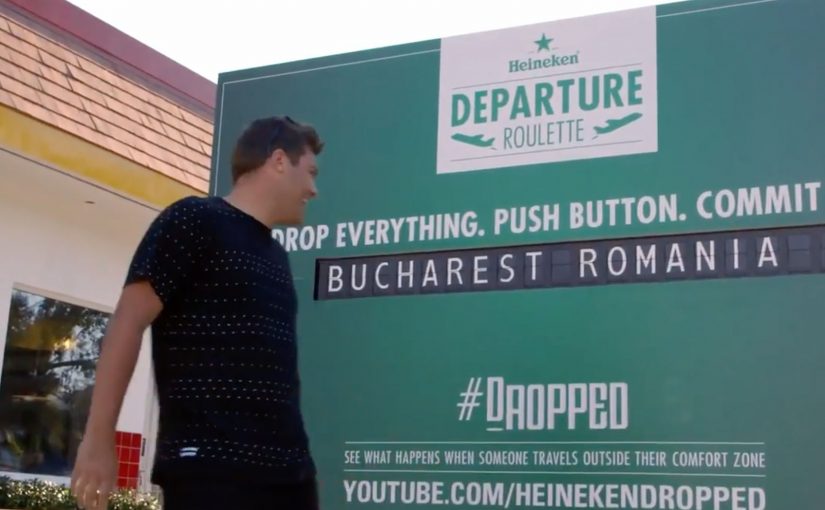
Heineken spots the tweets. Then they make them real. People watch the original Departure Roulette stunt and post the inevitable line on Twitter: “I’d press the button.” Heineken takes that public intent seriously. They track down a few of the people who tweet about wanting to play. Then they offer them the chance to play Departure Roulette on the spot. Real time, real commitment, no rehearsal.

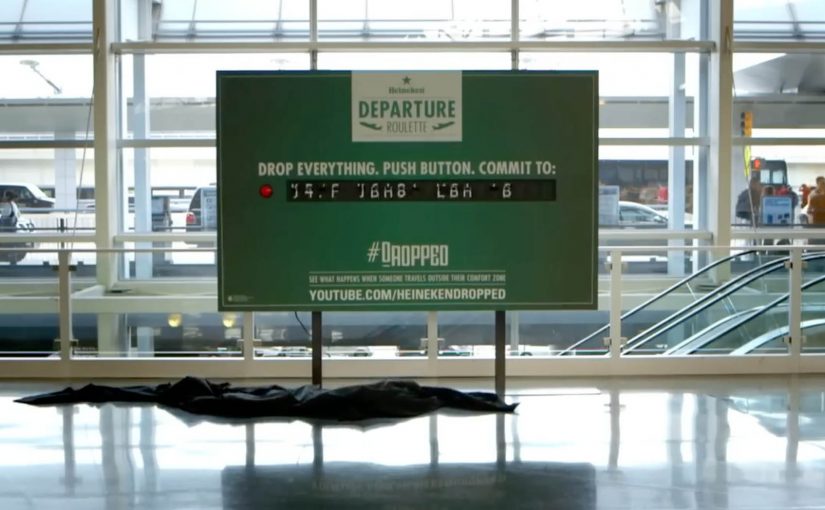
If you want the backstory first, the original Departure Roulette activation sets the frame: a physical roulette board at JFK Terminal 8. One red button. Press it and you accept a new destination immediately. Read about the original here.

What “En Route” gets right: it turns social intent into action

The smartest part of this follow-up is not the surprise. It is the mechanism. Heineken treats social conversation as a live signal of willingness, not just commentary. People are no longer reacting to a brand story. They are pulled into it.

It rewards declared intent in public

A tweet is a lightweight commitment. Heineken upgrades it into a real decision. The gap between “I would” and “I did” becomes the content.

It closes the loop from earned media to owned experience

The original stunt earns attention. The follow-up re-enters the stream where that attention lives. Social becomes a trigger for a real-world activation, not just a distribution channel.

It stays consistent with the campaign’s core promise

Departure Roulette is about spontaneity and courage. The follow-up keeps the same proposition, just delivered to a different moment and audience.

How to reuse this pattern without copying the stunt

  1. Define the “press the button” moment. Pick one unmistakable action that proves intent.
  2. Listen for explicit triggers, not vague sentiment. Look for “I would,” “I want,” or “If you did this I’d…” rather than likes alone.
  3. Respond fast enough that it feels connected. If the follow-up arrives too late, it reads like a promotion, not a story.
  4. Make the commitment real, but safe. Build constraints on timing, eligibility, logistics, and consent.
  5. Capture the decision, not just the reward. The moment of choice is the asset. The prize is the justification.

What to measure beyond views

  • Intent volume. How many people explicitly say they would do it.
  • Conversion rate. Percentage of selected participants who actually commit when approached.
  • Time-to-response. How quickly you move from trigger to activation.
  • Amplification quality. Replies and quote-posts that debate “would you do it,” not just “nice video.”
  • Brand linkage. Whether the audience repeats the core idea (spontaneity, adventure), not just the prank.

Risks and guardrails that matter

  • Consent and privacy. Do not approach people in a way that feels extractive. Keep it clearly opt-in.
  • Safety and duty of care. High-stakes travel stunts need hard boundaries, support, and contingencies.
  • Credibility. The offer must be unquestionably real, or the story collapses into suspicion.
  • Operational readiness. The logistics are the product. If ops fail, the story turns.

A few fast answers before you act

What is Departure Roulette En Route in one line?

It is a social-powered follow-up where Heineken turns “I’d press the button” tweets into a real-world chance to do exactly that.

Why does it spread?

Because it stages a high-stakes, relatable decision in public: keep your plan, or choose the unknown.

What is the reusable strategy?

Treat public intent as a trigger for action. Then deliver a real experience that proves the brand promise.

What is the minimum viable version for a brand without travel budgets?

Reward declared intent with an immediate upgrade: surprise access, exclusive drop, instant appointment, or fast-track service.

Where does this go wrong fastest?

When it feels like surveillance, or when the logistics do not deliver on the promise.

Heineken Departure Roulette

Board at JFK Terminal 8. A single red button. A real decision. To embody Heineken’s adventurous spirit, Wieden + Kennedy in New York sets up a Departure Roulette board at JFK’s Terminal 8 and dares travelers to play. If they press the button, they drop their existing plans and go somewhere totally new and exotic.

The commitment is real. The travelers who take the dare receive $2,000 to cover expenses and get booked into a hotel for two nights at the new destination. This is the recently released video of how it unfolds at JFK.

The stunt links to a broader idea. The game draws inspiration from Dropped, a Heineken campaign launched from W+K Amsterdam in which four men get sent to remote destinations, and the adventure of getting back gets filmed.

Why this stunt works

It makes spontaneity measurable

Most people can say they are spontaneous. Departure Roulette forces a binary choice in public. Press or walk away. The brand promise becomes an observable action.

It raises stakes without needing complex rules

The mechanic is simple. The tension is high. You do not need a long explanation to understand what is at risk: your plan.

It turns a brand value into a story people retell

The red button is a prop with meaning. It compresses the entire narrative into one symbol that is easy to remember, share, and debate.

How to apply the pattern

  1. Create one unmistakable action. A single step that proves intent, not interest.
  2. Make the trade-off clear. People must know exactly what they give up and what they gain.
  3. Design for the decision moment. The most valuable content is the second before and after commitment.
  4. Operationalize the reward. If logistics fail, the story turns from daring to disappointing.

What to measure beyond views

  • Participation rate. How many approached travelers agree to play.
  • Completion rate. How many press the button after hearing the rules.
  • Story lift. How often people retell the mechanic correctly.
  • Brand linkage. Whether the audience connects the act to “adventurous spirit,” not just “free trip.”

A few fast answers before you act

What is Departure Roulette?

A physical airport activation where travelers can press a red button and immediately swap their planned trip for a surprise destination.

What is the core mechanic?

One irreversible choice that turns a brand value into an action people can witness.

What makes it repeatable for other brands?

The format is not travel. It is a high-stakes choice with a simple trigger, a clear trade-off, and a real reward.

What is the biggest failure mode?

When the commitment is not credible, or the operations cannot deliver the promise.