
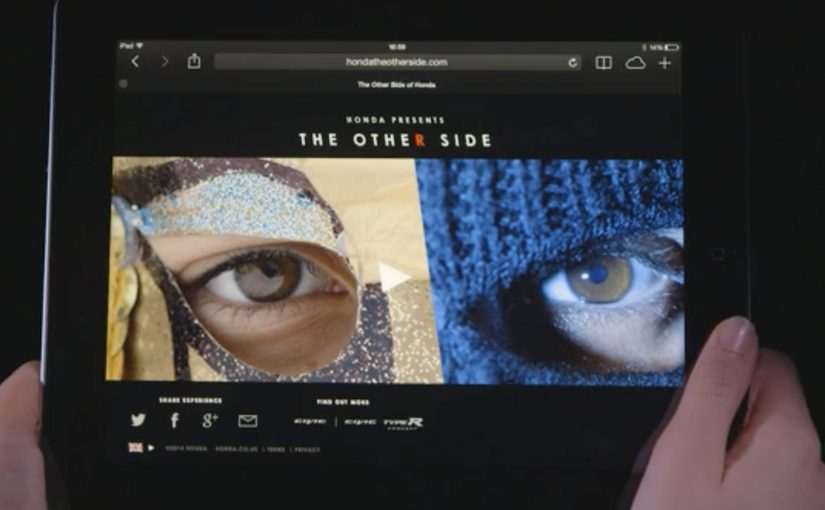
Honda – The Other Side

Car brands are always trying to show that their cars have different sides to their personalities, sporty vs reliable, safe vs cool, etc. What makes Honda’s latest effort unique is its YouTube video. By simply holding down the “R” key on the keyboard, the viewer can instantly switch between two different videos.

To execute this innovation, Wieden & Kennedy London had to create two storylines, one of an easygoing Dad doing the school run and the second as an undercover cop posing as a getaway driver. Both of which were then expertly mirrored with contrasting style and tone. The interactive experience was then put together by Stinkdigital at Honda’s YouTube Channel.

Why the mechanic matters more than the novelty

The “hold R to switch” idea is a simple interaction, but it changes how you watch. You are not just viewing a story. You are actively comparing two versions of the same moment, in real time.

  • One scene, two meanings. The mirrored structure makes contrast instantly legible.
  • Viewer control. You control the cut, which increases attention and repeat viewing.
  • Storytelling as product proof. Different “sides” of a car become a narrative device, not a claim.

Execution discipline: mirrored scenes, opposite tone

This only worked because the two storylines were designed to align. Timing, framing, and beats had to match so the switch felt seamless, not like two unrelated edits.

The payoff is that contrast becomes the hero. Calm family routine vs high-pressure escape. The same underlying vehicle context. Two different emotional reads.

What to take from this if you build interactive brand content

  1. Make the interaction explain itself. If the mechanic needs instructions, you lose momentum.
  2. Design for replay. The best interactive films reward going back and re-watching with intent.
  3. Let structure carry the message. When the format proves the point, you do not need heavy-handed copy.
  4. Keep the tech invisible. Viewers remember the feeling of control and contrast, not the implementation details.

A few fast answers before you act

What is Honda “The Other Side”?

It is an interactive film experience where viewers can switch between two parallel storylines by holding down the “R” key.

What are the two storylines?

One follows an easygoing Dad doing the school run. The other follows an undercover cop posing as a getaway driver, with both narratives mirrored scene-by-scene.

Why is the “hold R to switch” mechanic effective?

It gives the viewer control and makes the contrast immediate. That active comparison increases attention, engagement, and replays.

Who created the work?

Wieden & Kennedy London created the two mirrored storylines, and Stinkdigital put the interactive experience together on Honda’s YouTube Channel.

What is the transferable lesson for digital teams?

If you can express your message through an interaction that is instantly understandable, the format itself becomes the persuasion.

Automated Thanking Machine

Start with the smile of your audience, and then work back from there. That is the key to most of the successful marketing campaigns. Coca-Cola has done a great job with their various happiness campaigns, followed by WestJet’s christmas campaign where they surprised their passengers with gifts.

Now TD Canada Trust for their “TD Thanks You” campaign converted select ATM machines in their Toronto, Montreal, Calgary and Vancouver branches into special Automated Thanking Machines. Then 20 hand picked customers were requested to test out these new ATMs. To their surprise the ATM knew their names, talked back to them and eventually even gave them ultra cool gifts. The reactions were captured on video, which in the last 8 days has already got 4.9 million YouTube views.

Pepsi Max: Test Drive

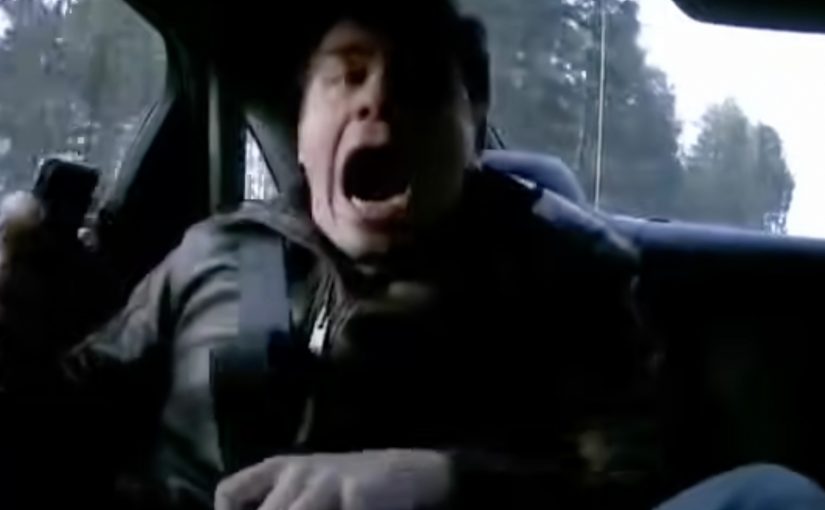
Last year in March, Pepsi Max along with professional stock car racing driver Jeff Gordon performed a prank on an unsuspecting car salesman by taking him on a test drive of his life…

The video since then got over 41 Million views on YouTube. Despite its viral success, automotive journalist Travis Okulski was not impressed and was pretty vocal in pointing out inconsistencies in the viral ad and calling it a fake.

So Jeff Gordon teamed up again with Pepsi Max to pull a similar prank on unsuspecting Travis Okulski, just to prove the authenticity of the original test drive video…

But even after all of that Travis Okulski is still not convinced and the video since its release last week has already gotten over 13 Million views on YouTube.

Why this became a two-part story

The first video worked because the premise is simple, the escalation feels real, and the payoff is pure reaction. But the moment it went viral, it also invited scrutiny. That is what makes the follow-up so interesting. The brand turned criticism into content by making the skeptic part of the narrative.

  • Viral hook. A familiar setting, then a sudden reveal of unexpected capability.
  • Credibility challenge. A public critique that reframed the conversation as “real or staged”.
  • Response as sequel. A second execution aimed at the critic to re-earn belief.

What to learn from the backlash

When stunts travel, authenticity becomes part of the product. If the audience starts debating “is it real”, the brand can either go silent or lean in. Pepsi Max leaned in and used the debate as fuel, which extended the lifecycle and kept attention anchored to the same brand platform.


A few fast answers before you act

What is Pepsi Max “Test Drive” with Jeff Gordon?

It is a prank-style stunt video where Jeff Gordon takes an unsuspecting car salesman on an extreme test drive, created as part of Pepsi Max’s viral entertainment approach.

Why was there controversy around the first video?

An automotive journalist publicly pointed out inconsistencies and argued it was staged, which sparked debate about authenticity.

Why did Pepsi Max do a second video?

To address the credibility debate directly by repeating a similar stunt and making the outspoken critic part of the execution.

What is the transferable pattern for viral campaigns?

Expect scrutiny, especially when the content looks “too good”. If doubt becomes the story, design a credible sequel that engages the criticism rather than ignoring it.