
Volkswagen: The BlueMotion Label

Volkswagen: The BlueMotion Label

A magazine gets read, then it gets tossed. The campaign framing cites a blunt number: 77% of magazines, along with their ads, end up in the trash, which makes the medium itself feel like waste.

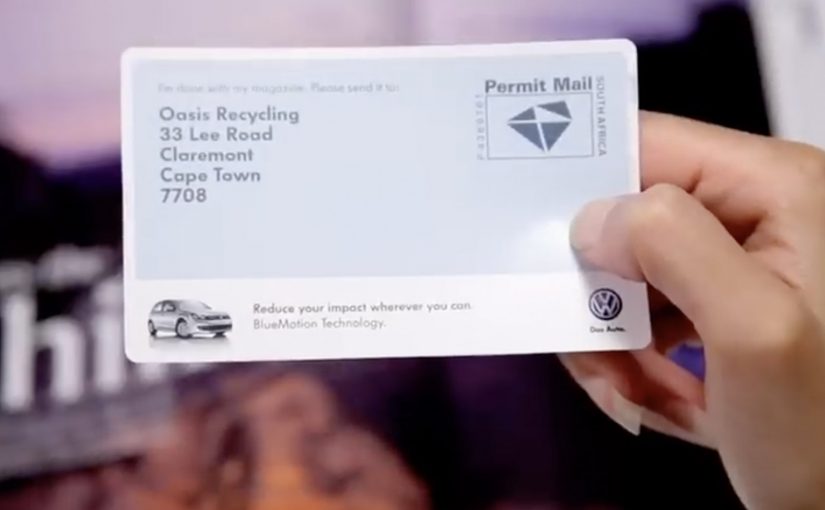
So when Volkswagen wants to promote the eco-conscious thinking behind its BlueMotion vehicles, Ogilvy develops a print insert that does not just talk about recycling. It makes recycling the default next step.

The insert is designed to get people in Cape Town to recycle their magazines via the city’s post boxes. Once you are done reading, you use the insert and drop the magazine into a post box, turning postal infrastructure into a recycling pathway instead of sending the paper to landfill.

When the medium becomes the message

The mechanism is a print ad that changes the fate of the print medium. Instead of adding more paper persuasion, it converts the entire magazine into something that can be routed to recycling, using a familiar behavior, posting, to remove the friction of “finding a recycling option”.

In consumer marketing, “sustainability” claims land best when the communication channel follows the same rules the product is asking people to adopt.

The strongest sustainability advertising makes the medium do part of the environmental work itself. The real question is whether the communication changes the waste behavior around the product, or just describes a greener intent.

Why it lands

This works because it removes hypocrisy. If you are going to sell eco-conscious thinking, your ad cannot behave like disposable clutter. By turning the magazine itself into the recyclable object, the campaign gives people a satisfying feeling of doing the right thing with almost no extra effort, and it makes the brand promise feel practical rather than moralizing.

Extractable takeaway: If your benefit is “less waste”, design the communication so it physically reduces waste, and let the proof be the experience, not the copy.

What to borrow from the BlueMotion Label

  • Replace messaging with utility. If you can change behavior directly, you do not need to preach.
  • Use existing infrastructure. People already know how to use post boxes, so adoption is friction-light.
  • Make the action one-step. The closer the action is to the moment of disposal, the higher the follow-through.
  • Make the proof visible. A physical insert is something people can show, talk about, and demonstrate.

A few fast answers before you act

What is “The BlueMotion Label”?

A Volkswagen BlueMotion print insert designed to make magazine recycling easy by letting readers use post boxes to route finished magazines into a recycling flow.

Why is this stronger than a standard eco-themed print ad?

Because it behaves like the promise. It reduces waste through the ad itself, instead of adding more disposable paper to argue about sustainability.

What behavior change does it target?

Moving magazines from “trash by default” to “recycle by default” at the exact moment people finish reading.

What is the key execution ingredient?

Friction removal. The action must be simple enough that people will do it immediately, without searching for a recycling option.

When should brands use this pattern?

When your claim depends on credibility, and you can redesign the medium or distribution so the communication itself demonstrates the value.
Austria Solar: Sun-Powered Annual Report

Austria Solar: Sun-Powered Annual Report

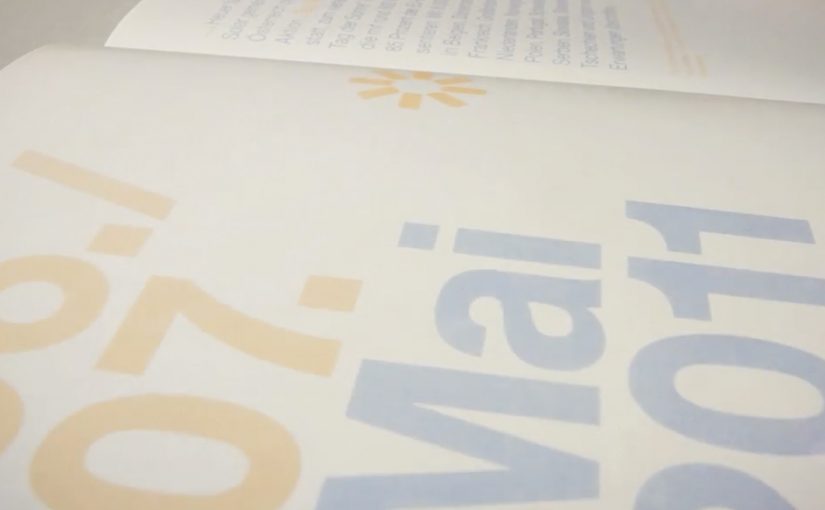
Austria Solar’s annual report arrives looking almost blank. Then you step into sunlight, and the pages wake up.

Serviceplan’s idea is to put solar energy “to paper” in the most literal way. The report’s typography and graphics only become visible when exposed to sunlight, turning the act of reading into a live demonstration of the product story.

How it works, and why the packaging matters

The mechanism sits in the production craft: a special printing process using light-reactive inks so the content remains invisible until UV-rich daylight hits the page, at which point the design reveals itself.

The report is then wrapped in light-proof foil before distribution, so recipients experience the reveal as a first-time moment rather than an already-exposed artifact.

In B2B and association communications, annual reports are expected to be worthy, and often get skimmed, so engineered “stops”, deliberate interruptions that force a reader to pause, can earn attention without needing louder messaging.

Why the reveal lands

This works because the medium is doing the persuasion. Because the content stays hidden until sunlight, the reader has to take one small step, which makes the reveal feel earned rather than announced. The real question is whether your format can do the convincing before your copy does.

Extractable takeaway: When your value proposition is invisible in everyday life, design a simple interaction that makes it visible in the moment. Let the audience “prove” the benefit to themselves through a familiar artifact.

There is also a quiet confidence in the restraint. The pages look empty at first, which builds curiosity. Then the content appears, which feels like a payoff rather than a pitch. This is a stronger move than adding more words when you need attention without hype.

The business intent behind the craft

The report is doing several jobs at once. It modernizes a traditionally dry format, positions Austria Solar as an innovation-led industry organization, and gives members and stakeholders a story they can easily retell.

Because the reveal is physical and repeatable, it also travels well in meetings. The report becomes a prop for advocacy, not just a document for compliance.

Practical moves to borrow from the sun-reveal report

  • Turn a claim into a demonstration. If your topic is energy, data, security, or sustainability, look for a way the format can embody the message.
  • Design for the first 10 seconds. Engineer a moment that forces curiosity before you ask for attention.
  • Make the interaction effortless. The user action here is trivial. Move into daylight.
  • Package the experience, not just the content. The light-proof wrap protects the “first reveal” so the idea survives distribution.

A few fast answers before you act

What is the core idea of Austria Solar’s sun-powered annual report?

It is an annual report printed so that its content only becomes visible when exposed to sunlight, turning reading into a physical demonstration of solar energy’s presence and power.

Why does making the content invisible at first help?

The initial blankness creates curiosity and a clear contrast. When the content appears, the reveal feels like a payoff, which increases attention and recall compared to a conventional report page.

What makes this more than a gimmick?

The interaction directly reinforces the organization’s story. The report does not just talk about solar power. It requires sunlight to function, which makes the message inseparable from the format.

Why does the light-proof wrap matter?

It preserves the first-time reveal by preventing premature exposure, so recipients experience the idea as a moment rather than a pre-exposed artifact.

Where else can this pattern work?

Any communication where audiences expect low novelty, like policy packs, compliance updates, investor or member reports, or annual reviews, especially when you can embed a simple demonstration into the artifact itself.

Jeep: Compass Remote Postcards

Jeep: Compass Remote Postcards

One of the oldest and most effective ways to sell a product is with a good demonstration. Leo Burnett Brussels takes that approach and gives it a fresh spin for the Jeep Compass by turning the demo into a journey people can follow.

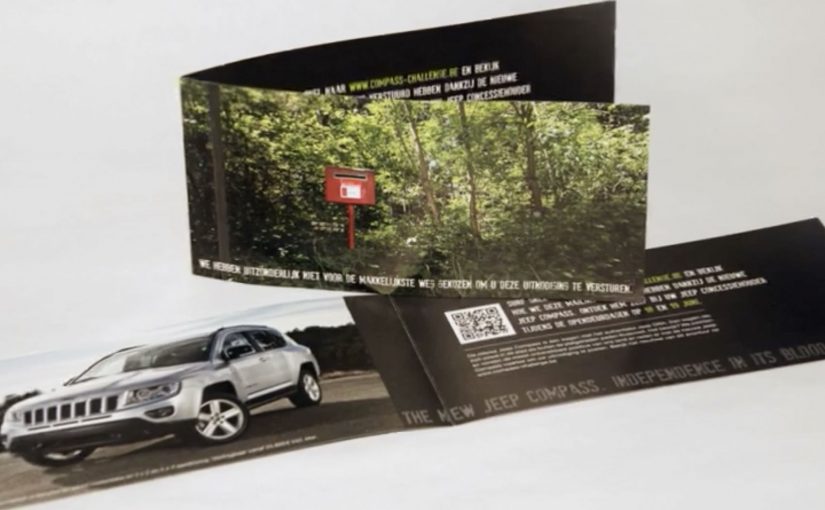
Cameras are strapped onto a few Jeep Compasses, and the team sets out to find the most remote post locations they can. Direct mailers are then shipped from these far-flung places, pointing recipients to a site where they can follow the trip and see the Compass in action.

Remote postcards as proof, not promise

The mechanic is simple. Put the product in the environment that proves the claim, document it, then send a physical artifact from the place itself. The postcard becomes evidence that the vehicle actually got there, not just a line in a brochure.

In automotive marketing, demonstrations land best when the proof is embedded in the distribution, so the message and the evidence arrive together.

The real question is how to turn an off-road capability claim into proof people can hold, trust, and retell. This is stronger than a spec-led demo because the proof is built into the medium itself.

Why this lands

This works because it collapses storytelling and verification into one object. A postcard from a remote location is inherently credible. Add footage from the route, and the demonstration feels earned rather than staged, even for people who only skim the campaign.

Extractable takeaway: If your product benefit is “go anywhere” or “handle more,” make the medium carry the proof. Send something that could only exist if the product performed as claimed.

What the campaign is really optimizing for

Beyond awareness, this is built to move the vehicle into active consideration. It gives prospects a concrete reason to re-evaluate the vehicle, and it creates a narrative that sales teams and enthusiasts can retell without needing technical jargon or spec sheets.

How to adapt this demonstration pattern

  • Turn proof into an artifact. Physical mail can signal effort and credibility.
  • Design a followable journey. A route with checkpoints is easier to remember and share than a one-off stunt.
  • Keep the CTA tight. One action. Follow the trip. See the product perform.
  • Make the environment do the persuading. Terrain and remoteness communicate capability faster than copy.

A few fast answers before you act

What is the core idea of the Jeep Compass remote postcards?

Use real remote locations as the demonstration, then mail postcards from those locations and direct recipients to follow the journey and watch the vehicle perform.

Why use direct mail instead of only video?

A postcard from a remote post office feels like proof. It is a physical signal that the journey happened.

What makes this a product demonstration, not just content?

The route and the mailer are consequences of the capability claim. The campaign structure is built around showing the vehicle doing the work.

What kind of products benefit most from this pattern?

Products with a capability claim that is easy to show in the real world. Durability, reach, range, off-road, endurance, or access.

What’s the biggest risk if you copy this approach?

If the “proof” feels manufactured or the journey is hard to follow, the credibility advantage disappears. The checkpoints and documentation need to be clear.