A one-click purchase is not the point. Default is.
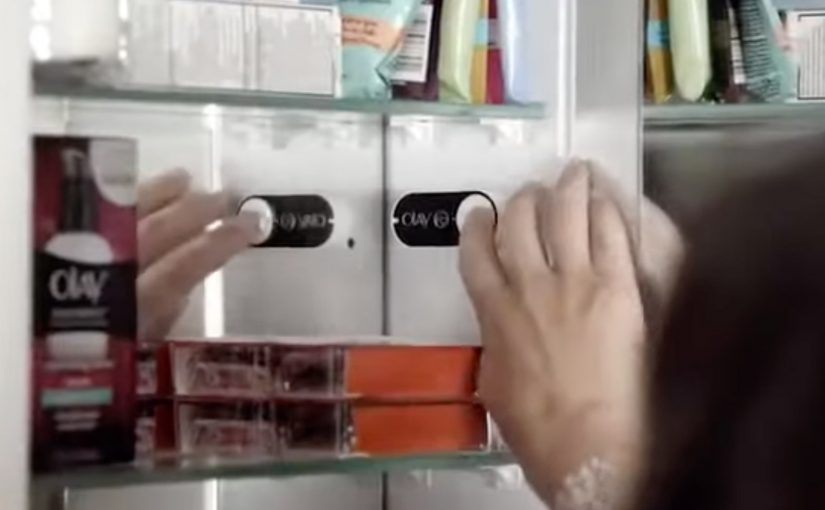
Amazon Dash Button looks simple. A branded button you stick near the place of usage. You press it. The same item arrives again.
But the strategic move is not “one click.” It is making the reorder the default behavior.
Dash Button turns repeat buying into an ambient habit. It shifts commerce away from discovery and toward automation. It pushes the battle for the customer from the shelf and the screen to the home.
What the Dash Button does
Dash Button is a small connected device tied to one specific product, and often one specific pack size. You link it to your Amazon account. You place it where the need occurs.
Examples are obvious in everyday life:
- Detergent button near the washing machine
- Coffee button in the kitchen
- Pet food button near the feeding area
When the product runs low, you press. Amazon confirms the order, typically via app notifications, and ships.
The experience is intentionally narrow. That narrowness is the innovation.
In consumer convenience products, loyalty is often less about love and more about default.
Why the narrowness matters
Dash Button removes three high-friction moments that brands fight over every day:
- Search. The customer does not type a query.
- Comparison. The customer does not see alternatives.
- Persuasion. The customer does not view ads, ratings, or promotions in the moment.
In other words, the customer does not shop. They simply replenish.
Once a household adopts replenishment behavior, the role of branding changes. The brand becomes less about persuasion and more about being the chosen default.
The hidden bet. Repeat purchases are the real moat
Dash Button is a physical expression of a platform strategy.
If Amazon captures replenishment categories, it wins the durable, high-frequency part of retail. The items that quietly drive recurring revenue and predictable logistics.
The button also functions as a data instrument. It reveals how often a household needs a product, where it is used, and which categories are truly habitual versus occasional.
That insight feeds subscriptions, predictive delivery, and future interface removal.
What this signals to CPG and retail leaders
Dash Button compresses marketing into an upstream decision.
The question is no longer “How do we win at the point of purchase?” It becomes “How do we become the configured default before the point of purchase even exists?”
For CPG leaders, this forces uncomfortable clarity on loyalty, pack architecture, trade visibility, and availability. For retailers, it signals a shift in power toward whoever owns the reorder interface.
The consumer tension. Convenience vs control
Dash Button introduces a trust tradeoff.
Consumers value convenience, but they also worry about accidental orders, loss of price checks, oversimplified choice, and dependence on a single platform.
Those tensions do not invalidate the model. They clarify what platforms must solve through better confirmations, clearer reorder states, and smarter replenishment rules.
The bigger story. Interfaces disappear
Dash Button fits a broader direction in commerce. Buying moves away from screens and toward contexts.
The pattern is consistent: less explicit shopping, more embedded intent, more automation, and more default-driven brand outcomes.
Dash Button is not the endpoint. It is an early, tangible step toward commerce that feels invisible.
A few fast answers before you act
What was Amazon Dash?
Dash was a physical reorder button that let customers buy a specific everyday product with one press, removing browsing and checkout steps.
What is the core mechanism?
Turning replenishment into a default action. One button equals one SKU. The interface collapses choice into speed and habit.
Why does this change loyalty dynamics?
Because the reorder interface becomes the brand decision. If the button exists, switching requires extra effort, so the default compounds over time.
What is the business intent?
Increase repeat purchase frequency and reduce churn by owning the replenishment moment and lowering friction to near zero.
What should other brands steal?
Design for the reorder moment. If your category is habitual, the winning move is to remove steps, make the default easy, and earn repeat behavior through convenience.