
AR in 2013: Three Retail-Ready Examples

Augmented Reality in 2013: when the real world becomes the interface

With smartphones and tablets becoming part of our everyday life, we also see more augmented reality apps mixing the virtual and the real world in 2013. Here are some examples from ARworks that recently caught my eye.

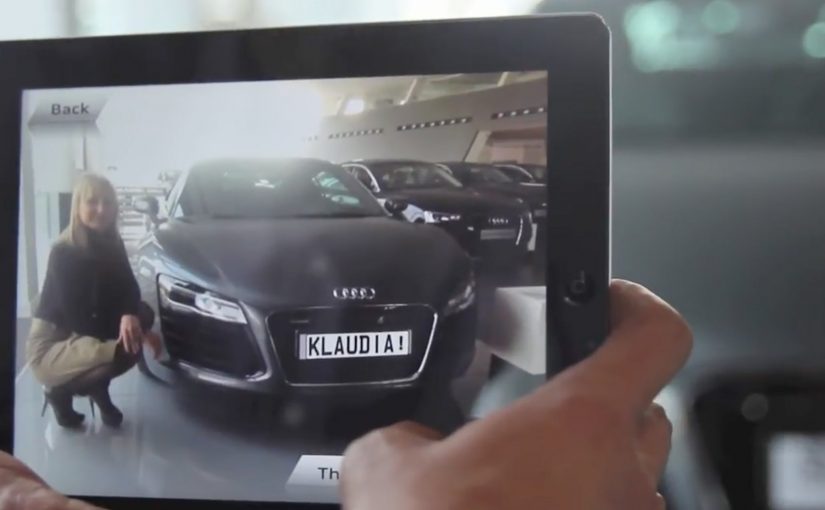
Audi Singapore Showroom app

For the opening of their biggest showroom in South-East Asia, Audi created AR experiences that allowed visitors to fly around the showroom building without actually boarding a plane, or drive the Audi R18 race car around Singapore at full speed without the risk of getting a ticket. What’s more, they even allowed visitors to personalize their individual license plates and then take photos with the car.

Dakar race in a shopping mall

A real Dakar desert racecourse was built for the new Opel Mokka on a 4mtrs long table that was placed in a shopping mall. Visitors could use the provided iPads to race against time and each other. The results were then shared on Facebook, and the weekly and overall winners received various prizes.

Christmas Ornament Sling

Deutsche Telekom, for their Christmas promotion, developed an iPad app where visitors could throw virtual Christmas ornaments containing their personal message onto a huge Christmas tree erected in a mall. A successful hit to one of the real ornaments on the tree lit it up through an integrated server application.

The pattern across all three: AR turns “watching” into doing

None of these examples treat AR as a gimmick. Each one uses the device as a bridge between curiosity and action. You explore a building. You race a course. You aim a message at a real tree. The screen stops being a place to consume. It becomes a tool to participate.

In retail and shopper environments, augmented reality works best when it turns a physical setup into a simple, repeatable action loop for the visitor.

The real question is whether your AR layer gives the visitor a simple verb and a payoff worth repeating.

Why retail is the natural habitat for AR

Retail already has the ingredients. Footfall, dwell time, and physical objects that can anchor the experience. AR simply adds a layer of viewer control. The visitor decides where to look, what to try, and what to share. This works because the physical anchor keeps the choice set small, so the device can turn curiosity into a low-friction action with an immediate outcome.

Extractable takeaway: AR earns its keep when the physical setup stays simple and the device turns it into a repeatable action that produces a visible outcome worth sharing.

What’s really being built here

These are not “apps.” They are engagement machines, meaning they turn a physical setup into an interaction loop with a reward and an easy share path. Each one creates a clear reason to interact, a clear reward for completing the action, and a clear path to share or repeat. That is how you turn novelty into behavior.

Four retail-ready AR mechanics to copy

  • Anchor it physically. Anchor the experience to a physical object people can gather around. A showroom, a tabletop course, a tree.
  • Give the visitor a simple verb. Fly, drive, race, sling. Actions beat features.
  • Design a tangible payoff. A photo, a score, a lit ornament. Make the outcome tangible.
  • Make sharing a by-product. Make sharing a natural by-product of the activity, not a forced button at the end.

A few fast answers before you act

What makes these 2013 AR examples feel “ready” for real audiences?

They are built around clear actions and clear rewards. The device is used to do something in the physical environment, not just view an overlay.

Which devices are central to these activations?

Tablets and phones are the delivery mechanism. The examples explicitly reference iPads and handheld devices for the AR interaction.

What role does sharing play in these concepts?

Sharing is tied to the activity. Photos with the car, results shared on Facebook, and personal messages sent as virtual ornaments.

What is the common mechanic across the three examples?

The camera-enabled device acts like a controller that links a real-world setup to a virtual experience, giving the viewer control over exploration and interaction.

How do you keep AR from feeling like a gimmick?

Make the overlay serve a real action and a visible outcome. If the visitor can do something concrete and see a result that is worth showing, the experience stops being novelty and starts being behavior.
Marie Claire: Print Pages You Can Tap to Buy

Enabling readers to buy directly from magazines or newspapers is slowly going to become the industry standard, as revenues from print continue to slip.

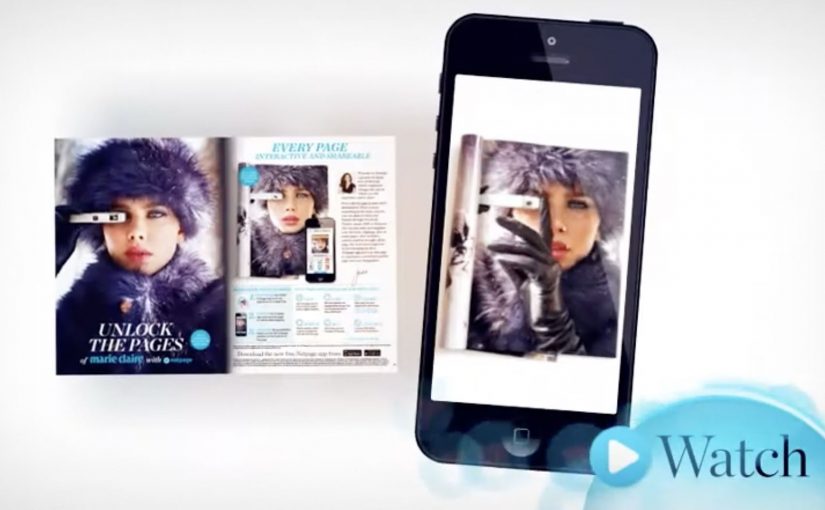
Last year Ikea re-imagined their catalog via a special visual recognition app that brought its pages and offerings within to life. Now Marie Claire has taken it one step further by letting their readers use the Netpage app to interact with its printed pages, clip, save, share, watch and buy.

The Netpage app is described as using a combination of image recognition, augmented reality and digital twin technology. Hence no special codes, watermarks or special printing processes are required. In this context, “digital twin” is used to describe a digital counterpart of each page that can be recognized and linked to interactive layers.

Shoppable print, without QR code clutter

Shoppable print is the fusion of editorial content and commerce, where a reader can move from “I want that” to checkout directly from the page. The key difference here is interaction that is designed to feel native to reading. Not bolted on as a separate scanning ritual. Because the interaction stays inside the reading flow, it reduces friction, which is why it can earn repeat use instead of feeling like a one-time gimmick.

In magazine and brand teams trying to keep print premium while still making it measurable, invisible recognition is the interaction pattern that scales best.

The real question is whether your print pages can create measurable intent without forcing readers out of the reading flow.

Why this matters for magazines and brands

Once print becomes tappable, meaning a phone can recognize a specific page and surface actions, the page stops being an endpoint. It becomes a trigger for a whole set of actions, saving for later, sharing with friends, watching richer product context, and buying immediately.

Extractable takeaway: If a page can trigger trackable actions and even checkout, the magazine is no longer only monetized by ads and subscriptions. It can also participate in the transaction path.

Practical moves for tappable print commerce

  • Design interaction as a reading behavior, quick actions that fit the moment, not a separate “tech demo.”
  • Reduce visual noise, if recognition can be invisible, the page stays premium.
  • Offer multiple intent paths, not everyone wants to buy now, but they might save, share, or watch.
  • Make the jump from inspiration to action short, the fewer steps, the more commerce you unlock.

Publishers and brands should treat tappable print as a measurable commerce layer, not a novelty. The future is all about content being fused with commerce so that it’s a quick step from reading about an item to buying it. So get ready!


A few fast answers before you act

What does “interactive print” mean here?

It means a printed page can be recognized by a phone app and instantly connected to digital actions like clipping, saving, sharing, watching content, and buying.

How is this different from QR codes?

The interaction is designed to be code-free on the page. The recognition layer is meant to feel invisible, so the magazine layout stays clean.

What is the core value for readers?

Convenience. Readers can act on interest immediately, whether that means saving an item, sharing it, or purchasing it, without leaving the content context.

What is the core value for publishers?

A measurable engagement layer and a commerce path. Pages can generate trackable actions and potentially incremental revenue beyond print ads.

What is the biggest adoption risk?

Habit change. If the scanning flow feels slow or unclear, people will not repeat it. The first experience must be fast, obvious, and rewarding.

Omote 3D: The 3D Printing Photo Booth

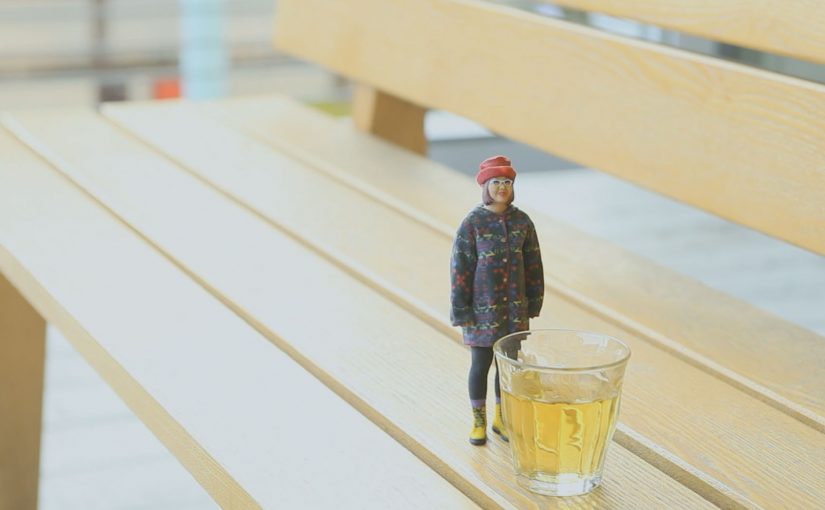
Ever wanted a life-like miniature action figure of yourself. Not a cartoon avatar, but a small, physical replica you can hold in your hand.

Omote 3D makes that possible by setting up what is billed as the world’s first 3D printing photo booth for a limited time at the Eye of Gyre exhibition space in Harajuku, Japan.

From November 24 through January 14, 2013, people with reservations can have their bodies scanned into a computer. Then, instead of a photograph, they receive miniature replicas of themselves.

The miniature replicas are available in three sizes. S (10cm), M (15cm) and L (20cm) for US$264, US$402 and US$528, respectively.

Why this “photo booth” feels like a shift

The mechanism is the message. A booth that normally captures a flat memory instead captures a 3D dataset, then materializes it into a keepsake. The output is not content you scroll past. It is content you place on a shelf.

Extractable takeaway: When you turn personalization into a physical object, it stops being content and starts being a keepsake.

Definition-tightening: this is not 3D “photography” in the traditional sense. It is full-body 3D scanning plus full-color 3D printing, packaged in a familiar photo booth ritual.

In consumer experiences where attention is scarce and products are increasingly interchangeable, turning personalization into a tangible object is a reliable way to earn talk value, meaning people have a reason to talk about it later.

The real question is whether your experience ends as something people display, not something they forget after the moment passes.

What makes it work as an exhibition idea

The booth turns the visitor into the exhibit. It also turns waiting and anticipation into part of the experience, because the “print” is a manufactured object, not an instant print strip. That shift makes the end result feel earned and premium.

Stealable patterns from Omote 3D’s booth

  • Use a familiar ritual as the wrapper. “Photo booth” is instantly understood, even when the technology is new.
  • Make the output physical. Physical artifacts extend the campaign life long after the pop-up closes.
  • Price by meaning, not by material. People pay for identity and memory, not for plastic and ink.
  • Gate with reservations when demand is the story. Scarcity plus scheduling can reinforce that this is special.

Additionally click here to see how Polskie Radio in Poland has used 3D printing technology to market their website.


A few fast answers before you act

What is Omote 3D’s 3D printing photo booth?

It is a pop-up booth that scans your body in 3D, then produces a full-color miniature figure of you instead of a standard photo print.

Why call it a “photo booth” if it prints a figure?

Because it borrows the familiar booth ritual. You step in, you get captured, and you leave with a keepsake. The technology changes, but the mental model stays simple.

How is the miniature created?

Your body is scanned into a 3D model, then the final figure is manufactured via 3D printing in full color and finished as a physical object.

What sizes are offered and what do they cost?

Three sizes are offered. 10cm, 15cm, and 20cm. The listed prices are US$264, US$402, and US$528, respectively.

What is the marketing lesson for brands?

Personalization becomes more valuable when it becomes tangible. A physical output turns novelty tech into an object people keep, show, and talk about.