
Cornetto Commitment Rings

Netflix has taken the world by storm, transforming itself from a mail order DVD company into a streaming behemoth that uses immense amount of internet bandwidth worldwide. This in turn has led to a cultural phenomenon called Binge-watching, where you tend to watch 2-6 episodes of the same TV show in one sitting.

The insight ice-cream maker Cornetto had to this cultural phenomenon was that over 28 million Netflix users have binge-watch cheated on their loved ones. 21% of them did it while the other person was asleep, while 12% of them re-watched the show with their loved ones. So Cornetto to fix this “Netflix infidelity” created a pair of smart wearable rings that blocked access to the shows unless the two were watching them together.

The rings had to connect to the smartphone over NFC, and then through an app users would have to register the shows they wanted to watch together. After that, both parties would have to be present, and have their Commitment Rings nearby, to be able to play a new episode from any of the saved shows.

At the moment there aren’t any pricing details or release dates for this particular wearable, so you’ll have to keep checking the Series Commitment website for more details about it, or register with the site to receive more information about the product.
TV Viewing: Super Bowl Meets HoloLens

TV viewing is overdue for a real change

The TV viewing experience does not change drastically for years. Bigger screens, better resolution, smarter interfaces. But the core behavior stays familiar.

That is why sophisticated headsets like Microsoft HoloLens feel like a genuine breakpoint.

They do not just improve the screen. They change the environment around it.

Microsoft and the NFL re-imagine the Super Bowl

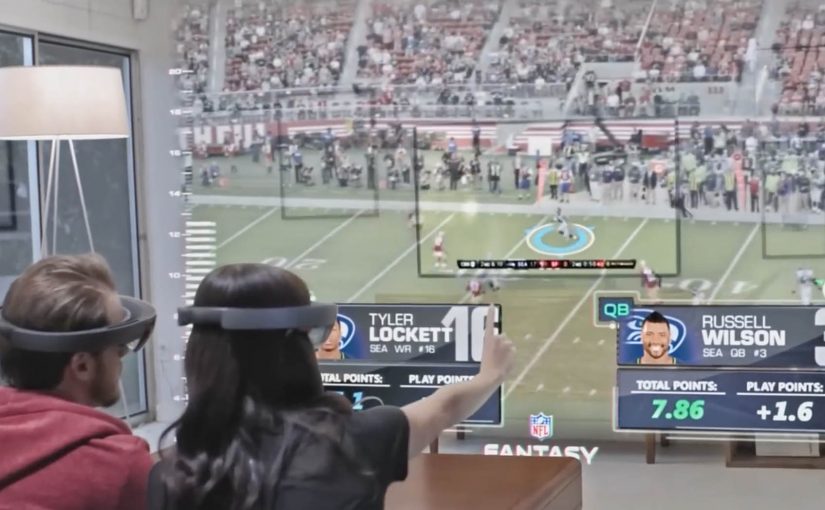
In a recently released video, Microsoft and the NFL re-imagine how a Super Bowl game could be watched with multiple friends and family members.

The scenario pushes beyond passive viewing. It turns the living room into an interactive layer, where the game experience becomes more immersive, more social, and more spatial.

This is the kind of concept that makes the future of TV feel tangible.

In mass-market entertainment, the constraint is not what immersive concepts can show, but when consumer hardware becomes affordable, comfortable, and mainstream.

Immersive viewing is real. Consumer timing is not

The video shows how immersive TV watching can get. But Microsoft is not fast-tracking HoloLens for consumer consumption.

For now, only developers can order HoloLens, shipping this year.

No one knows when consumers get access, or when scenarios like this become a reality.

That uncertainty is part of the story. The vision is clear. The rollout timeline is not.


A few fast answers before you act

Is this still “TV” or something else?

It starts as TV content, but behaves more like a shared, spatial experience than a single screen.

What is the core shift headsets enable?

They move content off the rectangle and into the room, so viewing becomes environmental and interactive.

What is the biggest constraint right now?

Availability and consumer readiness. Until mainstream hardware adoption happens, this remains concept-led.

What should experience designers take from this?

Design for co-viewing and spatial context. Multiple people, multiple viewpoints, and shared interaction become first-class requirements.

Volvo HoloLens Showroom: Virtual Dealership

The showroom no longer needs cars

Car dealerships traditionally depend on physical inventory.

Space, logistics, and availability limit what customers can see, touch, and configure. That constraint disappears when Volvo introduces a showroom experience powered by Microsoft HoloLens.

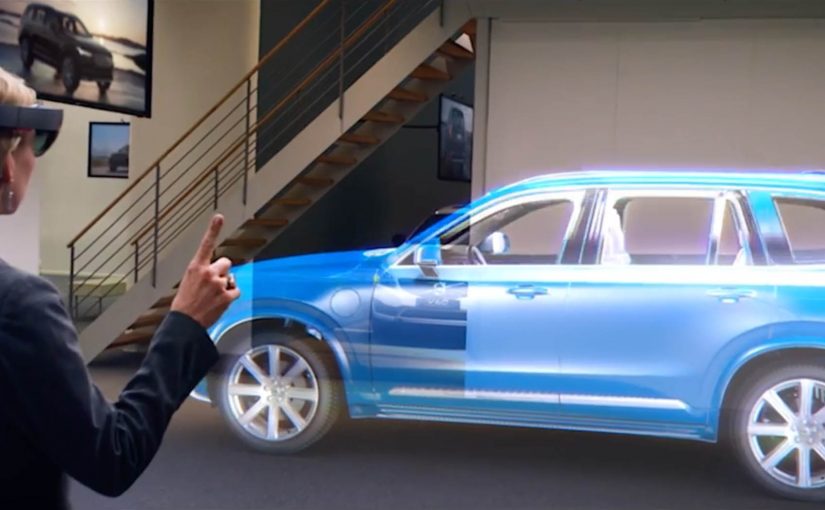
Instead of walking around parked cars, customers step into a virtual environment where full-size vehicles appear as holograms.

How the HoloLens showroom works

Using HoloLens, customers explore Volvo cars at real scale.

They walk around the vehicle. Look inside. Inspect details. Colors, trims, and configurations change instantly. The experience feels physical, even though no car is present.

The showroom becomes software-driven. Inventory becomes optional.

In high-consideration retail, the job is helping people visualize options confidently before commitment, even when the product is not physically present.

Why this matters for automotive retail

This is not a gimmick.

Virtual showrooms reduce the need for large floor space and allow dealerships to showcase the full portfolio, including models and options that are rarely stocked physically.

For customers, the experience becomes calmer and more focused. There is less pressure. More exploration. Better understanding before committing.

Experience beats inventory

The deeper shift is about control.

Customers explore at their own pace. Sales staff guide rather than push. The conversation moves from availability to preference.

The dealership turns into a configuration studio, not a warehouse.


A few fast answers before you act

Is this replacing test drives?

No. It improves decision-making before a physical test drive happens.

What is the real business benefit?

Lower inventory cost, higher configuration clarity, and better use of showroom space.

Why does mixed reality fit automotive retail?

Because cars are high-consideration purchases. Visualization matters as much as specification.