
ASICS: Race Ryan Hall at Columbus Circle

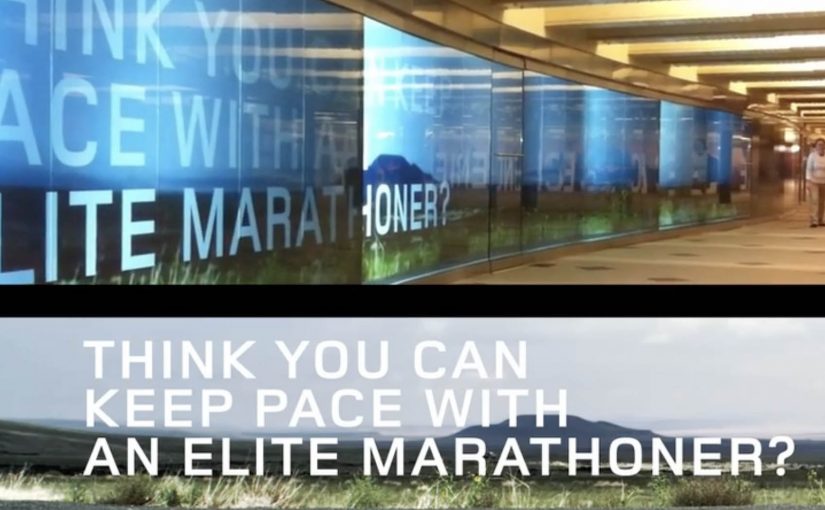
ASICS wants to level up physical interaction with their brand. So around this year’s ING New York City Marathon, they built a 60-foot video wall in the Columbus Circle subway station and challenged passersby to race U.S. marathon runner Ryan Hall.

The wall plays life-sized footage of Hall running at marathon pace, turning a commute corridor into a short, sweaty benchmark. You do not “watch” the message. You try to keep up with it.

In high-traffic urban transit environments, the fastest way to make a performance claim believable is to let people feel it with their own body, not just read it.

Why a race works better than a slogan

Most sports sponsorship visibility lives on banners and logos. This flips the value. It gives the audience a direct comparison: your pace versus elite pace. That makes the brand message tangible in seconds, and it creates a story people can retell immediately.

The craft move: frictionless participation

No sign-up. No app download. No instruction manual. The interaction is instinctive. See runner. Run next to runner. That simplicity matters because subway audiences have short attention windows and low patience for setup.

What ASICS is really doing with this build

On the surface it is a fun stunt. Underneath it is a credibility transfer. By letting everyday runners test themselves against a real benchmark, ASICS positions itself closer to serious performance culture, not just event sponsorship.

What to steal for your next big-event activation

  • Turn a claim into a test. If the audience can try it, they will believe it.
  • Make participation obvious. The interaction should be understood without reading instructions.
  • Place it where behavior already fits. A corridor invites motion. Use spaces that support the action.
  • Design for one-sentence retell. “I raced Ryan Hall in the subway” is the whole message.

A few fast answers before you act

What is the core mechanic of this activation?

A long-form video wall shows Ryan Hall running at marathon pace, inviting passersby to physically race alongside the footage.

Why does transit placement matter here?

Transit corridors create natural “run lanes” and constant foot traffic, so the activation gets high exposure and the behavior feels socially plausible.

What makes this more effective than a normal video billboard?

It turns viewers into participants. The message is experienced as effort and pace, not as information.

What is the biggest execution risk?

If the wall is hard to notice, the corridor is too crowded to move, or the interaction cues are unclear, people default back to walking and the idea collapses.

How would you measure success?

Dwell time, participation rate, repeat attempts, social sharing volume, and any lift in event-area brand consideration versus baseline sponsorship exposure.
Cadbury: Keep Our Team Pumped

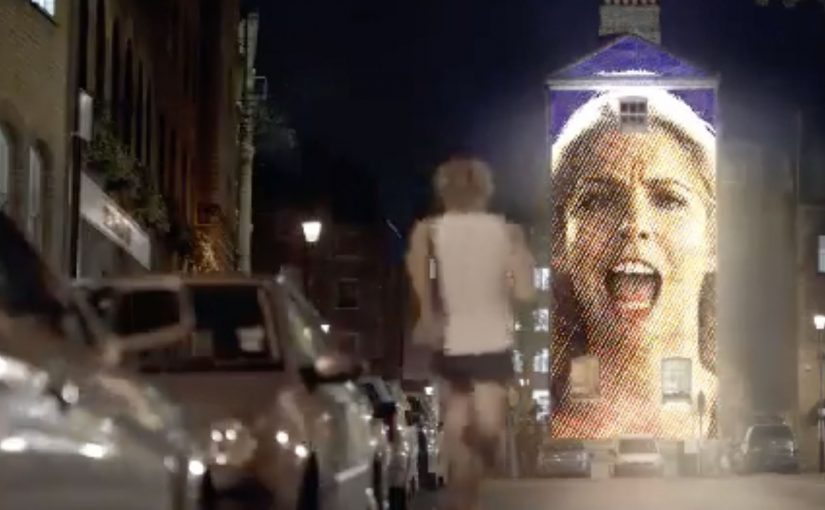
Training for the Olympics is tough, so Cadbury has come up with its loudest campaign to date: Keep Our Team Pumped. Here, supporters of the Great Britain Olympics team can sing a series of motivational, iconic power anthems to keep their team motivated during long training sessions ahead of the big event in 2012.

In plain terms, this is a crowdsourced music campaign: Cadbury gives the nation a set of recognisable “power” tracks, then turns public participation into fuel for Team GB, and into media for the sponsor.

Cadbury is set to release six tracks over the next seven months, culminating in a finale in March 2012 featuring a medley of all six songs created by the British public, plus a performance to Team GB athletes in London.

The Final Countdown

Simply the Best

The integrated campaign involves recruiting singers through social media, followed by a TV campaign airing on 3rd October and running for 6 weeks. There is also radio partnership activity, events, and digital media, with extra support on-pack and in-store, rallying the British public to keep singing.

The fans could follow it all at www.keepourteampumped.com.

In global FMCG sponsorship marketing, this approach works because it turns passive support into an action people can do in under a minute, then reuses that action as campaign content across channels.

Why music is such a strong sponsorship mechanic

Music is a shortcut to emotion and memory, especially when the songs are already culturally “loaded.” If you pick anthems people instantly recognise, you lower participation friction and increase the chance they will share, remix, or join in again when the next track drops.

What Cadbury is really building ahead of 2012

At the surface, it is motivation for athletes. Underneath, it is a sponsor-owned participation platform that can run on TV, radio, digital, on-pack and in-store without needing a new idea every week. Each track release is a fresh moment, and the public contribution keeps it feeling like a national project rather than a one-off ad.

What to steal for your own multi-month participation campaign

  • Use a repeatable content format. Six tracks. Same mechanic. New moment each time.
  • Make participation obvious. One clear action, one clear outcome, then show people what happens next.
  • Design for channel handoffs. Social recruitment feeds TV and radio, which then sends people back online.
  • Turn the finale into a payoff. If you ask people to contribute for months, the end needs to feel earned and public.

A few fast answers before you act

What is Keep Our Team Pumped?

It is a Cadbury campaign that invites the British public to record and contribute motivational “power anthem” performances intended to keep Team GB energised during training ahead of London 2012.

How does the campaign mechanic work?

Cadbury releases a sequence of tracks, recruits singers via social media and other channels, then builds toward a final medley performance assembled from public contributions.

Why release the campaign in tracks instead of one big launch?

Staggered releases create repeat attention peaks, give people multiple chances to participate, and keep the campaign fresh across months without changing the core idea.

What channels does this kind of campaign need to work?

You need an online hub for participation, plus at least one mass channel to drive scale and a retail layer to convert awareness into purchase at shelf.

What is the biggest risk with crowdsourced music campaigns?

If the participation flow is awkward or unclear, contributions drop fast. The format only sustains if it is easy to join and people feel their input is genuinely used.