
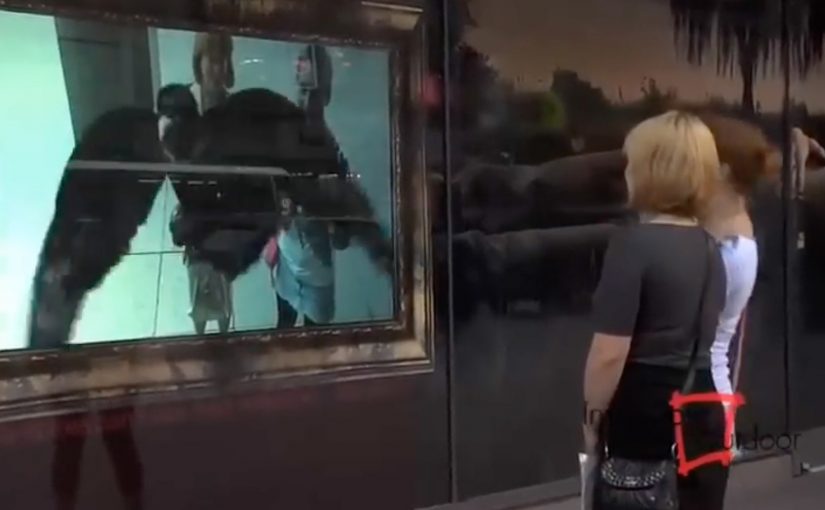
Vampire Diaries Augmented Reality

An outdoor advertising campaign by Inwindow Outdoor for CW’s Vampire Diaries appears in Los Angeles and New York. It uses augmented reality to trigger the on-screen display.

The idea. Outdoor that reacts

The execution uses augmented reality as the activation layer. Instead of treating the screen as a static placement, the display is triggered through AR to create a moment that stands out in public space.

Where it runs

The installation appears in two major markets. Los Angeles and New York.

Why it matters

This is a straightforward example of AR moving out of devices and into the street. The screen becomes the stage, and the AR trigger becomes the differentiator.


A few fast answers before you act

What is this campaign?
An outdoor advertising campaign for CW’s Vampire Diaries by Inwindow Outdoor that uses augmented reality to trigger an on-screen display.

Where does it appear?
Los Angeles and New York.

What role does augmented reality play?
It is used to trigger the on-screen display.

Who executes it?
Inwindow Outdoor.

What is the core takeaway?
Use AR as an activation layer that turns an outdoor screen from static media into a triggered experience.
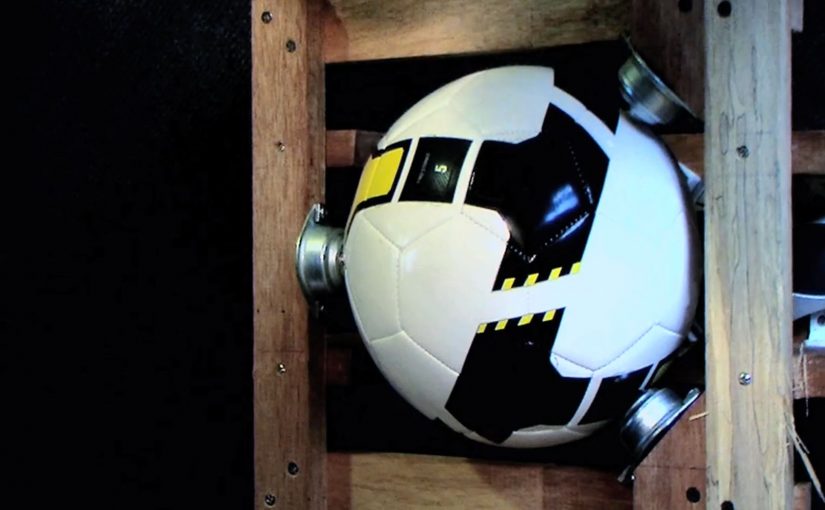
Nike: Trackball for CTR360

When Nike launched the CTR360 football boot in Singapore, they wanted something that could deliver the revolutionary features that make this product the ultimate in ball control.

So an interactive in-store experience was created where ball control and product knowledge of the Nike CTR360 was both seamless and seductive.

Why this retail execution works

The strongest part is that it does not separate “demo” from “education”. The interaction itself becomes the explanation. You learn by doing, and that is exactly how a ball-control product should be introduced.

  • Product truth in the mechanic. Control is demonstrated through controlled interaction, not described in copy.
  • Low friction discovery. Visitors do not need instructions to begin. The interface invites experimentation.
  • Retail as experience, not shelving. The store becomes the medium that proves the claim.

What to take from it

If your product benefit is physical or performance-based, build a retail moment that lets people feel the promise quickly. The goal is not to show every feature. It is to create one memorable proof point that makes the product easier to believe and easier to talk about.


A few fast answers before you act

What did Nike do for the CTR360 launch in Singapore?

Nike created an interactive in-store experience that demonstrated ball control while also communicating CTR360 product features through the interaction itself.

Why pair product education with interaction?

Because performance products are understood faster through demonstration than explanation. The experience makes the benefit tangible.

What is the core pattern behind this kind of retail activation?

Translate the product promise into a simple, inviting interaction. Then let that interaction deliver both the “wow” and the learning.

How do you know if an in-store experience is doing its job?

If a visitor can explain the product benefit immediately after trying it, without needing staff to interpret it, the design is working.

Coca-Cola: Velcro Posters for Grip Bottle

A bus-shelter poster you can literally grip

Here is another cool innovation at the bus shelters. Coca-Cola has come up with a new Grip Bottle which has a better grip for holding. To let people know they printed posters with Velcro on them and placed them in bus shelters in Paris to make people interact with the grip.

The campaign was a big success as people were literally hooked on to the campaign and there was a 3.8% brand volume growth in France compared to 2007.

The campaign was created by Marcel in Paris, France.

The smartest part: the demo is the media

If the claim is “better grip,” then the fastest proof is to make you grip something. Velcro turns the poster into a hands-on argument.

Why it sticks in your head

Bus shelters give you time. And touch beats talk. You do not just read about the benefit. You feel it while you wait.

The business point

Make the new Grip Bottle noticeable, and make the “better grip” benefit instantly understandable through interaction.

What to take from this

  • When the benefit is tactile, communicate it through touch, not explanation.
  • Use high-dwell environments to earn interaction, not just impressions.
  • Keep the mechanic simple enough to repeat at scale.

A few fast answers before you act

What was the Coca-Cola Grip Bottle campaign?

A bus-shelter activation in Paris promoting Coca-Cola’s Grip Bottle by using Velcro posters that encouraged people to interact with the grip.

Where did the campaign run?

It was placed in bus shelters in Paris, France.

What outcome did the post cite?

The post cited a 3.8% brand volume growth in France compared to 2007.

Who created the campaign?

The post credits Marcel in Paris, France.